
Mini Clubman Interior & Tech: A Stylish Companion for the Road Less Ordinary

Layout-wise, the Clubman excels at theatrical practicality. The split rear doors are the star of many a town-center parking lot, but beyond the Instagram moment they offer earnest utility: loading crates, a couple of suitcases, or a set of muddy hiking boots becomes less of a puzzle. The rear bench seats are accommodating for two adults and acceptable for three on short hops, with headroom that benefits from the car’s stretched proportions compared to the shorter, more cramped Mini hardtop. Legroom is decent for the class, and the rear layout shows that Mini remembers families and weekenders when it designs cars — the Clubman is not a lifestyle prop, it’s a usable machine.
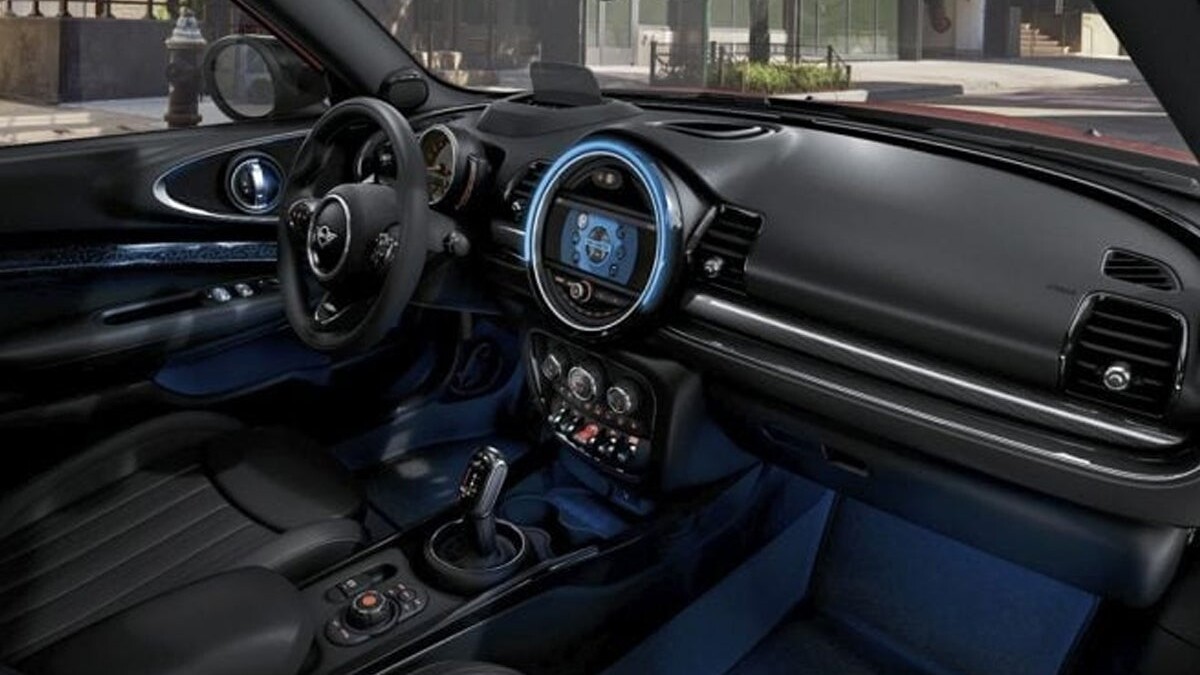
Driving is where the Clubman’s interior earns its keep. The cockpit is ergonomically sympathetic to spirited driving: controls fall to hand with no dramatic reaches, the steering wheel frames the instruments neatly, and the shifter (or selector, depending on transmission) feels muscular rather than ephemeral. When you want to drive quickly, you don’t fumble with menus or hunt for functions buried deep in sub-menus; you adjust drive modes through a tactile control, the steering tightens perceptibly, and the infotainment simply backs out of the way. That may sound like a small detail, but in a car that intends to be engaging, the cabin must facilitate rather than distract — and the Clubman mostly does.
That said, the Clubman’s interior is not without contradictions. For a brand that trades heavily on retro-chic, some of the styling choices veer toward affectation. The circular instrument cluster might charm on first encounter, but prolonged use exposes limitations in information density compared with more modern rectangular displays. Depending on the trim, you can get a more driver-focused digital cluster, but if you’re in a model with the classic round unit, expect to toggle through information more often than you would in rivals with wider screens. It’s not a dealbreaker — the display is attractive and easy on the eyes — but if you’re a numbers person who likes to have lap times, economy readouts and trip stats all visibly simultaneous, you’ll miss the additional screen real estate available elsewhere.
Technology, in the Clubman, is an exercise in tasteful restraint. The infotainment is intuitive: menus are logical, touchscreen responses are quick enough for everyday use, and the system integrates smartphone functions reliably. For long stretches of motorway, navigation behaves predictably; in town, the interface is quick to accept reroutes. There are physical shortcuts for the most-used functions, which I appreciated during spirited canyon runs when fiddling with glass surfaces becomes an exercise in risk management. One of the smarter moves in the Clubman’s cabin is to keep frequently used toggles tactile and close to the driver — it’s a small design philosophy that rewards committed driving with fewer seconds lost to menu-diving.
On my trip, the tech shone brightest in ambient functionality rather than headline-grabbing features. Climate control is effective and straightforward; seats offer useful adjustments and optional heating for colder mornings; USB and charging positions are pragmatic in their placement so that devices can be used without trailing cables awkwardly across the cabin. The sound system in the car I drove was capable and clean, sufficiently nuanced for a variety of music without turning every drive into a mobile nightclub. If you’re an audiophile after a very specific sonic signature you may want to audition a Clubman with a branded upgrade, but for the majority of listeners the factory setup feels well-judged.
Practicality is where the Clubman quietly outplays many of its competitors. The loading sill is sensibly low, the rear compartment usable for weekend luggage, and with the front seats adjusted reasonably the cabin can swallow grocery runs, surfboards on short trips, or the paraphernalia of an impromptu picnic. Small storage cubbies are well-placed, and cupholders are more secure than they often are in cars that prioritize gesture over grip. But here, too, the Clubman insists on personality: some switchgear prioritizes style over the absolute clarity of function. There were a few moments when I reached for a control expecting it to be where a generic European compact would place it, and instead encountered a delightful but slightly less intuitive layout. Embrace the quirk or be mildly irritated — that’s the choice.
Passenger comfort is another area where the Clubman performs its subtle magic. The front seats struck a competent balance between support and cushion during long runs, with bolsters that keep you composed through the bends without clamping your hips the way hardcore sports seats can. Rear passengers appreciate the thoughtful touches — map pockets, readable vents, and sensible seat contours. If your travel companion is style-conscious, they will notice the cabin details and appreciate the complement of aesthetics and comfort. If your travel companion is a seven-year-old prone to spills, you’ll be grateful for the practical layout and easy-to-clean surfaces.
Driver aids and safety tech are present and effective in supporting roles. Lane-keeping aids, adaptive cruise and parking assistance systems are functional when required, but they never pretend to be omniscient. For those who enjoy placing the car at the center of the driving experience, the Clubman’s systems assist without auto-piloting — a philosophy I prefer, even if it occasionally means being more involved at lower speeds. For longer motorway stretches, adaptive cruise is a welcome companion; in tight town centers, the parking aids are precise and make the split rear doors even more useful when maneuvering into confined loading spaces.
The Clubman’s interior also revealed its social skill on my trip. Friends and strangers alike commented on the cabin’s aesthetic; it’s that rare non-humblebragging kind of design that invites curiosity without sounding like an advertisement. The central lighting ring proved to be a surprisingly effective conversational piece: different colors set different moods — calming blue for dawn drives, amber for late afternoon — and it’s a tiny thing that somehow elevates the experience. Interiors often reveal personality through the little rituals they encourage; the Clubman’s cabin nudges you toward enjoying the act of driving and the act of being driven.
No cabin is perfect, and the Clubman has its peccadilloes. The central circular screen, beloved for its charm, has trade-offs in sheer information density. Storage, while good, isn’t cavernous — if you’re packing for an extended trip for five people, bring a roofbox or plan shorter hops. Some of the optional extras — leather, upgraded sound systems, advanced driver support packages — tilt the car towards a prettier price bracket, and at that point you must ask whether you’re paying for substance or style. In my view, the Clubman leans into both enough to justify the cost, but your tolerance for fashion-led features will determine whether the balance feels right.
By the end of the journey — dunes blurred at the edges of the road, a cafe stop with ceramic cups warming in the sun, and a final twisty descent into a valley — the Clubman’s interior had become less of a showcase and more of a collaborator. It made the trip easier, more pleasant and at times more joyful. The technology never felt like an apology for mechanical compromise; instead, it complemented the driving experience. There were moments of delightful clarity — a tactile knob that let me change drive modes without looking, a well-placed vent that banished morning chill — and moments of indulgent style — an ambient light scene that made evening arrivals feel like an event. For those who want a compact car that’s at once practical, stylish and engaging to drive, the Clubman’s cabin is a persuasive argument.
In short, the Mini Clubman’s interior and tech are not about flashy spectacle. They are about considered presence: enough convenience to make travel smoother, enough charm to make it memorable, and enough driver-focused layout to keep the joy of driving intact. If you prize precision on the road and style in the cabin, the Clubman will seduce you with both. If you demand the last word in digital instrumentation or cavernous cargo space, you may find it charming but not quite absolute. For me, the Clubman struck a near-perfect truce between the two. It’s a car that wants you to arrive relaxed and to enjoy the arriving as much as the driving, and on that recent road trip it made every mile feel like an intentional choice rather than a necessity.
Specifications
| Specification | Value |
|---|---|
| Body style | compact estate / 5-door |
| Seating capacity | 5 |
| Doors | 5 (including split rear doors) |
| Drivetrain | front-wheel drive (all-wheel drive available on some versions) |
| Engine | various petrol (turbocharged) and diesel options depending on market |
| Transmission | manual and automatic options depending on trim and market |
| Fuel type | gasoline (diesel available in some markets) |
| Infotainment | central circular touchscreen with ambient lighting ring and smartphone integration |
| Audio | factory and optional premium branded sound systems available |
| Safety tech | driver assistance features such as adaptive cruise and lane-keeping assists available depending on specification |