
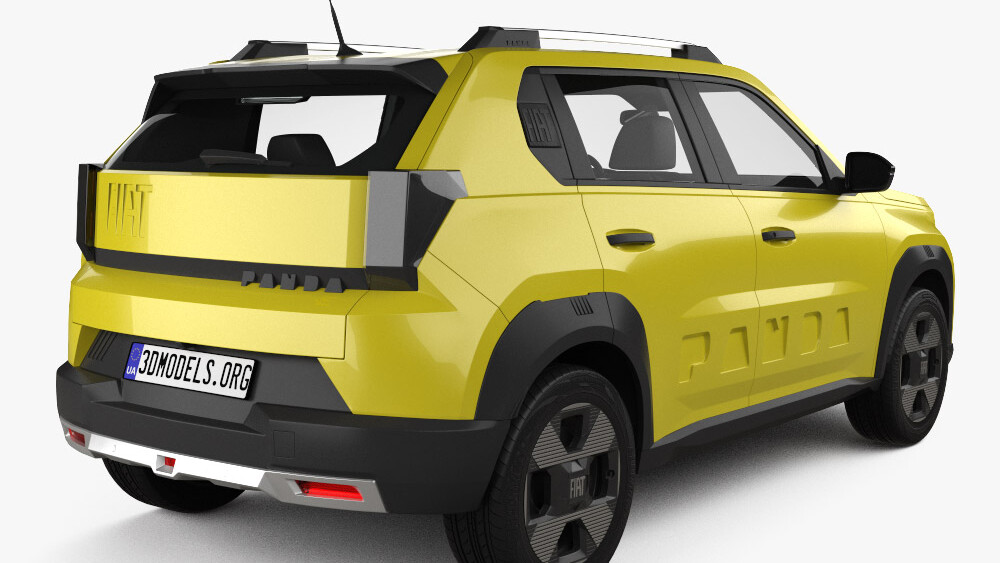

Speed Demon series: Performance first. We took the 2025 Fiat Panda to the We Review Cars track to see what, if anything, of a race car can be coaxed from a small urban hatchback.
Introduction — Why test a Panda on a track?
People expect me to judge Ferraris and Porsche GT cars, but a Speed Demon review isn't about badges—it's about extracting usable speed from metal and rubber. The Fiat Panda has always been a utilitarian, honest little car. In the traffic of modern cities it's a pragmatic choice. On a circuit, though, the questions are different: how does its chassis behave under load? How do the brakes and tyres resist heat and fade? Can a small, seemingly meek city car be made to feel quick, confidence-inspiring and fun on a challenging, changeable circuit?
On a damp morning that turned bright and then squally — typical English mood-swings — I spent a full day pushing the 2025 Panda around our private circuit. I ran multiple stints, changing lines and entry speeds to tease out behavior at the limit. Here are the technical impressions you want: suspension, steering, brakes, chassis balance and what you can realistically improve if you want more pace.
Packaging and architecture — the basics that matter on track
The Panda's packaging is straightforward: compact footprint, short overhangs and a tall, upright body. That geometry gives the car a high centre of gravity compared with low-slung sports cars. For a chassis engineer or a driver that means: anticipate more body roll and earlier weight transfer. The wheelbase and track width define the baseline stability and moment of inertia—both play into how quickly the car responds to steering inputs.
What that translates to on track: the Panda is nimble in slow, tight changes of direction thanks to its shortness, but it is not built for high-speed stability. It trades yaw inertia for agility, which is a common, sensible compromise in a city car. If you want the Panda to feel sharper, you must control roll and lateral load transfer rather than expecting sudden, razor-sharp turn-in.
Chassis and suspension — compliance versus control
The 2025 Panda's suspension is tuned for real-world comfort. That means relatively soft springing and compliant damping. On the road, that gives a forgiving, absorbing ride. On the track, it risks letting the body wallow and the tyres run out of ideal camber at higher lateral loads.
Turn-in and initial responses: With the standard setup the car asks to be settled before you get aggressive on the steering. There's a measured, predictable initial understeer as the front tyres come under load — not violent, just insistent. That characteristic is easy to manage if you respect the balance: slow the car down enough to allow the front tyres to carry load without exceeding their adhesion window.
Mid-corner behavior: Once you carry speed through the apex, the Panda will often show a gentle tendency to push (understeer) as weight shifts forward. The rear will seldom step out abruptly unless provoked: there's a built-in stability bias. That makes the car very forgiving for less experienced drivers, but for a driver looking for agility it can feel a touch inert.
Body control and roll: Expect a perceptible amount of roll compared to sportier cars. The limited anti-roll stiffness means the outside tyre can lose favorable camber faster than you'd like. With consistent track laps that roll becomes the single biggest limiter of cornering speed; controlling it is the key tuning avenue to extract more lateral grip.
Steering — what the wheel tells you
The Panda's steering is light, which is ideal for urban manoeuvring but gives a pared-back sense of feel at the limit. On the circuit I relied on subtle inputs: smooth, progressive steering rather than aggressive flicks. The steering's ratio and assistance level favour responsiveness at low speeds and a relaxed castor effect on the highway — a world away from a race car's direct, tactile wheel.
Feedback and precision: Do not expect razor-sharp feedback. The steering transmits the broad brushstrokes — turn-in pressure, mid-corner load, return-to-centre — but it lacks fine-grain information about subtle tyre load transitions. For drivers who have spent years listening to a wheel, this means relying on the car's overall balance rather than subtle concentrated steering clues.
Brakes — predictability over outright bite
Brakes on small city cars tend to be engineered with fade resistance for normal use rather than track heat cycles. On a few hot laps the Panda's brakes remained consistent and progressive: the pedal builds in a linear way and the car slows predictably without abrupt grabbing or juddering. Over longer sessions, I watched for changes in pedal feel and bite as temperatures rose; the system held together, though a dedicated track setup would clearly benefit from uprated pads and improved cooling.
Driver technique: Because the pads are on the conservative side, you have to be decisive with braking. Use a firm, committed initial application, then modulate into the apex — the car rewards planning and clear threshold braking rather than fuzzy, hesitant inputs. This mirrors what I always preached in GT cars: a consistent, repeatable brake point beats sporadic heroics.
Powertrain and drivability — what I've observed
The Panda is not sold as a sports machine; its power delivery and gearing are oriented around efficiency and in-town usability. On track that means modest mid-range punch and a gearbox that favours smooth shifts and low-speed tractability. Acceleration at the exit of slow corners relies on momentum and the ability to place the car correctly rather than explosive engine surge.
Traction and torque steer: As with most front-driven small cars, take care of the throttle application. An aggressive stab can unsettle the nose and induce understeer or torque steer sensations if the tyres are pushed beyond grip. For quick exits, focus on smooth progressive throttle inputs and a line that allows you to carry a little more speed through the apex rather than trying to wheel-spin your way out of corners.
Tyres — the simple ingredient that changes everything
Tyres will dictate more of the Panda's on-track performance than most other single changes. The standard road rubber is designed for low noise, low rolling resistance and wear life. Swap to a stickier, sport-oriented tyre and you immediately transform the chassis' capabilities: turn-in becomes more immediate, mid-corner loads are carried more willingly, and braking distances shorten.
Be realistic: montée to high-grip tyres without addressing roll control and brake cooling gives diminishing returns. The first tyre change is the cheapest and most effective upgrade to make the car feel faster. After that, structure improvements (dampers, anti-roll bars) make the tyres work more effectively.
What I changed and why — a practical tune-up road-map
I didn't perform major mechanical surgery during the test, but I ran quick experiments and tyre swaps to see how far the Panda could be pushed while retaining everyday usability. If you want this car to behave more like a small, focused track toy, here's a logical sequence of changes that yield the best bang for your buck:
- Tyres: Move to a high-performance road tyre. Expect the biggest immediate improvement here.
- Brake pads: Fit a higher-friction, road-legal pad to improve bite and consistency under hotter conditions.
- Sway bars: Increase roll stiffness incrementally through stronger anti-roll bars to reduce body roll and keep tyre camber in a usable band.
- Shock absorbers: Replace or re-valve dampers to control rebound. This sharpens transient responses and reduces squat and pitch.
- Alignment: Add a small amount of negative camber at the front to keep the outside tyre flatter under load, and dial toe settings to prioritise mid-corner stability.
These changes prioritise predictable, usable handling rather than an artificial increase in outright lateral g. They respect the Panda's ethos: keep it civil for daily driving while unlocking performance when you want to play.
Driver technique — how I squeezed the best laps
From my years in GT3 cars I learned that in an understeering car you either reduce entry speed or rotate the car with rear grip. The Panda favours the first approach. My technique was:
- Brake early, trail off into turn-in: Allows the front tyres to settle and bite.
- Commitment to apex line: Hold a stable apex rather than constant steering corrections; the Panda rewards single-sweep inputs.
- Smooth throttle application: Gradual rather than violent; this keeps the front tyres loaded in a usable window and avoids torque-steer surprises.
- Use weight transfer to rotate: A small lift-and-rotate technique helps the inside wheel unload and the outside rear to gain a little slip angle, aiding turn-in.
All of this is about playing to the car's strengths rather than forcing it into a behavior it was not designed to deliver. That is true for many road cars: the fastest lap is often the one that respects the vehicle's architecture.
Comfort versus performance — the unavoidable compromise
The Panda's default tune emphasises comfort, noise isolation and urban practicality. If you stiffen shocks and anti-roll bars, expect trade-offs: a firmer ride, more noise over expansion joints, more pronounced reactions to sharp road inputs. For many owners the Panda's primary mission will remain city driving and light touring, so any performance upgrades should be weighed against daily usability.
My recommendation: Keep upgrades conservative if you want a dual-purpose car. A sticky tyre, firmer pads and modest anti-roll increases will make the car feel far livelier on a circuit while remaining civil on the public road.
Safety and limits — know before you push
Small cars often give a false sense of invulnerability because they are light and nimble. On a track, when you push beyond the adhesion limit, consequences are the same as any other vehicle. The Panda's short overhangs and compactness help in avoiding high-speed impacts, but they do not change fundamental physics: lose the rear at the wrong spot and you will run wide.
Respect the envelope: If you plan track days, consider basic safety upgrades: better brake fluid, fresh tyres with known temperatures, and an understanding of the car's understeer limits. For drivers used to rear-drive track cars, allow an adjustment period: front-drive dynamics reward different lines and throttle strategies.
How it feels — the final, subjective verdict
After a full day at the circuit the 2025 Panda left me with a clear impression: it is not a speed freak by design, but it is malleable. If you are a driver who values predictability, it will give you confidence and allow you to explore pace incrementally. If you attempt to force it into GT-style aggression you will be disappointed — the chassis will simply steer you back to moderation.
I enjoyed the challenge. There is a satisfaction in extracting lap time from a car that hasn’t been born for the task. It makes you drive with precision: perfect lines, smoothness, and anticipation. That, to me, is the essence of Speed Demon testing — not simply blasting down straights, but refining technique until the car yields more than its specification suggests.
Summary — who should buy a Panda and why it matters on track
For the city driver: The Panda remains a smart, practical choice. It is comfortable, easy to live with, and forgiving.
For the weekend track toy owner: The Panda is an attractive platform to learn car control and enjoy track days without spending on high-maintenance performance hardware. Start with tyres, pads and minor suspension tweaks, and you’ll be surprised at the pace you can reliably sustain.
Final take: The 2025 Fiat Panda is not a sports car in the conventional sense. But, when approached intelligently, it becomes a rewarding exercise in engineering and driving skill—an honest reminder that speed is as much about discipline and suspension setup as it is about horsepower. If you want to be a faster driver, the Panda will teach you more about chassis balance than many flashier machines ever will.