
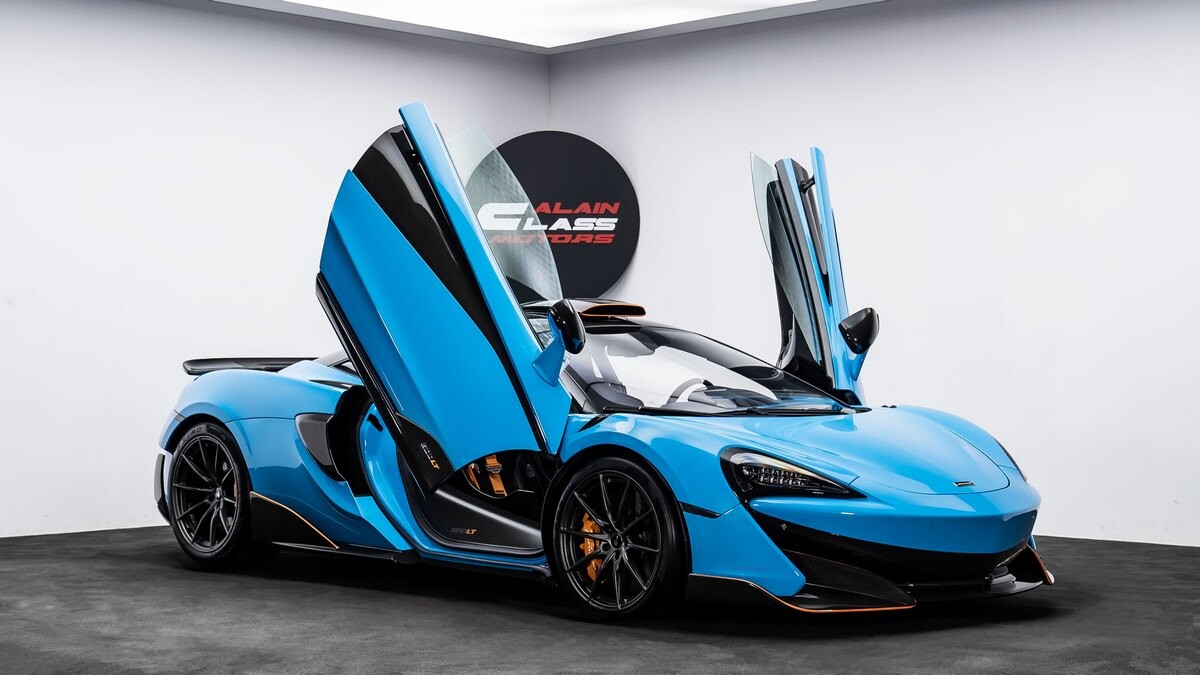

Background and context
Powertrain and engineering — how it affects efficiency
At its heart, the 600LT uses a compact, twin‑turbocharged V8 mounted mid‑ship. McLaren's engineering philosophy centres on extracting high specific power from a relatively small displacement engine and marrying that engine to an extremely stiff carbonfibre monocoque. That approach delivers exceptional power‑to‑weight and chassis efficiency — both valuable from an environmental perspective because, simply put, a lighter car requires less energy to accelerate and to climb grades.
From an emissions and fuel‑use standpoint there are several technical trade‑offs to consider:
- High specific output. Engines tuned to produce very high power per litre often have higher thermal and pumping losses when driven outside their most efficient load/rpm window. In practical terms this means spirited driving — the very thing the 600LT encourages — will quickly move fuel consumption and CO2 emissions into the higher bracket.
- Turbocharging efficiency. Twin turbocharging enables a small displacement engine to deliver high torque at low rpm, which can improve part‑load efficiency if the driving style keeps the engine in those favourable bands. Modern twin‑turbo systems, when well‑matched to engine and gearbox, can therefore be a net positive for real‑world efficiency compared with a larger naturally aspirated powerplant.
- Lightweight construction. The carbonfibre MonoCell and targeted deletion of non‑essential weight items reduce the dynamic energy required per mile. Weight savings are one of the most effective ways to lower energy consumption and tyre wear, both of which are meaningful for lifecycle environmental impact.
Aerodynamics and its environmental consequences
The 600LT's aero package, with an extended 'long tail' and more aggressive wings and splitters, increases downforce at speed. For drivers seeking maximal cornering grip this is non‑negotiable; for an Eco Adventure it changes the equation.
Downforce is achieved by redirecting airflow and increasing pressure differentials; that typically carries a drag penalty. On high‑speed highways the net aerodynamic drag will therefore be higher than on a less aero‑focused sibling, and that higher drag manifests as increased fuel consumption at sustained high speeds. The practical advice for an eco‑conscious approach is to choose routes where the car can be enjoyed at moderate speeds, where aerodynamic drag plays a smaller role in fuel consumption, and where the benefits of downforce (stability, precise handling) can be enjoyed without excessive throttle inputs.
Real‑world fuel efficiency — what to expect and how to improve it
Supercars are seldom paragons of fuel economy, but modern engineering and small displacement turbo engines mean they are not uniformly wasteful either. When driven briskly on winding roads the 600LT's fuel consumption will be significantly higher than during calm highway cruising. For the Eco Adventurer there are practical, technical measures to reduce consumption and emissions without stripping the car of its character:
- Mind the torque curve: The twin‑turbo V8 produces usable torque across a broad spread. Keeping the engine in mid‑range rpm where the turbos are spooled and combustion is efficient reduces unnecessary downshifts and heavy throttle applications.
- Optimal gear selection: The car's rapid gearbox is built to change gears quickly; use higher gears where possible for lower engine rpm. This reduces frictional and pumping losses.
- Tire choice and pressure: High‑performance tyres are essential for the 600LT's handling, but they vary in rolling resistance. When planning eco‑minded runs, selecting tyres with a balance between grip and lower rolling resistance helps. Keeping pressures at manufacturer‑recommended levels minimises excess energy loss through flexing.
- Regular maintenance: A well‑tuned engine with clean filters, fresh oil and properly calibrated fuel injection will burn fuel more cleanly. Maintaining exhaust after‑treatment components (catalytic converters, O2 sensors) is crucial for controlling emissions.
- Route selection: Avoid prolonged open‑throttle highway stretches or stop‑start city traffic. Smooth undulating country roads permit momentum‑conserving driving: use of gravity-assisted descents and early anticipation of corners reduces heavy acceleration events.
Eco‑friendly routes and how the 600LT fits them
For an Eco Adventure I seek routes that allow conservation of energy while showcasing engineering. The 600LT is at its best on technical, flowy B‑roads: an extended sweep where momentum and chassis balance matter more than outright top speed. Such roads encourage a driving style that can be surprisingly fuel‑gentle — using the car's aerodynamic balance, mechanical grip and highly communicative chassis to carry speed through corners rather than scrubbing it off and demanding heavy re‑acceleration.
Examples of route characteristics I recommend for minimizing environmental impact with the 600LT:
- Low average speed, high flow: Roads where average speeds remain moderate but drivers can maintain steady speed and minimal braking.
- Minimal congestion: Avoid urban corridors; stop‑start traffic is the least efficient operating condition for any high‑performance engine.
- Changing elevation: Gentle climbs and descents allow for regenerative style momentum management — coast into descents, then use the regained momentum instead of accelerating hard out of slow corners.
- Short, targeted sprints: If you want to open the car up, use short bursts followed by long recovery stretches at low load. That practice mimics interval training, limiting total fuel penalty.
Trade‑offs: performance vs. environmental responsibility
No discussion of a supercar's eco performance is complete without acknowledging the fundamental trade‑offs. The engineering choices that make the 600LT so intoxicating — lightness, a high‑revving turbocharged V8, aggressive aerodynamics and track calibration — also push its operational envelope toward higher energy use when exploited. However, the same engineering also provides tools for a lower impact approach: a precise chassis and accessible torque curve allow a competent driver to extract enjoyment with moderate fuel use.
From a collectability standpoint, the 600LT's LT badge and focused specification mean that many owners will keep these cars in original, low‑mileage condition. For environmental impact across the vehicle life cycle, long ownership and careful maintenance are beneficial: the energy and emissions embodied in manufacturing a carbonfibre monocoque are best amortised over long ownership horizons and lower turnover.
Technical observations from the road
In my time driving the 600LT on mixed roads with an eco focus, several technical characteristics stood out:
- Immediate response at part‑load: The turbochargers are tuned to provide useful torque at modest revs, meaning you can keep revs lower and still maintain progress — a clear advantage for reducing fuel burn.
- Drivetrain efficiency: The gearbox is brief and efficient in its shifts, so gear selection plays a big role in real fuel economy. Use smooth, early upshifts under light load.
- Braking and regenerative opportunities: While the 600LT lacks electric regeneration, the car's excellent brake feel and predictable balance make it easy to lift early and rely on engine braking, which conserves kinetic energy compared with late, heavy braking and re‑acceleration.
Owner practicalities and sustainability
For owners wanting to make the 600LT as sustainable as possible, practical steps include meticulous maintenance, sympathetic driving training (learn how to exploit momentum), and attention to consumables. Sourcing high‑quality long‑life lubricants, ensuring correct wheel alignment and using tyres optimized for the intended use will reduce running inefficiencies and tyre replacement frequency — both positive outcomes environmentally.
From a preservation and collectability angle, keeping emissions equipment original is important. Tampering with catalytic systems to improve peak performance is not only illegal in many jurisdictions, it undermines the car's long term value and increases pollutant emissions.
Conclusions — can a Longtail be eco‑friendly?
My conclusion is nuanced. The McLaren 600LT is not, and should not aim to be, a zero‑emission machine. It is an exemplar of a specific engineering goal: maximum driver engagement with a minimal weight and packaging penalty. However, within that remit it has features that can be exploited to reduce environmental impact: a compact, efficient powertrain, exceptional chassis balance that rewards momentum conservation, and an architecture that benefits from long ownership and low mileage.
For the classic‑minded enthusiast who also cares about footprint, the 600LT asks for a considered approach: pick routes that reward technique over top speed, maintain the car to strict standards, and recognise that the best way to reduce lifetime emissions is to cherish and hold on to these machines rather than let them be replaced frequently. In that way, even a Longtail can be part of an Eco Adventure.