
A Modern Detour: Touring Country Roads in the Honda ZR-V
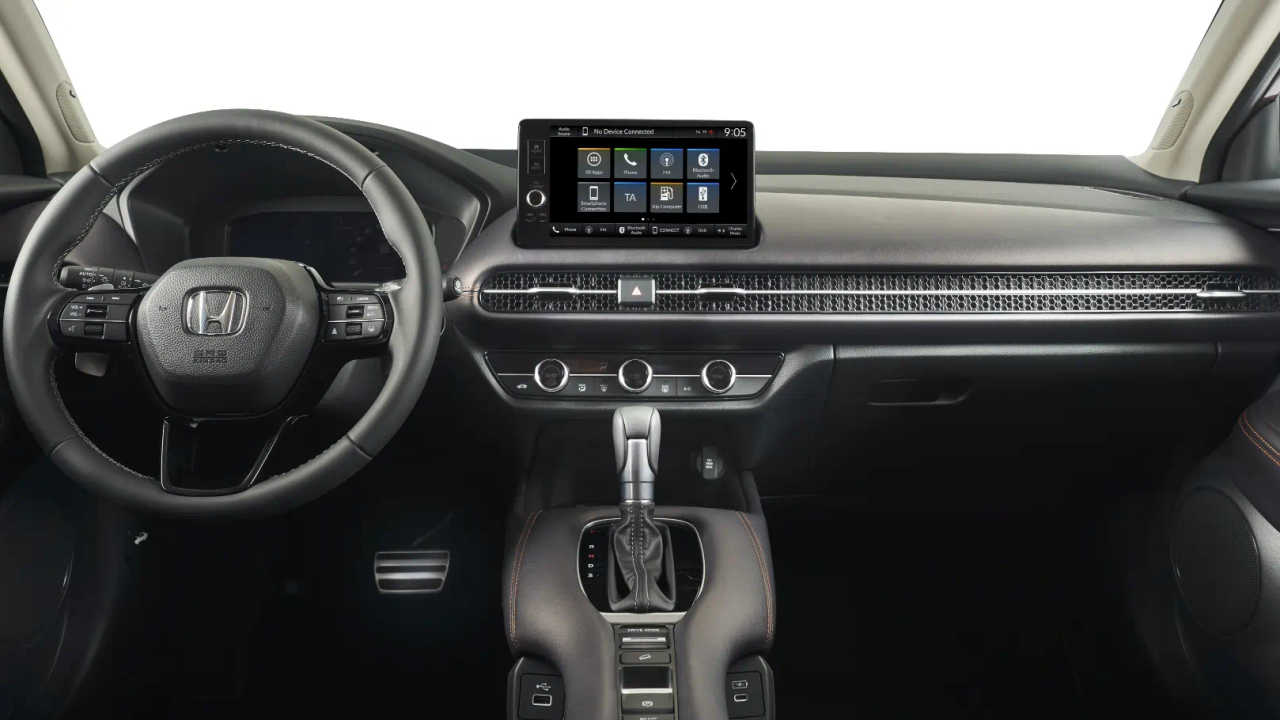

The ZR-V is, unmistakably, a compact crossover. That classification could make it sound generic, but viewed through the lens of Honda's history it is another chapter in the brand's long experiment with packaging. From the earliest small Hondas that prioritized interior cleverness to the CR-Vs and HR-Vs that followed, Honda has shown an ability to squeeze utility from compact footprints without indulgent excess. The ZR-V continues that tradition. Inside, the cabin felt considered more than flashy: logical switchgear, a driving position that balances upright visibility with a connected feel to the road, and surfaces that are sensible rather than showy. For someone who has spent hours in seventies and eighties cabins whose ergonomics often invite apology, this is a refreshing return to usability.
On the road, the ZR-V surprised me in ways that are subtle yet important. Its suspension tuning leans toward a middle ground that favors composure over sharp sportiness. When the lanes narrowed and the tarmac pinched, the car did not protest. It responded in a manner that felt confident and predictable, not wired or unsettled. That predictability is an unsung virtue on long trips; it reduces fatigue and permits a steady pace when the objective is scenic enjoyment rather than lap times. Steering weight is honest, and the car communicates grip limits without drama. If a classic enthusiast sometimes yearns for mechanical immediacy, the ZR-V offers the modern equivalent: a confidence that comes from good chassis calibration and thoughtful damping.
Space and practicality are where the ZR-V made itself most useful during my journey. We packed a weekend's worth of kit for two, including a pair of overnight bags, a crate of market produce and a folding picnic blanket, and there was still room to spare. Rear-seat comfort is generous for a compact machine; the sort of family that frequently embarks on countryside excursions will find the ZR-V accommodating. The boot floor is low enough to make loading easy, and the tailgate aperture suits odd-shaped parcels as well as neat suitcases. I thought often of Honda's early mastery of interior ergonomics—ingenious solutions like versatile seating and sensible storage—and found a modern echo in the way everyday items fit and stay put.
Technology is present but not overwhelming. For someone who values tactile familiarity, the ZR-V's user interface strikes a reasonable balance between touchscreen convenience and physical controls. Climate adjustments and frequently used functions remain accessible without diving through menus, which is a practical mercy when en route between villages and viewpoints. Driver aids also worked competently during the trip: adaptive systems assisted rather than intruded, and safety equipment provided quiet reassurance when visibility narrowed around hedgerows or when shepherding through the wet that followed a brief spring shower.
Fuel economy and drivetrain particulars are often the focus of modern buyers, but here I am careful. I will not invent figures or claim statistics I do not know. What I can say from experience is qualitative: the ZR-V feels composed in town, steady on the open road and willing to cruise day after day. For a traveler whose afternoons are measured in miles and late daylight, that constancy is more valuable than headline numbers. The refinement of the powertrain, whatever its configuration, suited the mission. It delivered smooth, civil responses at cruising speeds and enough urge to overtake confidently on rural stretches when necessary.
Driving a modern crossover inevitably invites comparison with cars from earlier decades. On a crisp morning after a night of rain I found myself parked beside a 1970s coupe at a roadside cafe. The contrast was telling: the coupe radiated character in the way only patina can, while the ZR-V spoke of purpose and adaptability. Both have virtues worth celebrating. The old car demanded attention and involvement; the ZR-V offered comfort and uncomplicated competence. For trips that prioritize seeing country lanes and stopping at little museums or farm shops along the way, the latter is a pragmatic ally.
Comfort over distance is a particular strength of the ZR-V. Seats are supportive without being rigid, and the cabin remains a calm place for extended periods. Isolation from road imperfections is good without giving the impression of being insulated from the world; you still feel the texture of the road beneath, a quality I appreciate when the landscape itself is part of the journey. Noise intrusion is managed well: wind and tyre rumble only become prominent at higher speeds, and then in a manner that does not intrude on conversation or the enjoyment of a playlist curated for the drive.
Detailing reveals Honda's quiet insistence on durability. Where a classic car reveals mechanical personality and invites hands-on maintenance, the ZR-V hints at a modern philosophy of long-term reliability through sound engineering rather than flamboyant gimmicks. Materials, fastenings and joints that you notice at first touch suggest a vehicle designed to be used and to live through years of miles. This practical longevity, while less romantic than a varnished dashboard or a hand-stitched leather wrap, is part of the same lineage that made so many early Hondas beloved: sensible engineering that rewards ownership.
One of the pleasures of the trip was how the ZR-V handled the transition between surfaces. From smooth A-roads to narrower lanes where potholes and occasional grit demanded respect, the car absorbed imperfections and maintained composure. That adaptability made me think about the nature of collectability. Classic cars are treasured for their singular character and the stories they tell. Modern vehicles like the ZR-V are more about versatility and reliability. Their stories will be different—less about singularity and more about how they served as dependable companions on the ordinary journeys that stitch a life together. There is value in that, even if it is not the kind of value that will necessarily make headlines at concours events in decades to come.
Practical considerations matter when planning trips with mixed terrain. I found that ingress and egress, especially for older passengers, are straightforward. The doors open wide and the sill height is forgiving. For those who travel with a range of companions—from children to grandparents—this accessibility is a detail that often decides whether a car becomes part of family life. Storage solutions within the cabin are thoughtful: cubbies, cupholders and clever bins that keep the small necessities in reach. These are the sorts of things that classic car enthusiasts often miss when they upsize from a cherished coupe to a family-friendly modern car.
As a classic car writer, I cannot resist wondering about the future. Will a vehicle such as the ZR-V become collectible? Perhaps, and perhaps not in the traditional sense. Enthusiasts tend to prize models that embody the spirit of an era, display unique engineering, or represent a turning point in design. The ZR-V is a competent modern crossover: it is unlikely to spark fevered auctions by virtue of rarity or radical innovation. Yet it may accrue interest among collectors who appreciate models that capture a snapshot of mainstream automotive life in the early twenty-first century—cars that were practical, ubiquitous and quietly well made. There is a case to be made that the most telling museum pieces will be those that illustrate how ordinary people moved about their lives, not only the headline-grabbing supercars.
The route I chose was deliberately varied: a mixture of sweeping countryside and stopover market towns with narrow streets lined by stone cottages. The ZR-V performed admirably in both contexts. Maneuverability in tight spaces was predictable, aided by sensible visibility and assistance systems that did not overreach. Parking was straightforward and low-stress, which allowed me to spend more time enjoying destinations rather than wrestling with a car in confined bays.
At the end of two days on the road, I reflected on the kind of travel for which the ZR-V is made. It is not a car that seeks to dazzle with bravado. Instead, it excels in the quiet work of getting people where they want to go, comfortably and without fuss. For a classic car lover like me, that practicality is sometimes underappreciated. Classics teach us to love the ritual of motoring—preparation, maintenance and appreciation of mechanical nuance. Modern cars like the ZR-V return a different kind of pleasure: they let you spend more time enjoying destinations and less time tending to vehicle idiosyncrasies.
Will I trade in my fondness for classic shapes? Unlikely. There is an irreplacable joy in the tactile and the historical. Yet I came away from this trip with a genuine appreciation for what a compact crossover can offer: sensible packaging, reliable composure and the quiet competence to make a short getaway feel effortless. In a motoring world that often chases extremes, the ZR-V is a reminder that thoughtful, well-executed ordinary transport is a worthy thing to celebrate. For those who want a practical companion on real trips yet still cherish the romance of the open road, it strikes a sensible balance.
In the years ahead, when I stroll through car shows and museums and catalog the vehicles that defined the era, I hope there will be room for both the polished classics and the ordinary cars that carried families between life events. The ZR-V may not be the star of a retrospective on style or radical engineering, but it represents a continuation of a philosophy that enthusiasts have long respected in Honda: making the everyday better through sound design. For a weekend escape across sunlit lanes, it was enough to make me enjoy the present without betraying my nostalgia for the past.
Specifications
| Specification | Value |
|---|---|
| Manufacturer | Honda |
| Model | ZR-V |
| Body style | Compact Crossover SUV |
| Seating | 5 |
| Drive layout | Front-wheel Drive Or Available All-wheel Drive (market Dependent) |