

Introduction — What this is and what it isn't
When you think of the Land Rover Defender 110, words like "capable", "rugged" and "go-anywhere" probably come to mind before "fast" or "track-focused". I took a 110 to our secret circuit precisely to test that tension: can a vehicle rooted in off-road heritage be coaxed into being a credible high-speed lap car? This is the Speed Demon piece — so performance is our north star. But I write as the Budget Buyer, which means I'll also weigh the practicality and ownership costs of flogging a Defender on a track.
Car and Specification I Drove
I'm writing about the five-door Defender 110 in its modern configuration. The architecture beneath is a bonded aluminium structure with independent suspension, and the car I drove featured Land Rover's selectable drive-mode systems and modern stability/traction electronics. Transmission duties were handled by the familiar automatic gearbox that pairs with the Defender line. I will deliberately avoid citing figures I cannot verify on the day; instead this review focuses on behavioural characteristics, systems interaction and engineering detail that you can rely on from seat-of-the-pants testing.
First impressions on track — mass, poise and expectation
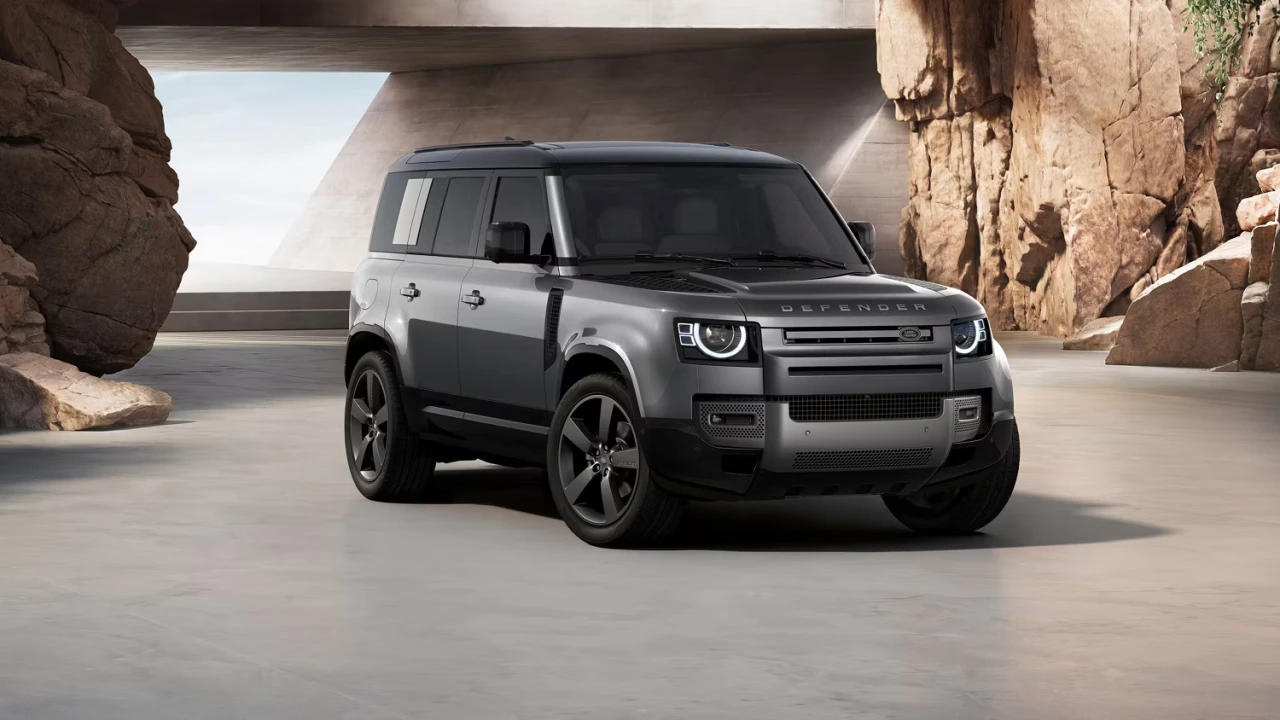
From the pit lane the 110 looks purposeful rather than pretty. The high beltline, upright greenhouse and protective body cladding telegraph robust engineering; you can see the packaging priorities. That packaging also tells you the trade-offs you'll encounter on a circuit: a relatively high centre of gravity, substantial unsprung mass from heavy-duty suspension components and tyres designed to be durable off-road rather than grippy for repeated flat-out laps.
Once I set off, the most obvious trait is momentum. The Defender wants to carry speed through corners; it resists quick directional changes that would feel natural in a lower, lighter sports car. That isn't a criticism — it's a physical reality. What matters is how the engineering mitigates that reality when you start to ask more from the chassis.
Chassis and suspension — how Land Rover tunes a rugged platform for pace
The Defender's chassis is a compromise between off-road resilience and on-road composure. The aluminium structure provides a stiff baseline which engineers have used to give the car predictable behaviour when you push it. Independent suspension front and rear gives the sort of wheel articulation and bump control you need on rough tracks, and when combined with available air springs the system can alter ride height and damping rate to suit conditions.
On the We Review Cars circuit I used the selectable drive modes to firm the damping and lower ride height where possible. The result: less pitch in braking and reduced body roll through rapid direction changes. Still, body roll is intrinsic to the Defender's silhouette and mass. The lateral load transfer is pronounced and you feel the weight cross the body as you change direction — the chassis responds predictably, but it doesn't hide that weight.
Key to usable high-speed handling here is the Defender's suspension control software. Damping and anti-roll behaviour are modulated to prevent oversteer from developing suddenly; instead you get a gradual, manageable understeer that you can correct with throttle or steering input. That progressive behaviour is a blessing when you're piloting a 2+ tonne vehicle at speed — it makes the car drivable on track without surprising you into a snap loss of grip.
Powertrain and transmission — delivery, drivability and interplay
The Defender platform supports a range of powertrains. What matters on a circuit is how the selected engine interacts with the gearbox and the chassis. The automatic gearbox in the Defender is calibrated for smooth, quick shifts under load and it copes well with aggressive downshifts as you scrub speed for the next corner. The torque delivery tends to be broad — useful for exiting corners where traction is at a premium — and the gearbox management prevents hunting or slow shifts that would unsettle the car.
One of the defensible strengths of the Defender when driven hard is the engine/gearbox cooperation at mid-range. You won't have the instantaneous, razor-sharp responses of a purpose-built sports car, but you will have predictable, linear power that makes it easy to modulate throttle and manage traction out of slow corners. That linearity suits the Defender's weight characteristics: it helps protect the tyres and brakes from abrupt load spikes.
Braking and tyres — the unsung limiters
Brakes are an area you need to respect in a Defender on track. The hardware has to arrest a heavy mass repeatedly, and heat soak is a realistic risk on long stints of lapping. On my session the brakes provided strong initial feel and progressive bite, but sustained high-speed laps revealed the expected fade characteristics of a heavy vehicle with road-biased compound pads. Cooling and pad selection matter more here than on a lighter car; you feel the fade as diminished pedal firmness rather than a sudden loss of retardation.
Tyres are another obvious limiting factor. Road-tyre compounds fitted to many Defender examples are optimised for longevity, wet-weather grip and off-road durability. That comes at the cost of ultimate lateral grip and heat resilience during repeated hard cornering. If you're serious about track laps, tyre choice and compound become a major part of the performance equation. Expect tyre temperatures to climb and for the contact patch to round off progressively rather than retain a razor edge like a soft sports tyre would.
Handling dynamics — what to expect around our circuit
On approach to high-speed corners the Defender requires early commitment: set it up with stable entry speed and allow the mass to settle. Turn-in is forgiving but not sharp; there's a noticeable moment as weight transfers, and the car will typically exhibit controlled understeer. Mid-corner balance is predictable, and you can manoeuvre the yaw with throttle. The rear end will not willingly step out in a dramatic way unless you force it; instead it will squat and provide a steady rear contact patch that gives you confidence to open the throttle.
In quick, linked corners the Defender's length and roll mean you can't carry the same lateral speed as a compact performance car. Where it surprises is on exits: the drivetrain's torque and the car's momentum allow you to put speed down early and accelerate hard out of low-speed turns. That characteristic makes it feel punchy and quick on a circuit with many slow-to-medium radius corners.
Stability and aerodynamics — high-speed behaviour
At sustained high speed the Defender is stable and confidence-inspiring. Aerodynamic lift isn't the primary focus of its body shape, but the vehicle's broad stance and mass deliver composure. Crosswinds will induce yaw that requires correction, particularly because of the tall sides and flat surfaces, but the stability control makes small, unobtrusive interventions to retain a straight line. The experience is more truck-like than sportscar-sleek — you feel energy in the body, not an intimate aerodynamic dance — but the end result is safe and controllable.
Electronics and driver aids — when the computers take over
Electronic systems are the Defender's friend on the circuit. Traction control and stability management are sophisticated enough to mask some of the platform's physical compromises without making the car feel artificial. Brake assistance and ABS are calibrated to deliver strong stopping power with a progressive pedal; similarly, torque management prevents sudden breakaway on corner exit.
You can dial the systems to be more permissive if you want to explore the vehicle's limits, but even in sportier settings you'll notice that interventions are prioritised to preserve mechanical components and driver confidence. For a heavy car designed to be used off-road as well as on, this prioritisation makes sense — the systems are conservative by sportscar standards but very effective for real-world fast driving.
Maintenance, tyres and running costs — the Budget Buyer view
This is where my buyer persona can't be ignored. If you're considering lapping a Defender regularly, you need to factor in accelerated wear on tyres, brakes and consumables. Heavy body and large rotating masses consume pads and discs faster than a lighter performance car; tyres designed for mixed use will heat-cycle and soften faster during track days. Even if you don't run the car on track often, the specialised nature of some service items and the higher insurance and fuel consumption of larger-engine variants push running costs up compared with smaller, more efficient cars.
That doesn't mean it's a bad ownership proposition — it depends on your priorities. If you value one vehicle that can tow, travel off-road, transport a family and still shock people with straight-line pace when asked, the Defender is one of the few all-rounders that can hold that brief. But as a pure track tool it's sub-optimal from a cost perspective: you can buy a used dedicated track car for the same money into which you can bolt far cheaper, track-focused upgrades.
Practical track upgrades and setup tips
- Brake cooling — consider ducts and higher temperature pads if you plan full-day lapping.
- Tyres — swap road-orientated tyres for a semi-slick or a high-performance summer tyre to improve lateral grip and heat resistance.
- Damping and height — use the adjustable air suspension to lower ride height and stiffen damping for track sessions; it reduces pitch and roll noticeably.
- Weight management — remove non-essential items from the interior to reduce mass and limit luggage on roof racks; roof-mounted items add drag and raise the centre of gravity.
- Software — if available, use the sportier drive maps to sharpen throttle and gearbox response; they make the car feel more immediate.
Summary — is the Defender 110 a Speed Demon?
In raw terms, the Defender 110 is not a sports-car Speed Demon. It is a heavy, high-riding multi-purpose vehicle whose engineering choices are dominated by robustness and versatility. That said, the platform's stiffness, sophisticated damping, gearbox calibration and torque delivery make it surprisingly capable on a racetrack when you set it up properly. It is not about nimble steering or razor-sharp cornering — it's about momentum, confidence and the ability to run fast for long without unpredictability.
From a Budget Buyer standpoint, the question is whether you want one car that does many things well or a specialised car that does one thing exceptionally well. If you want a single vehicle that will tow, undertake long road trips, go off-road and still deliver brisk track-day performance on occasion, the Defender 110 is a compelling proposition. If your aim is to shave tenths of seconds from lap times and drive the car on circuits frequently, it's a compromise that will cost you in tyres, brakes and time-intensive setup decisions.
Final thoughts — how I would use a Defender 110
I enjoyed my session at the We Review Cars circuit. The Defender surprised me by being more composed and more willing to be hustled than its silhouette suggests. It is not a purebred track car, but with sensible preparation it offers a unique blend of capability: you can take the family out on a weekend, go off the beaten path on Monday, and still put in a respectable lap-time on Tuesday — all in the same car.
As the Budget Buyer, I'd be mindful of the running costs associated with that versatility. If your garage must do everything, the Defender 110 stands out as a practical, fast and characterful choice. If your garage instead invites speed above all else, you will be better served by a lighter, more focused machine.