
Spyder Weekend: A Case for Two Seats, One Road, and the 718’s Soul
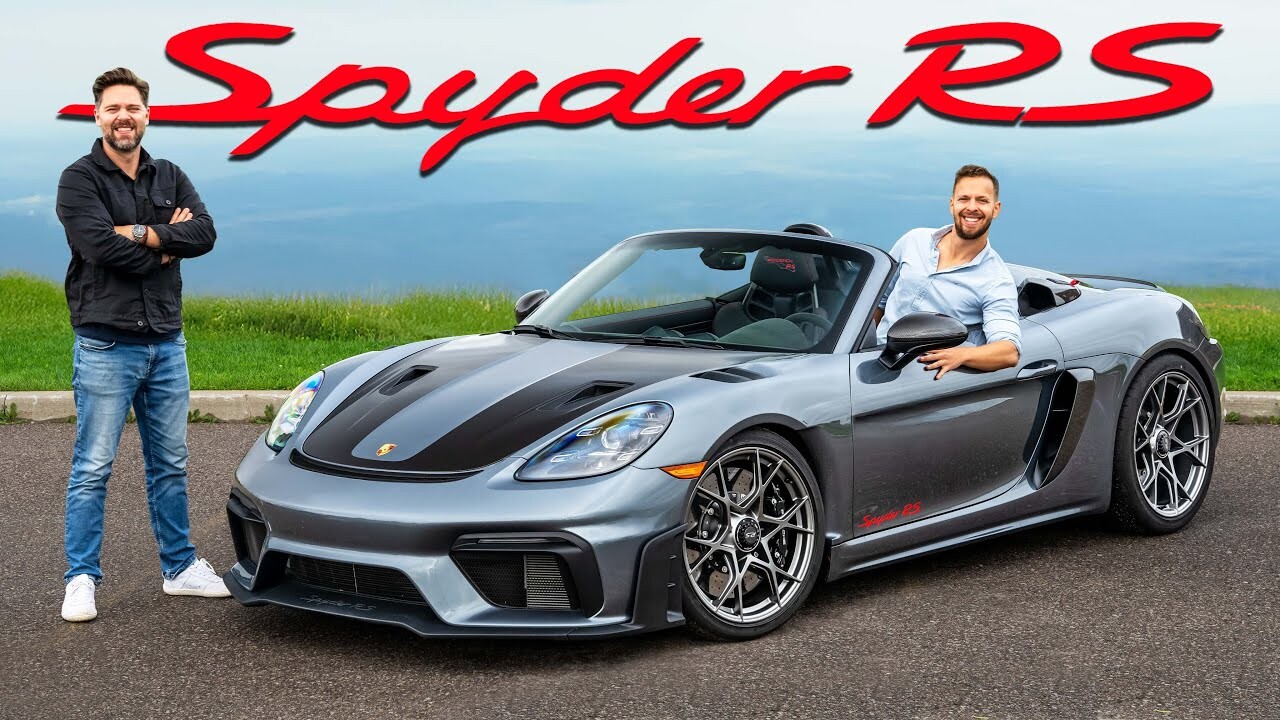

First impressions matter, and the Spyder’s silhouette reads like a shorthand for Porsche’s greatest hits: taut fenders, a low rake, and a long, compact midship section that promises balance rather than brute force. It looks smaller and more intimate in the flesh than in photos, which is a compliment — this is a car that invites you to lean into it. The cockpit is similarly focused. Porsche’s interior design language has matured into something that feels both expensive and functional, and in the Spyder the emphasis is resolutely on the driver. Switchgear is tidy, surfaces are well put together, and there are tactile moments—levers, dials, and a steering wheel that communicates—that remind you automotive affection is still craftsmanship, not just software polish.
On weekend runs, purity matters more than outright specification charts. The Spyder excels at this. It is a car that wants to be pointed, and then pointed some more. Its chassis feels honed so that the car’s reactions are nearly surgical: lift, turn-in, and the car obliges with a predictable change of attitude. That predictability is the foundation of driver confidence on the kind of rural twisties I seek out when the city gives me space to escape. The reward comes not from violence but from timing—waiting until the last acceptable moment, then letting the Spyder deliver the next phase with the kind of mechanical clarity that puts a grin on the face of anyone who still enjoys managing weight and slip angles without electronic babysitting becoming the star of the show.
Noise, often the unsung dramaturge of the weekend drive, plays its role well here. The Spyder speaks in a language of rasp and wind that is, in equal measure, provocative and candid. With the top down the soundstage becomes immersive: gearbox clunks, intake breaths, and a wind noise that frames the whole experience. It is, crucially, the sort of noise that enhances a drive rather than intrudes. In the slow stretches it is the car’s character that occupies the cabin; at pace it narrows to a kind of mechanical music that rewards revs with clarity rather than crowding the experience with artificial effects.
A Spyder is not a suitcase hauler, and no amount of marketing imagery should seduce you into thinking otherwise. Practicality, in the everyday sense, is not on the spec sheet because it need not be. What the Spyder offers for weekend use is a trade: give up bulky storage and multi-role utility in exchange for a driving connection that most multipurpose cars can only fantasize about. For a two-day escape where clothing can be pared down and a top-box or soft luggage can be used judiciously, the Spyder performs admirably. Little attention to detail here makes a big difference; luggage hooks, under-trunk pockets, and well-positioned grab handles are modest concessions to utility that make planning a spontaneous overnight trip less of a logistical headache. But do not expect to cram camping gear for four or a folding canoe. This is a car made for destinations that start and end on paved surfaces, or for adventures where the journey’s character is part of the luggage.
Comfort is a relative term. The Spyder keeps you connected to the road at the cost of extreme softness. On brilliantly paved B-roads it absorbs irregularities with the steely composure of a sports car that has been taught courtesy and restraint. On rougher surfaces, the firm suspension will remind you that you chose this engagement. Seats are supportive and keep you centered during enthusiastic driving, and ergonomics are driver-first: everything seems to be in reach without fuss. For longer transits on motorways, the Spyder is accomplished enough to swallow distances when the roads are cooperative, but it will remind you periodically that endurance in this car is a pleasure purchased at the price of constant attention and a proclivity for higher revs.
One of the most persuasive arguments for the Spyder as a weekend weapon is its temperament in the kinds of mixed-use scenarios weekenders actually encounter. Think: a dawn blast over a mountain pass, a mid-morning coffee stop in a village square, a late-afternoon run where you test lines on an unfamiliar stretch of road before returning to base. The Spyder performs each task with a tonal flexibility I admire. It can be serene and observant at a relaxed pace, collecting scenery and light like a convertible should. When stirred it becomes precise and purposeful, never muddled. This capacity to serve multiple moods—contemplative cruise, sprint, and back again within the same afternoon—is what elevates it from a mere toy to a tool for the weekend strategist.
That said, the Spyder is not without its modern irritations. Porsche, like all luxury manufacturers, occasionally uses options as both upgrades and necessary evils. What looks like a simple trim selection can balloon into a shopping list before you realize it, and that tendency runs counter to the purity the car otherwise promises. There is a tension here between the idea of a pared-back roadster and the late-era expectation of creature comforts on demand. I am old-fashioned enough to prefer mechanical virtues over menu-rich infotainment, but pragmatism suggests you will want certain modern comforts if you plan to spend substantial time in the car. Choose your compromises knowingly; the wrong set of choices can leave you with a car that has the demeanor of a thoroughbred and the resale price of a bespoke machine, without delivering the unmediated contact you bought into in the first place.
One of my favorite weekend tests is to take a car to places where its character must carry the agenda: a seaside road with unpredictable winds, a mountain valley with changing tarmac, and a small town with narrow lanes and tight parking. Here the Spyder usually shines. Its compact footprint and direct steering mean threading urban nooks is less of a chore than one might expect from such a dedicated machine. Highway cruising is comfortable when you accept that the Spyder will not cocoon you; rather, it will relay the road to you with clarity. In the mountains, where weight distribution and chassis feedback count most, the car’s mid-engined focus and mechanical honesty allow you to place it with a kind of confidence that makes even the riskier line feel deliberate rather than reckless.
Despite my enthusiast’s indulgence, the Spyder’s one-seat-per-person reality does create a peculiar weekend dynamic. Shared escapes require a kind of intimacy and pre-planning that family SUVs never demand. If your ideal weekend includes friends and their gear, the Spyder will force choices. For two people intent on good roads, fine coffee, and occasional gastronomic indulgence, it is nearly perfect. For larger social logistics, it is an exquisite inconvenience. That inconvenience, to be frank, is part of the charm. The car’s limitations shape the weekend’s decisions; you choose the drive and the companion by necessity, and in doing so you curate your experience. There is sophistication in that kind of constraint.
As a classic-car lover I can’t help but view each modern roadster against a lineage. The Spyder name carries a cultural weight, and the latest iteration nods to those ancestors with a clean, purposeful aesthetic. But past charm and present engineering are not always interchangeable. Where classic Spyders traded fragility for poetry, the modern Spyder offers more reliability and less romanticism, and I celebrate that trade because it means you can enjoy the car without the attendant anxiety of mechanical unpredictability. Still, some of the tactile drama of older machines is filtered through contemporary engineering refinements. For weekend purists who prize authenticity over convenience, that smoothing over may feel like a mild disappointment; but for those who want the sensation of a classic roadster without the burdensome Sunday wrenching, it is a welcome evolution.
Collectability is a long-term game, and while I am wary of predicting market movements, certain considerations matter. A car that is honest, evocative, and limited in what it offers—two seats, open-air focus, and a driver-centric layout—tends to hold an emotional value that can be durable. The Spyder sits at an interesting intersection between modern performance and classic sensibility, and that duality is attractive to collectors who appreciate both. But collectors will also pay attention to provenance, options, and how a car was driven, so if you acquire one for the weekend you should expect to treat it as you would any valuable toy: with careful use and mindful maintenance.
One criticism I will level without hesitation is that modern sports cars sometimes insist on being all things at once: a track weapon, a commuter, and a grand tourer. The Spyder resists that homogenization more than most, which is commendable. However, its purity means it will not be the best tool for every job. If you need one car to ferry family, tow, or haul a variety of gear, look elsewhere. If you want a weekend instrument that refines the art of enjoying a road through speed, rhythm, and engagement, the Spyder is a fine choice. It teaches you that a great weekend is not measured in destinations ticked off but in moments that return you to the city a little more alert and a little less hurried.
In the end, the 2025 718 Spyder is a reminder of why I still treasure cars. It is not a perfect machine in the utilitarian sense, but it achieves something rarer: it makes the act of driving an event again. For weekend warriors who plan outings around roads rather than activities, who prefer a precise chassis to a padded ride, and who value the theater of open-top driving, the Spyder rewards with a clarity of purpose that modern mobility often lacks. It is a car that prods you to go out and find a road worth remembering, and for that alone it is worth owning — provided you accept, with good humor, the little inconveniences that come with choosing passion over pragmatism.
So I will keep it simple: take the Spyder out on a clear morning, find a route with curves that test your resolve, and let it show you what a weekend can be when a car refuses to be ordinary. Bring careful luggage, an understanding companion, and an appetite for high-rev conversation. Leave the camping stove and the paperback library at home. The Spyder is not a mobile living room; it is a small, elegant instrument that rewards precision, patience, and presence. And in an era when so many things are engineered to distract us from the act of driving, that narrow focus feels refreshingly subversive.
As a lover of cars that wear their purpose on their sleeve, I found the 2025 Porsche 718 Spyder to be refreshingly unapologetic. It is a two-seat roadster that insists you plan your life around a good road rather than the other way round. Behind the wheel it delivers the sort of mechanical clarity and steering precision that put a smile on my face — the kind of honesty many modern sports cars have traded for gadgets. Yes, the ride is firm, luggage space is modest, and Porsche’s options list can quietly inflate the price and dilute the character if you’re not careful. But those are concessions I happily accept for a machine that prioritises engagement over convenience. For weekend escapes, canyon runs and those moments when you want to remember what driving can feel like, the 718 Spyder is a superbly judged instrument. I wouldn’t recommend it as a one-car family solution, but as a focused driver’s car it’s earned my enduring respect — and, frankly, my envy.
Specifications
| Specification | Value |
|---|---|
| Manufacturer | Porsche |
| Model | 718 Spyder |
| Year | 2025 |
| Market | UK |
| Body type | Two-seat Open-top Roadster |
| Seating capacity | 2 |
| Engine layout | Mid-engined |
| Drive | Rear-wheel Drive |
| Fuel type | Petrol |
| Notable character | Driver-focused, Limited Luggage Space, Emphasis On Mechanical Engagement |