
Alfa Romeo 4C: Lightweight Legacy — A Speed Demon's Retrospective from the Secret Track

Introduction: A Small Italian Statement
Origins and Context
The Alfa Romeo 4C must be read as a product of a particular moment. Alfa needed halo credibility: a lightweight, mid-engined sports car to reconnect with the marque's sporting image and to show engineering intent beyond sedans and crossovers. The 4C concept first raised eyebrows at shows and then moved into production. Rather than chasing headline-grabbing horsepower figures, Alfa doubled down on another route to performance: weight reduction and balance.
That emphasis on lightness is where the 4C stakes its claim as a modern classic. For a manufacturer known for stirring engines and sensual design, the 4C is a concentrated statement — minimal insulation, minimal electronics, and maximum chassis honesty. It harks back to an era when a sports car's talent was measured as much by how it communicated as by how fast it went in a straight line.
Design and Engineering: Compact, Carbon, and Committed
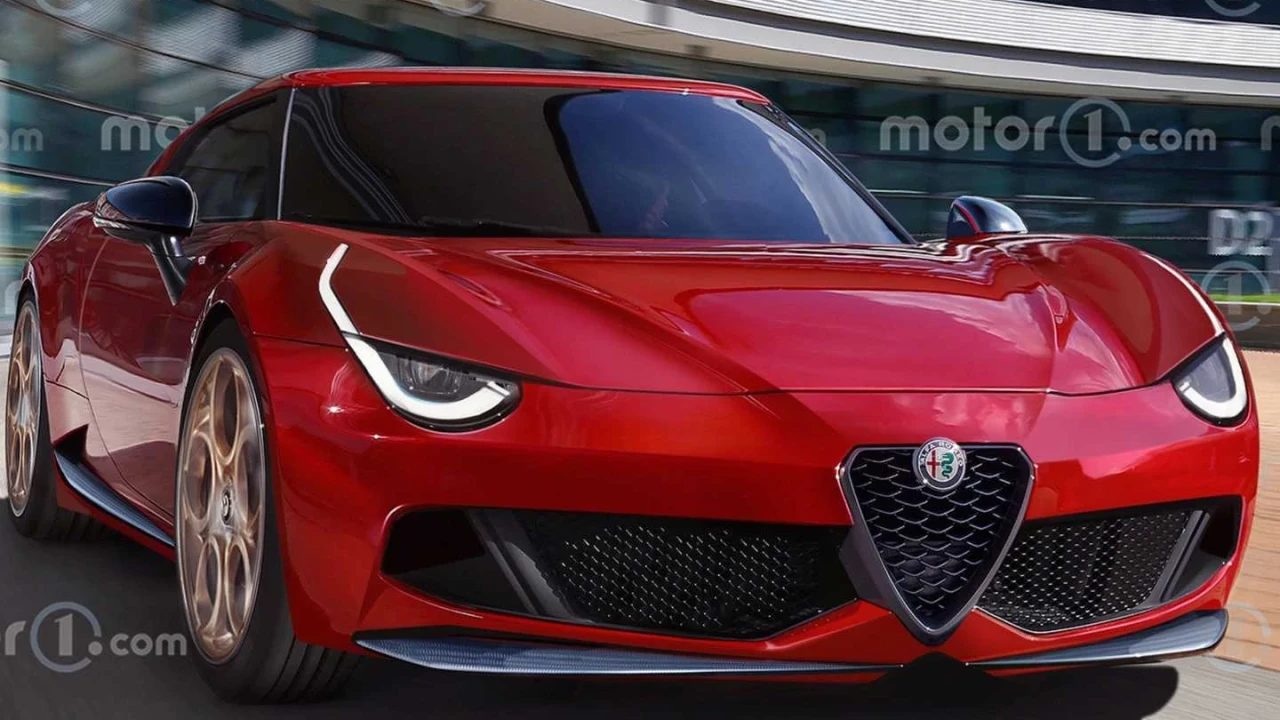
Stylistically the 4C borrows from Alfa's long lineage: slim headlamps, a triangular shield grille set deep into the nose, and a purposeful rear that announces the mid-engine layout. But beyond the design flourishes, the engineering choices define the car. The 4C uses a carbon-fibre monocoque as its backbone — a serious piece of technology to put under a car this size. Around that tub was fitted lightweight composite body panels and aluminium subframes, all in service of making the whole package feel nimble rather than merely quick.
Power comes from a small-displacement turbocharged four mounted mid-ship, and the transmission is a rapid-shifting dual-clutch unit. No illusions: this isn't about merciless straight-line numbers; it's about how that small, eager engine and a light chassis deliver an immediacy that heavier, more poweful rivals often struggle to match.
The 4C on Track: My Lap-by-Lap Impressions
I took the 4C out onto our secret circuit on a morning that began with drizzle and ended in bright winter sun. The changing conditions are an excellent way to see where a car's character really lies. The 4C reacts to everything: track surface, tyre temperature, throttle blips — it tells you plainly and without artifice.
Turn-in and steering. The steering is the headline act here. It is razor-sharp, direct and heavy enough to inspire confidence without being tiring. On corner entry the car snaps to the chosen line with absolute clarity. There's a tactile purity to the steering that many modern electric or electrically-assisted systems only aspire to reproduce. You feel the front tyres' limits earlier and more honestly than in most contemporary sports cars, which in practice is a gift: it lets you place the car precisely and correct early, rather than surprise you at the apex.
Balance and chassis feedback. The mid-engine layout and light mass combine to give the 4C a balance that is genuinely rare at this price point (and even relative to cars that cost far more). It is beautifully neutral through mid-corner, with a charm that encourages a brisk pace. If you ever wanted a car that teaches you better driving lines rather than masking mistakes with heaps of electronic intervention, this is it. On wet sections of the track the 4C demanded respect: it would step out predictably but decisively, and the real skill was in throttle modulation and small steering corrections — both areas where this car rewards a precise driver.
Engine and gearbox. The turbocharged four is eager and characterful rather than earth-shattering. It revs willingly and delivers a linear shove through the mid-range where you spend most of your time on a short, technical track. The dual-clutch gearbox is brisk and well-suited to the car's temperament; it can be abrupt when driven flat-out, but that fits the 4C's persona rather than detracts from it. There is some turbo lag at the very low end, but in practice the chassis' lightness largely compensates — you can use momentum and the car's quick turn-in to keep the pace up even in the tighter sequences.
Brakes and tyres. The brakes are strong and progressive. They offer a reassuring bite and good modulation, allowing you to attack the corner markers without worrying about fading in a single, extended session. Tyres are the limiting factor: fit the right sticky rubber and the 4C is a scythe; on all-seasons it becomes more of a nimble toy. Our test car had a set-up that favoured track engagement over ride comfort, and when the surface got greasy I was grateful for that extra mechanical grip.
The thing about being lightweight. Throughout the lap the recurring theme is that everything happens with less effort. Braking distances feel shorter, turn-in is sharper, and the car's responses demand smaller inputs. Compared with heavier rivals, you work less hard to get the same effective pace. On a twisty back-road this translates into low-stress, high-satisfaction driving. On a track, that lightness reduces the physical toll of repeated laps, allowing you to stay consistent for longer.
Road Manners and Everyday Use
Ask any 4C owner and they'll tell you it's not a practical daily driver in the modern sense — and they'd be right. The cabin is snug, the ride firm, and there is minimal sound deadening. Visibility is compromised by the wide rear haunches and small mirrors, while luggage space is tiny. All of that is a conscious trade-off. If you buy a 4C for commuting comfort or family hauling, you will be disappointed.
But if your metric is joy per mile then the 4C remains a compelling argument. Short blasts on scenic A-roads are where it shines: the direct steering, the quick-change gearshift, and the way the chassis makes simple moves feel decisive make even mundane drives memorable. Climate control, infotainment and creature comforts are secondary in this car; it is a driver's tool first and an all-rounder second.
Ownership: Running Costs, Practicalities and Value
Here's where my Budget Buyer instincts kick in even in a Speed Demon review. The 4C is a fantastic driving machine, but it is not an inexpensive one to own if you insist on low running costs and convenience. Carbon fibre repairs, specialist service networks, and the premium parts that come with a small-production Italian sports car mean that maintenance bills can be higher than those for mass-market alternatives. Insurance groups for bright, niche sports cars can also be punitive for younger or inexperienced drivers.
On the flip side, a well-kept 4C can maintain desirability. Its uniqueness, limited production, and clear role as a purist driver's car mean that values have been fairly resilient compared with some other niche models. If you approach buying one with a realistic maintenance budget and the willingness to accept its compromises, the 4C offers a type of ownership satisfaction that a more practical car simply can't provide.
Reliability and Practical Concerns
Modern Alfas have a mixed reputation for reliability, and the 4C is no exception. Its simplicity in terms of electronics belies the fact that it is a complex car to manufacture and maintain: carbon tubs, composite body panels, and a small-production supply chain can complicate ownership. Prospective buyers should seek cars with thorough service histories and expect to use specialists for some repairs. The mechanicals themselves — engine and gearbox — are competent, but any Italian car with exotic construction requires a careful eye on corrosion, seals, and electrical gremlins that can turn up in cars that have seen hard use or been poorly stored.
How the 4C Fits into Alfa Romeo's History
From a historical view, the 4C is a modern incarnation of Alfa's sporting identity. It doesn't try to be everything; instead it evokes the brand's mid-20th-century ethos of making lightweight, driver-focused machines. There are echoes of earlier Alfa two-seaters in the 4C's proportions and driving approach, but with contemporary materials and a turbocharged soul. In that way it stands as a bridge between past and present: a small, sharp reminder that Alfa's DNA still includes pure driving pleasure, even now.
Final Thoughts: For Whom the 4C Is Right
If I wear my Budget Buyer hat, the conclusion is a little nuanced. The 4C is not an obvious buy if your priorities are low running costs, everyday comfort, or outright practicality. But if your priority is visceral engagement, the purest sense of connected driving, and having a car that repays investment in driving skill, then the 4C is one of the best-value doors into that world. It offers a more immediate, unfiltered experience than many cars with higher peak power. On track it is addictive; on a back road it is intoxicating.
In the end the 4C is a small, uncompromising reminder that speed is not just about numbers — it’s about dialogue between driver and machine. And that conversation is worth listening to.
Specifications
| Specification | Value |
|---|---|
| Engine | 1.75-litre Turbocharged Inline-4 |
| Layout | Rear Mid-engine, Rear-wheel Drive |
| Transmission | 6-speed Dual-clutch Automatic |
| Chassis | Carbon-fibre Monocoque |
| Body | 2-seat Coupé (also Offered As Spider Convertible) |
| Seating | 2 |
| Doors | 2 |
| Fuel type | Gasoline |
| Production years | 2013-2020 |
| Assembly | Modena, Italy |