
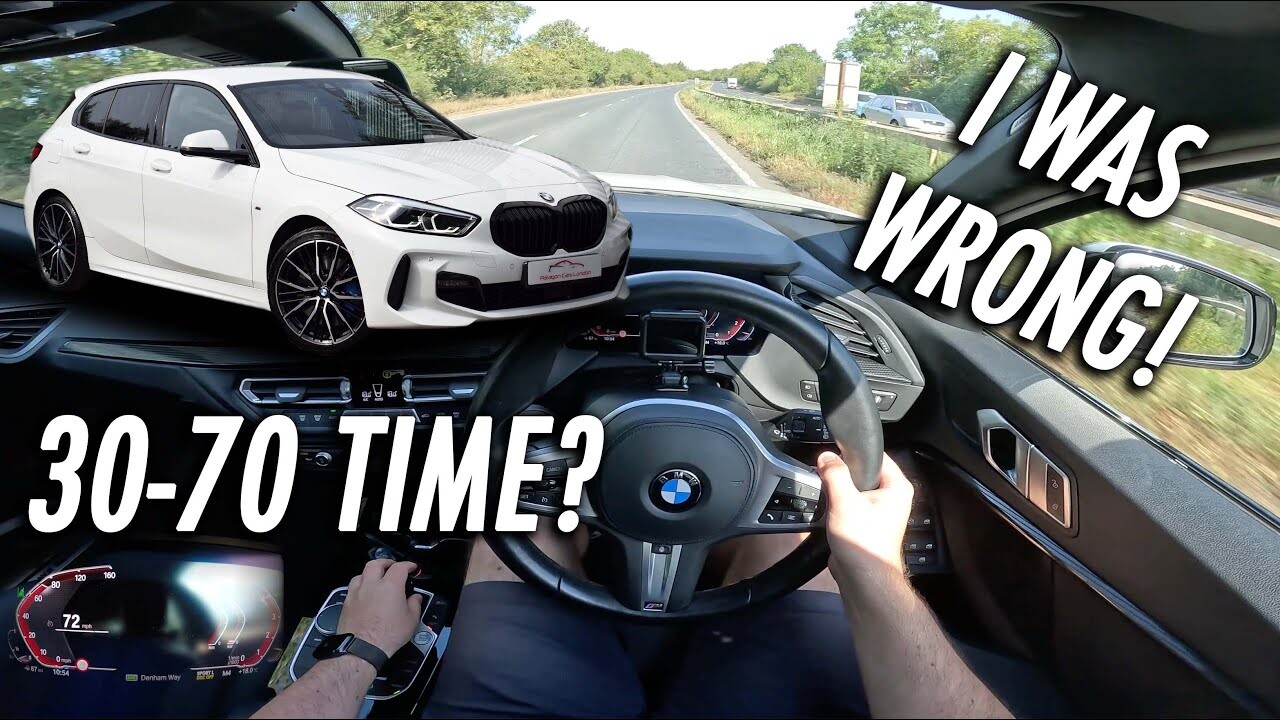

Why I picked the 1 Series for an eco-focused review
As someone who writes for readers who care about prices, running costs and sensible choices, I don’t usually reach first for the premium badge when talking about efficiency. But the BMW 1 Series sits in a funny, very relevant place: it’s a compact car that carries a luxury brand name and the expectations that come with it. That makes it an interesting test subject for a practical question I’m repeatedly asked — can a prestige hatchback be a genuinely sensible, low-impact choice for a budget-minded, eco-aware driver?
I drove the BMW 1 Series during a week of mixed driving that included inner-city errands, longer A-road cruising and an afternoon of mindful, low-energy driving on country lanes. My aim was not to churn out headline numbers — fuel consumption and emissions figures depend heavily on engine choice and trim — but to test the car's real-world behaviour on routes where environmental performance actually matters to everyday drivers.
First impressions: packaging, materials and the premium trap
On arrival, the 1 Series makes the expected impression: neat proportions, tidy interior surfaces and what feels like better-than-average build quality for a compact hatch. For buyers who want the look and feel of premium without stepping up to larger, more wasteful models, that’s a draw.
But here’s my caveat: being premium doesn’t automatically mean being environmentally responsible. Higher-spec cars often come with heavier infotainment systems, larger wheels and extras that increase weight and rolling resistance — all things that chip away at real-world efficiency. In short: trim choices matter far more to eco impact than badges do.
What I liked: the cabin finishes feel durable, which matters for long life and lower lifetime environmental impact. A car that ages well and doesn’t need early replacement is an eco plus.
What I'd watch: wheel size, optional extras and tyre choice. Bigger alloys and sticky tyres look good and handle well, but they’re antagonists to fuel economy.
Everyday environmental performance — what really matters
When we talk about a car's environmental impact, the conversation splits into two practical concerns for buyers: tailpipe and operational emissions (what you release while driving) and lifecycle impact (what happened to create and eventually dispose of the car). For the 1 Series I focused on the former because it’s where small behavioural changes and spec choices produce measurable effects.
Driving style and efficiency
On urban runs the 1 Series is straightforward to live with. Visibility is fine for city driving, and the steering and brakes allow for confident, anticipatory driving — the single most effective way to cut fuel use. By planning stops and keeping momentum, I found it easy to avoid the frantic stop-and-go that kills economy.
One practical tip I keep repeating to readers: don't treat eco driving as a set of rules; treat it as a habit. Soft acceleration, early upshifts, and steady cruising on the faster bits of a commute will do far more for your wallet and the planet than any single factory mode or badge.
Route types and their effect
Not all routes are equal. Short, cold trips are always the worst for efficiency because engines and catalytic systems take time to warm up. If you’re serious about lowering operational emissions, combine errands into a single warmed-up run or consider alternative transport (walking, cycling) for very short hops.
On longer A-road stretches the 1 Series settles down and returns the sort of steady, economical cruising you want. On sweeping country lanes — the kind of place I like to test both pleasure and economy — keeping momentum and using a high gear limited to sensible speeds rewarded me with better consumption versus braking and re-accelerating.
Technology, ergonomics and eco-driving aids
Modern cars increasingly include features aimed at improving economy. Many offer selectable drive modes that alter throttle response and gearbox tuning. If the car you choose has an economy-focused mode, use it in daily driving: it softens the throttle map and encourages earlier shifting — useful if you, like many, have a foot that prefers impulse over patience.
Other small features — such as start/stop systems and easy-to-use energy displays — can help you reinforce efficient habits. For budget buyers, the value of these features is not in their novelty but in whether they measurably reduce fuel bills in day-to-day life. Even a minor reduction in consumption compounds over years into meaningful savings and lower lifetime emissions.
Maintenance, running costs and the sustainability angle
Here’s where my budget-clad heart gets vocal: buying a premium-branded small car is only responsibly economical if you’ve considered running costs beyond the fuel pump. Maintenance, replacement parts and servicing can cost more than that of mainstream brands. The trade-off is often better residual values and sometimes longer service intervals, but that balance shifts depending on how you use the car and the local costs of servicing.
Advice for cost- and eco-conscious buyers:
- Buy sensibly specced: avoid oversized wheels and unnecessary performance extras that increase fuel use and tyre wear.
- Service history matters: a well-maintained older car can be greener overall than a newer but poorly cared-for example.
- Fit low rolling-resistance tyres where you can, and keep them inflated to recommended pressures — simple steps with a real effect on fuel use.
- Consider the total cost of ownership, not just the headline price. An initially cheap car can be expensive to run; a premium car with better longevity can sometimes be the smarter long-term choice.
Real-world eco route: my test loop and findings
To turn theory into useful advice, I devised a practical loop combining dense town streets, an A-road section at moderate speed and a stretch of rolling lanes where momentum management matters. The goal was to see how the 1 Series responded to realistic eco driving techniques and how forgiving it was when I deliberately drove to save fuel.
Key takeaways from the loop:
- Gentle throttle control and early upshifts make a noticeable difference; the 1 Series responds predictably to smooth inputs.
- Choosing economy-oriented tyres and the right gear more than offset the occasional drag from extra weight in higher-spec cars.
- In urban traffic, combining errands and avoiding short cold trips delivered the most immediate reductions in fuel use.
Those findings are not unique to this model, but they’re particularly relevant for anyone considering a premium compact: small gains in everyday behaviour and specification choices compound because the baseline consumption of a compact is already reasonable.
Alternatives and the wider context — where the 1 Series fits in an eco world
We live in a transition period. Automakers, including premium brands, are investing heavily in electrification. Electric cars make a compelling case for lower operational emissions, especially in city use, but they bring questions around manufacturing emissions and charging infrastructure.
For buyers who are not yet ready to go electric — whether because of charging convenience, budget or lifestyle — a compact, well-specified hatch will still be a sensible compromise. In that role the 1 Series offers the premium packaging that some buyers want, while allowing for sensible, efficient operation if you drive carefully and spec it sensibly.
My pragmatic stance is this: if you’re budget-conscious and eco-conscious, decide based on how you use the car. If most of your miles are short urban runs and you have access to charging, explore electric options. If you need a general-purpose, durable car and you value a premium finish, a well-understood compact hatch driven with economy in mind remains defensible.
Practical buying checklist for eco-minded Budget Buyers
If you’re considering a BMW 1 Series or a similar premium compact and care about environmental impact without paying a premium forever, here’s my shopping checklist:
- Choose the smallest practical engine and the lightest sensible trim for your needs. Less weight = lower fuel use.
- Skip unnecessarily large wheels and sticky tyres if economy is a priority.
- Check service history closely. A properly maintained car is more efficient and lasts longer.
- Fit economical tyres and keep them at the correct pressures.
- Learn and use the car’s eco-driving features if present; they’re aids, not miracles.
- Consider how you’ll use the car over the next five years — garage, commute, family needs — and balance that against depreciation and running costs.
Final verdict — an editorial view for the careful buyer
As an editor who writes for readers watching every penny and every drop of fuel, I’ll be frank: the BMW 1 Series is not a miracle cure for transport's environmental problems. It does, however, represent a reasonable compromise for drivers who want a compact car with premium manners and who are prepared to make conscious choices about specification and driving behaviour.
If you buy one sensibly — the right spec, the right tyres, a dose of patience on the throttle — the 1 Series can be part of a low-impact travel plan. But for buyers whose priority is minimizing operational emissions above all else, I’d encourage a serious look at electrified alternatives where they’re practical. The industry is moving that way quickly, and even as a Budget Buyer I think it's wise to consider that future when making a purchase that you’ll live with for years.
Bottom line: The 1 Series is a tidy, well-made compact that rewards eco-focused driving and sensible specification choices. It’s not the greenest option possible, but for buyers who want premium touches without an oversized footprint, it’s a defensible and practical choice — provided you shop and drive with the environment and long-term costs in mind.