
Discovery in the Concrete Jungle: A Historical Take on the Land Rover Discovery (2023) City Commute Challenge
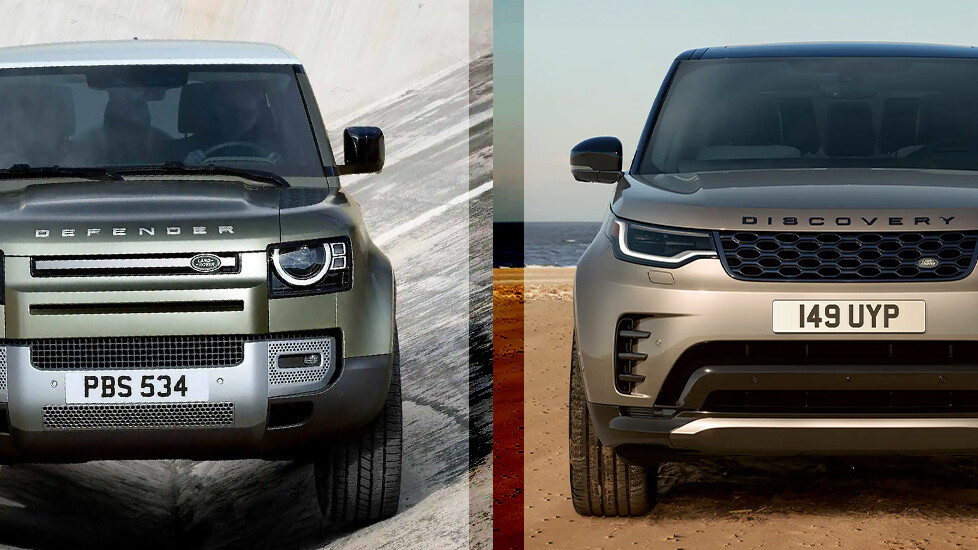

To understand the 2023 Discovery's behaviour in the city you must first accept its lineage. The Discovery was created to be more accommodating than the brand's pure off-roaders, and over time its appointments moved steadily upmarket. What was once merely utilitarian has been layered with genuine craftsmanship: well-executed leather, soft-touch surfaces where your hands naturally fall, and trim choices that speak to an attention to detail you expect in luxury vehicles. In an urban commute these are not frivolities; they're the difference between arriving frazzled or arriving composed. I spent many hours with the Discovery's cabin as my city sanctuary and was repeatedly impressed by how the interior calmed the travel experience: cushioning that isolates road imperfections from the senses, an ergonomically arranged driver environment, and materials that remain quietly confident rather than showy.
One of the most immediate urban advantages the Discovery brings to the table is the driving position. The elevated perch gives a commanding view of traffic and intersection geometry that is a real practical benefit when negotiating congested lanes and complex junctions. I found myself consistently able to anticipate flow and hazards a beat earlier than drivers in smaller cars. This elevated perspective also helps when maneuvering around delivery vans or double-parked vehicles — situations all too common in city centers. That said, that commanding view comes paired with the Discovery's physical presence: it's a large vehicle. In confined parking spaces and tight inner-city lanes the Discovery's bulk becomes an ever-present consideration, one mitigated by driver aids but never wholly erased.
Modern Land Rovers, including the 2023 Discovery, come equipped with a suite of driver assistance and parking technologies. During my urban routine I appreciated features such as parking sensors, a comprehensive camera system and active assistance that takes some of the cognitive load away when threading into narrow spaces. These technologies are not an excuse for poor spatial awareness, but they are excellent partners for a driver who values assurance over bravado. On streets where curbside parking is at a premium, the 360-degree visualisation and audible cues make a real difference: you can pick the margin you’re comfortable with instead of guessing. Those moments when technology prevents a scuff or a curb kiss are small victories, but they add up across weeks of commuting.
Space and flexibility are at the heart of the Discovery's urban appeal. The third-row seating option and generous cargo volume mean that a typical city day — school drop-offs, a bulk grocery run, transporting a friend's luggage — becomes effortless. I routinely removed the mental calculations that shape urban life in smaller cars: what to leave at home, whether the kids' activities will force a second vehicle, or if the weekend shopping trip will become a logistical headache. The Discovery's space turns those questions into conveniences; you simply load and go. At the same time, the intrusion of large dimensions in a city's fabric is real. Narrow, historic streets and tight parking garages remind you that size has trade-offs; in some European centres that translates to longer parking searches or the need to park a little further from your destination.
City commutes are not only about physical space but also about sensory experience. Here the Discovery's acoustic insulation shows its class. Engine and road noise are kept at bay more effectively than many rivals, creating a cocoon that masks the clamor of urban life and preserves conversation and music clarity. That alone elevates mundane journeys into something more restful. Climate control systems that maintain a consistent temperature and air quality further enhance the sense of arrival; when you step out into a cold morning or a sweltering afternoon, the cabin has already been engineered to reduce shock. Small features — soft-close doors, well-damped controls, an intuitively placed infotainment screen — all contribute to an overall sense of purpose-built refinement.
Efficiency is always part of the city calculus. I am careful not to quote figures because real-world urban consumption fluctuates with traffic density, driver habits and local conditions. What I can say from experience is that the Discovery behaves like a car that reconciles its capability with modern expectations. Start-stop traffic, low-speed manoeuvres and frequent idling are areas where the trade-offs of a larger SUV become evident: fuel economy in the city will never match a compact hybrid hatchback. However, the Discovery's drivability in slow traffic is mature; its throttle mapping and transmission calibration are smooth and composed, which reduces the need for jerky inputs that often worsen fuel usage. For commuters who value presence, space and comfort, the city fuel toll is a conscious compromise — one that many will accept for the lifestyle benefits it brings.
Handling and agility in urban contexts are often judged harshly for large SUVs, and it's fair to scrutinise the Discovery. In everyday driving the steering provides a reassuring balance between on-centre composure and weightier feedback at speed. It is not a nimble hot hatch; it does not pretend to be. But in the city its manners are predictable and confidence-inducing. Turning into tighter lanes or executing multi-point turns requires patience rather than contortion. If you spend much of your time in dense urban grids full of traffic-calmed streets, the Discovery encourages a more measured approach to driving — an arguably positive behavioural nudge in built-up environments.
One of the subtler attributes I assess in a city-challenged vehicle is how it integrates into the lifestyle of its owner. For the Discovery that relationship is underpinned by its social presence. Pulling up to a theatre, a boutique hotel or an office, the Discovery projects restrained authority rather than ostentation. In neighborhoods where taste and discretion matter, that is valuable. Inside, the materials and craftsmanship reinforce that impression. The sensation of well-stitched leather, the tactility of controls and the visual calm of a thoughtfully designed dash are elements that transform errands into something slightly more ceremonial. For individuals who consider their vehicle an extension of their personal brand, the Discovery plays its part with subtlety.
Of course, a historical retrospective of the Discovery has to acknowledge the model's roots in utility and capability. Even in the city that capability has unexpected urban benefits. Terrain-response systems, while ostensibly designed for off-road use, translate into better traction in poor weather or on slippery spots when the streets are spattered with oil or rain. Adaptive suspension systems, when present, soften urban potholes and can lower ride height to ease ingress and egress — a welcome feature when you are juggling a coffee, a briefcase and an infant seat. These are examples where the Discovery's heritage actually enriches daily urban life rather than being merely ornamental bravado.
Reliability and ownership considerations are also part of the weekday equation. Modern Land Rovers come with complex electronics and advanced mechanical systems; these augment the driving experience but also change ownership dynamics. For my city challenge I factored in the convenience of dealer networks and service intervals as part of the ownership picture. The truth for city dwellers is that a vehicle with sophisticated systems rewards disciplined maintenance: keep up with recommended services and software updates and the Discovery will continue to behave with the composure expected of a premium vehicle. Neglect that discipline and the urban commuter may face inconvenient downtime, which is the last thing you want in a car intended to be a dependable daily instrument.
Parking is where theory meets reality. In wide, modern parking structures the Discovery fits seamlessly; in older, tighter European garages it requires strategy. I learned to plan my destinations slightly differently, choosing parking with room to open doors or accepting a short walk to avoid the stress of squeezing into a compact bay. The Discovery's parking aids softened those trade-offs considerably; semi-autonomous parking routines and clear visualisation made tight slots manageable. But even with these tools, the vehicle's footprint is a constant consideration, so a pragmatic approach to city life is necessary: you gain the benefit of comfort and versatility at the cost of cramped parking convenience.
After weeks of commuting, my verdict is shaped as much by history as by the present model's behaviour. The 2023 Discovery, within the context of its lineage, represents a convincing urban proposition for those who prize premium comfort, generous space and a commanding presence. It is not a vehicle for every city driver — it will never match the maneuverability or ultra-low running costs of a subcompact alternative — but it is a superb choice for people who need its capabilities without wanting to sacrifice refinement. Its cabin craftsmanship, acoustic isolation and suite of driver aids turn daily commutes into a more civilized experience, while its heritage systems quietly enhance urban practicality in adverse conditions.
In the end, the City Commute Challenge for the Land Rover Discovery (2023) is a study in priorities. If my commute were a simple exercise in efficiency, I would recommend something smaller and less indulgent. But urban life is rarely just about the fastest, cheapest transit between two points. For those who place comfort, presence and versatility at the top of the list, the Discovery rewards that preference every morning and evening. It remains true to its historic purpose: a vehicle that does much and does it with a distinct sense of purpose and polish. For a certain kind of city driver — the discerning parent, the executive who needs space and composure, the person who values material quality and tasteful presence — the 2023 Discovery transforms the commute from a daily grind into a part of the day you might, on occasion, appreciate.
As someone who has traced Land Rover’s evolution for years, I view the 2023 Discovery as a compelling chapter in a long story of pragmatic luxury. It carries the DNA of the marque — purposeful capability, composure over difficult terrain — but has matured into a vehicle that privileges refinement and material quality in equal measure. Over weekday commutes and family runs the Discovery’s sumptuous cabin, measured ride and thoughtful packaging feel like the work of a marque that has learned how to translate rugged credibility into urban civility. That civility does not erase its lineage: off-road know‑how and a tall, authoritative driving position remain part of the equation, and they inform the car’s confidence in poor weather and awkward conditions. The trade-offs are those of any modern large SUV — footprint, running costs and the maintenance demands of sophisticated electronics — but for buyers who place craftsmanship, cabin comfort and everyday versatility above outright economy or nimbleness, the 2023 Discovery is a worthy, historically coherent choice. In short, the Discovery has moved from erstwhile utilitarian stalwart to considered luxury family tool without losing the core character that made it a Land Rover.
Specifications
| Specification | Value |
|---|---|
| Manufacturer | Land Rover |
| Model | Discovery |
| Year | 2023 |
| Generation | L462 |
| Body style | 5-door SUV (available With 5 Or 7 Seats) |
| Seating capacity | 5 Or 7 (market And Trim Dependent) |
| Engine options | Market-dependent: 4-cylinder Petrol, 4-cylinder Petrol With Mild-hybrid, 6-cylinder Diesel With Mild-hybrid, And Plug-in Hybrid Variants Where Offered |
| Fuel types | Petrol, Diesel, Plug-in Hybrid (market Dependent) |
| Transmission | 8-speed Automatic |
| Drivetrain | All-wheel Drive / Four-wheel Drive |
| Suspension | Adaptive Air Suspension Available (electronic Air Suspension) |
| Infotainment | Pivi Pro Infotainment System (touchscreen; Features Vary By Trim) |
| Driver assistance | Comprehensive Suite Including 360° Camera, Parking Aids And Advanced Driver Assistance Systems (features Vary By Trim) |
| Towing capacity | Up To 3,500 Kg (varies By Specification And Market) |
| Manufacturing period | L462 Produced 2017–present (2023 Is Part Of This Generation) |