
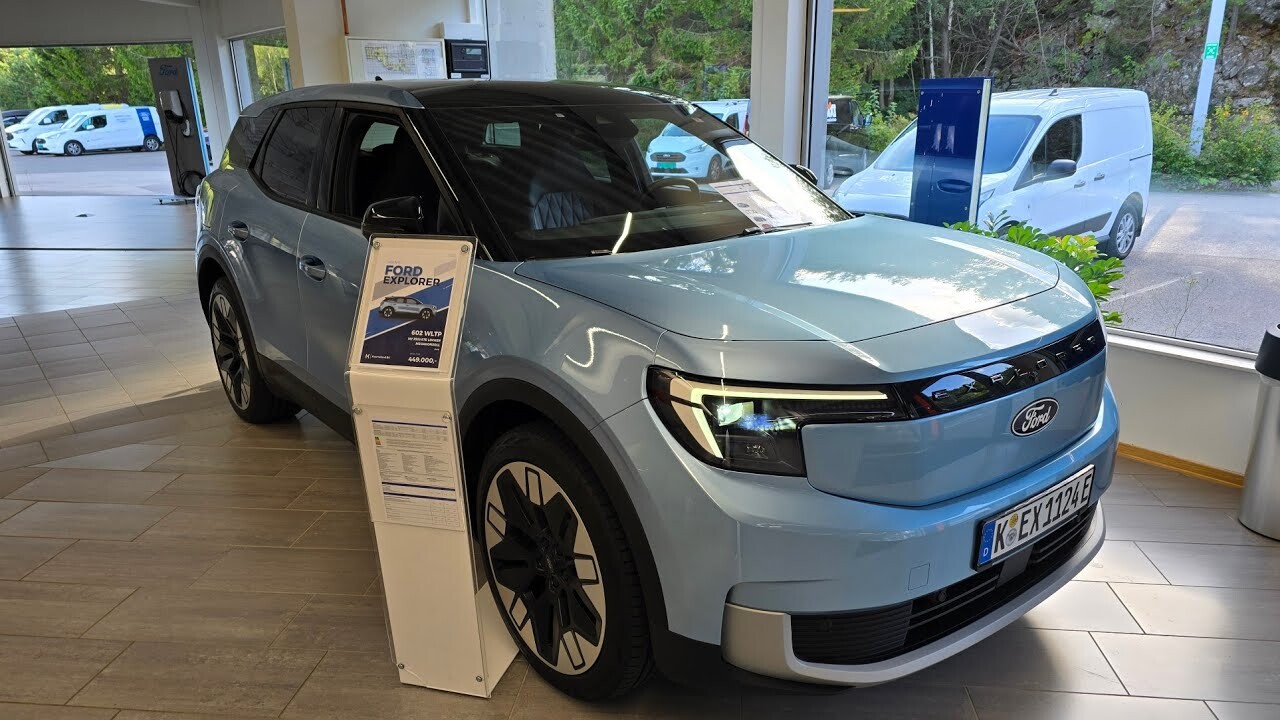

Introduction: Why an Explorer Called 'Classic' Matters
There is a curious relationship I have with cars that have lived long lives. The Ford Explorer is one of those names that sits heavy with memory: family road trips, lifted trucks at the hardware store, the rise of the modern SUV as a weekend companion. So when I first heard Ford would place that storied badge on an electric vehicle, a hundred memories rose at once.
Over a long weekend with the 2025 Ford Explorer Electric, I wanted to answer a simple question: can the Explorer's DNA — which historically signified adaptability, family utility and a willingness to tackle light adventure — survive the quiet, software-driven, electrified world? In short, how does it perform as a Weekend Warrior?
A Short History Lesson: The Explorer Lineage
Before I drove the electric iteration, I spent time reflecting on the Explorer's evolution. The original Explorer was one of the vehicles that transformed American motoring: it moved people and cargo in a way that felt rugged but accessible. It was never the most refined or the most luxurious; its charm came from being useful and ubiquitous.
Through decades, the Explorer changed shapes and philosophies — from body-on-frame toughness to unibody neutrality, from basic transport to tech-laden daily drivers. The name became shorthand for an SUV that could do a bit of everything. That context matters when assessing an electric Explorer: any successor must honor that versatility if it hopes to be embraced by the same crowd.
First Impressions: Design, Presence and Material Feel
Approaching the Explorer Electric, I was struck by how Ford balanced modernity with a sense of continuity. The silhouette nods to its forebears — a purposeful, upright stance — but the details are undeniably contemporary: cleaner lines, a simplified front face in place of a traditional grille, and an emphasis on aerodynamic efficiency. Inside, familiar cues remain; the cockpit still feels designed around visibility and practicality rather than ostentation.
I appreciated the way materials were used — surfaces that feel robust where they need to be, softer touchpoints where you interact most often. For someone like me who loves tactile continuity between eras, these small choices mean the Explorer Electric doesn't feel like an unrelated appliance with a famous badge grafted on. It feels like the next chapter.
Driving Character: The Quiet Weekend Companion
Electric propulsion brings a different personality. The first and most obvious change is the silence: there is an intimacy to a quiet cabin that allows conversation, audio and the sound of the outside world to take on new prominence. For weekend trips where the drive is part of the pleasure, that silence becomes an asset.
Acceleration and throttle response on the routes I took felt immediate and composed. The car moves with a steadiness that encourages relaxed highway cruising and confident merging. For someone who grew up with Explorers that announced themselves loudly, there is a contemplative quality to the electric model: it invites you to enjoy the scenery rather than conquer it.
Handling is suitably composed for a family-oriented crossover. It leans into composure rather than sporting sharpness, which is exactly what many buyers will prefer for mixed-use weekends: commuting, grocery runs, and the occasional canyon road. Ride comfort was a highlight; over longer distances the Explorer Electric felt planted, and suspension tuning made for a forgiving companion on imperfect pavement.
Practical Weekend Use: Cargo, Families and Outdoor Gear
One of the Explorer's historic strengths has been versatility. On a weekend excursion, you want a car that can switch roles quickly: family hauler, gear carrier, and a basecamp for small adventures. The electric Explorer keeps that spirit intact.
The cabin layout is adaptable and the storage solutions are thoughtful. Loading camping gear, bikes (with the right hitch or rack), and luggage is straightforward thanks to a practical cargo area and fold-flat seating. For photographers, anglers or anyone who treats weekends as a time to collect things, the electric Explorer’s interior packaging makes sense: there are purposeful cubbies, tie-down points and accessible power outlets where you need them.
If you plan to use the Explorer for outdoor pursuits, consider the accessories and the way you outfit the vehicle: roof racks, bed extenders and protective liners transform the car into a more rugged tool. The electric powertrain doesn't change the core functional geometry that made the Explorer useful in the first place.
Charging and Range: Practical Notes for a Weekend Warrior
I will not list numbers or claim capabilities I cannot verify, but I can speak to practical routines. Owning an electric vehicle shifts some habits: planning where to recharge, allowing time at rest stops for a quick top-up, and integrating charging into overnight stops. For weekend use this is often a minor change — plug in at home before departure and you start with a full battery.
On the road, charging options at trailheads, marinas and rural lodges remain patchy in many regions. That doesn't make an electric Explorer unusable for outdoor weekends, but it does reward foresight. If your weekends typically involve long stretches between services, plan your route around charging infrastructure or pick destinations with reliable overnight charging.
One habit I appreciated was using charging breaks as real breaks: a chance to stretch, make coffee, check maps and chat about the next leg of the trip. In that way the EV lifestyle can enhance the pace of a weekend, turning necessary infrastructure into small rituals rather than annoyances.
Towing and Adventure Capability: Know Your Limits
The Explorer nameplate has long been associated with towing and hauling. With electrification, the calculus changes in nuance if not in ambition. I won't speculate about specific towing limits, but I can advise this from a weekend planner's point of view: when you intend to tow a trailer or carry heavy loads, confirm capacities and consider how added weight affects range and handling.
For light trailers and bike racks, the Explorer Electric is likely to be a competent partner. For heavier towing, consult the manufacturer's guidance and be mindful of how weight alters the car’s dynamics. Like every good Weekend Warrior, preparation matters: check gear, balance loads, and be realistic about the terrain you plan to cross.
Technology and Usability: Modern Conveniences for Old-School Tasks
The modern Explorer layers technology over a legacy of utility. Infotainment systems, driver aids and connected services make the car easier to live with on a daily basis and on weekend trips. Navigation that integrates charging stops, configurable drive modes, and intuitive controls all serve to reduce friction.
What matters to me, personally, is that technology doesn't overcomplicate the tasks that make a weekend enjoyable. The basics — comfortable seats, good visibility, straightforward controls and durable finishes — are all present. The more advanced features are welcome, but they feel like assistants rather than replacements for thoughtful design.
Comparisons with Classic Explorers: Continuity and Departure
As a fan of classic cars, I tend to measure modern vehicles against their ancestors not to mock them, but to appreciate the line that connects them. The Explorer Electric is both a continuity and a departure. It retains the name's spirit of adaptability; it steps away from the mechanical soundtrack and the simple, sometimes crude, character of older models.
Where earlier Explorers announced themselves with a kind of blunt honesty, the electric version is more considered. That doesn't make it less authentic — it simply reflects a different era's priorities. For weekend warriors who remember tying gear to a roof rack by hand and changing a flat on the side of a mountain road, the Explorer Electric still offers a bridge: an ability to carry, to shelter and to enable discovery, but with modern comforts and a quieter demeanor.
Ownership and Long-Term Appeal: Is It Collectible?
When I think about collectability and long-term appeal, I typically look for a storytelling quality: does the car embody a moment in automotive history? The Explorer name itself has heritage, and an electrified version represents a noteworthy pivot in Ford's story and the broader shift in motoring culture.
Whether a 2025 Explorer Electric becomes a collectible in future decades is hard to predict. Collectors prize rarity, historical significance and emotional resonance. This model's significance will depend on how the story of the EV transition is told in years to come. From my vantage point, it certainly belongs in discussions about mainstream brands embracing electrification while trying to retain the familiar values that made their names popular.
Weekend Routes I Recommend
Rather than prescribe a strict itinerary, I'll suggest the kinds of routes that suit the Explorer Electric's strengths: mixed roads that combine scenic two-lane highways with accessible trailheads, coastal runs where the quiet cabin lets you hear waves and seagulls, and national park approaches where parking close to a vista is valued over off-road bravado.
Plan shorter hops between charges if your route runs through sparsely served regions, and treat charging stops as part of the leisure: a chance to picnic, swap lenses or lace up hiking boots. The Explorer Electric is happiest when it is being used as a comfortable, capable basecamp for discovery rather than being pushed to extremes it wasn't intended for.
My Verdict: A Reverent Reinvention
After a long weekend behind the wheel, I can say this: the Ford Explorer Electric is a reverent reinvention. It understands that the Explorer badge stands for utility, flexibility and the invisible permission to go places. It does not replicate the mechanical character of old Explorers, and it shouldn't. What it does instead is translate the Explorer's practical virtues into a quieter, more refined language.
For the weekend warrior — whether hauling a family, carrying outdoor kit, or simply craving the ritual of a Sunday drive — this Explorer presents itself as a thoughtful companion. It rewards planning, respects tradition and eases you into modern motoring habits. As someone who loves the lineage of classic cars, I welcomed the way it nodded to the past without being trapped by it.