
Green Grit: Driving the Škoda Fabia vRS on Eco-Friendly Routes
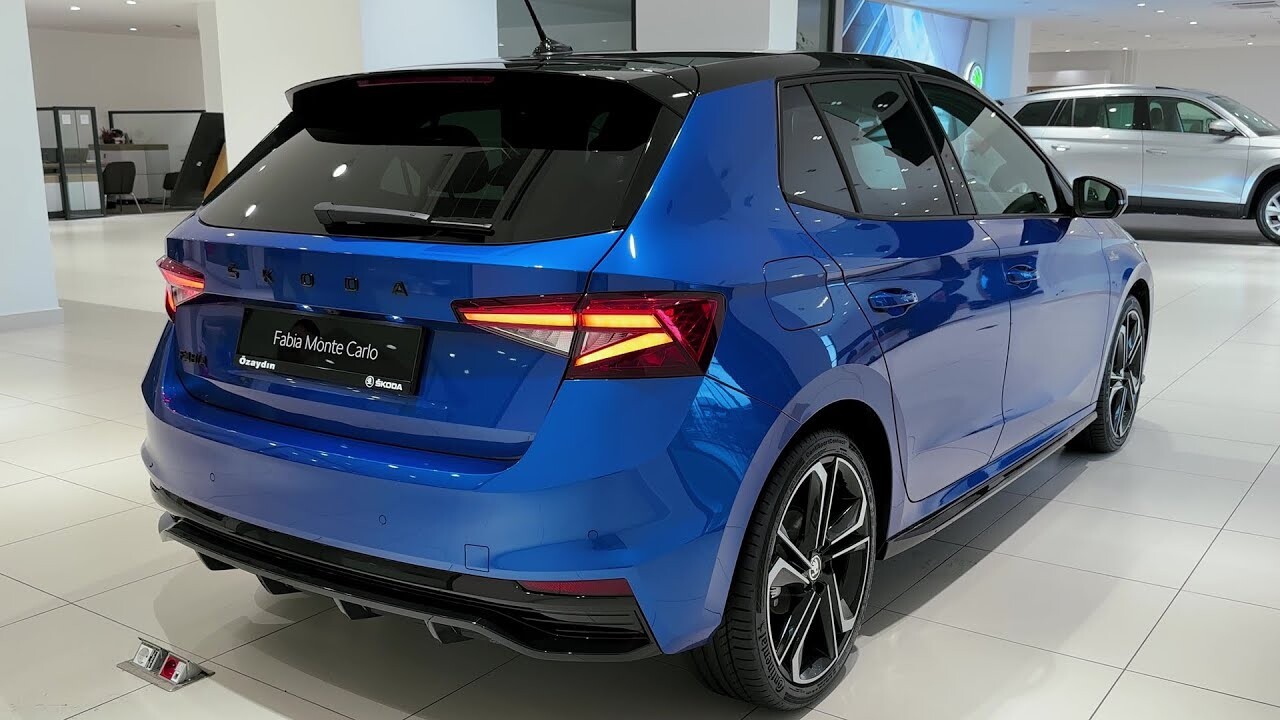

The first thing I noticed, before I turned the key, was the car’s scale and its implied promise. The vRS trim is a compact package—nimble, lower to the ground than a regular Fabia, and keenly focused. On paper that tells you it will respond with alacrity, and in the real world that meant the engine felt lively right away. I was careful not to be presumptuous in throttle inputs: leaning on a turbocharged engine wastes fuel in urban and stop-start environments, so I treated the Fabia as a precision tool. Short, deliberate throttle blips allowed the turbo to do the work without hunting for extra revs. It’s surprising how much distance you can coax out of a litre of fuel when you let the drivetrain breathe at its most efficient mid-range.
Eco-minded driving is as much about route choices as it is about technique. I swapped a direct motorway sprint for a two-hour path along country lanes that promised fewer stops and more consistent speeds. That decision cut down on the kind of hard accelerations and heavy braking that doom fuel economy. The Fabia vRS rewarded that decision: it stayed composed, planted and eager to change direction, which meant I rarely needed to add power that would have cost fuel. The suspension, tuned for the sportier vRS feeling, hedged between comfort and control—small inputs transferred to the road without fuss. On gravel and packed earth lanes where many performance cars would flinch, the Fabia’s compact footprint and FWD setup let me keep momentum without needing to force the issue.
One of the subtler battles for a greener drive is thermal management: engines run most efficiently within a narrow temperature band. I kept an eye on how quickly the Fabia settled into that band after cold starts and how gentle cruising helped maintain it. In town, I used the car’s natural responsiveness to make early gear choices and to glide through traffic where possible. When the engine was warm and moving at sensible speeds, gear shifts felt smooth and the drivetrain never protested gentle upshifts that kept the revs low. That’s a small victory—low rev, high-load driving is often where you find a sweet spot for efficiency, especially on winding country roads.
Tyres are a huge part of this story. The Fabia vRS came with performance-oriented rubber that offered grip, but if you’re serious about eco-focused routes, tyre choice matters almost as much as throttle discipline. Swapping to lower rolling resistance tyres or ensuring pressures are optimised for load and route not only improved fuel consumption but also softened the ride over stony lanes. On my coastal sweep, high pressures meant a choppier ride and more energy lost to vibration; a mindful adjustment before leaving the tarmac improved the car’s comfort and economy in equal measure. It’s the kind of practical tweak that makes an everyday car behave like a considered tool.
Driving through mixed terrain, I observed how the Fabia’s compact geometry allowed it to thread tight corners and slip into spaces with less fuss than larger cars. That agility translates directly to greener city runs: fewer lane changes, less engine braking and a lower tendency for frantic manoeuvres that burn fuel. I’ll admit to opening it up on a long, uninterrupted sweep of coastal road—just to remind myself why the vRS badge exists—but the thrill there was different. It was a demonstration of how small-displacement, turbocharged engines deliver usable power without the mass penalty of larger units. When deployed judiciously, that power feels efficient rather than wasteful.
Environmental impact is never only about what goes into the tank. Noise, tyre wear, and particulate emissions from brakes all count. I made a point of using engine braking lightly and relying on momentum to slow the car when safe to do so; that decreased brake dusting and conserved energy. The Fabia’s brakes are direct and confidence-inspiring, which helps you modulate them rather than stamp on them. In towns where I had to stop frequently, I leaned on smooth deceleration and the car’s natural idle characteristics to keep the engine from hunting for fuel. These small habits add up over days and weeks of driving.
At a local village market I timed my entry to avoid the midday jam. There, the car’s size proved an environmental advantage: I found the last parking spot with minimal circling. Less time idling, fewer frustrated revs, and a shorter walk to the market stalls all translate into a quieter, cleaner outing. The Fabia vRS isn’t a van or SUV; it doesn’t promise cargo dominance, but in a world where urban footprints are judged as much by congestion as by CO2 numbers, being compact is part of being green.
Of course, no narrative about eco-driving is complete without mentioning fuel types and infrastructure. I planned my route around easily accessible fuel stops because long detours to refuel erase the gains of careful driving. I also made a point of pairing fuel stops with short walks—one to stretch the legs and another to scope local communities—turning refuelling into a low-impact break. In regions where alternative fuels and electrification are more visible, the small-car format of the Fabia offers efficient packaging for future powertrains, though on this trip I drove a petrol-powered example; the lessons of efficient routing and gentle driving are universal regardless of propulsion.
What about carrying capacity? I loaded a modest kit for a day’s adventure—coffee flask, a lightweight folding chair, a couple of camera lenses and a small toolkit. The hatchback layout gave me enough versatility to stow items under soft covers and avoid roof bars, which can increase drag and reduce economy. When I travel eco-consciously I treat every added load as an enemy: roof boxes, heavy gear and excess weight all rob your potential range. The Fabia’s compact boot and the ability to arrange items low and central helped maintain a low centre of gravity and kept the car feeling spritely.
One of the evenings I parked on a layby overlooking fields where the sun retreated behind a line of trees. I spent that hour thinking about long-term ownership impacts. Routine maintenance—keeping filters clean, tyres at correct pressures, alignment checked—does more for a car’s environmental performance than periodic hypermiling. The vRS’s spirited nature can encourage heavy use, and that’s why an owner with eco-conscious intentions will need to temper enthusiasm with discipline. The rewards are tangible: lower fuel bills, better tyre longevity and less frequent component replacements. It’s the slow, sustainable payoff of thoughtful driving.
There were compromises. The sportier suspension, while excellent for handling, sometimes transmits roughness on uncompromising lanes. That can tempt drivers to short-shift or to make sharper inputs that heighten consumption. Learning to read the road ahead and letting the car roll over imperfections reduced those impulses. The thrill of a properly negotiated bend—the sound of the engine rising then settling, the reassuring grip from the front tyres—remained a reward for patient driving rather than a cause for reckless acceleration.
At one point, a short dirt lane led to a small pub where I stopped for a late lunch. Walking back to the car, I examined the tyre sidewalls and brake discs for wear. Everything looked tidy; mindful driving left less evidence of abrasion and overheating. The pub landlord asked what I drove and I told him a small tale of torque and temperance. He laughed, then asked how much it cost to run. I deflected with a story about the route, the tyre pressures and the way I timed my stops. People often expect extremes: either peaky performance and appetite or dull efficiency. The Fabia vRS sits between those expectations, offering a practical, playful compromise when given sensible stewardship.
As dusk fell and the roadlights came alive, I reflected on what the Fabia vRS had taught me about eco-adventuring. It is not enough for a car to be labelled efficient; the driver must be part scientist and part steward. Plan your route to avoid unnecessary stops, choose tyres with economy and grip in mind, keep the car light and the momentum steady, and respect the thermal and mechanical thresholds that keep an engine efficient. The vRS rewarded every one of these choices with a feeling of purposeful mobility—fast when needed, frugal when asked. For those who want a spirited drive without paying in excess fuel or environmental cost, this little hatchback shows how a bit of discipline and a lot of appreciation for the road can turn an ordinary day into a green adventure.
In the end, my report is not a manifesto but a field notebook: the Škoda Fabia vRS is a nimble partner for eco-focused routes when you pair it with careful driving and thoughtful planning. It is not a zero-emissions miracle, nor is it a brute-performance machine that demands fuel to feel alive. It sits in a meaningful middle ground—a car for people who like to drive, but who also care about the consequences of that driving. If you approach it with a conservationist’s eye and a driver’s grin, you’ll find it can be both rewarding and responsible.
Specifications
| Specification | Value |
|---|---|
| Make | Škoda |
| Model | Fabia VRS |
| Body | Hatchback |
| Drivetrain | Front-wheel Drive |
| Fuel type | Petrol |
| Engine | Turbocharged Petrol (specific Displacement And Output Vary By Model Year And Market) |
| Transmission | Manual Or Automatic Options (market Dependent) |
| Notes | Specifications Such As Exact Engine Displacement, Horsepower, Fuel Economy (mpg/L/gal) And Top Speed Vary Across Model Years And Markets. Consult Local Škoda Documentation For Precise Figures For A Given Year And Specification. |