
Twists, Tarmac and Tailgates: A Weekend With the 2025 Toyota Supra
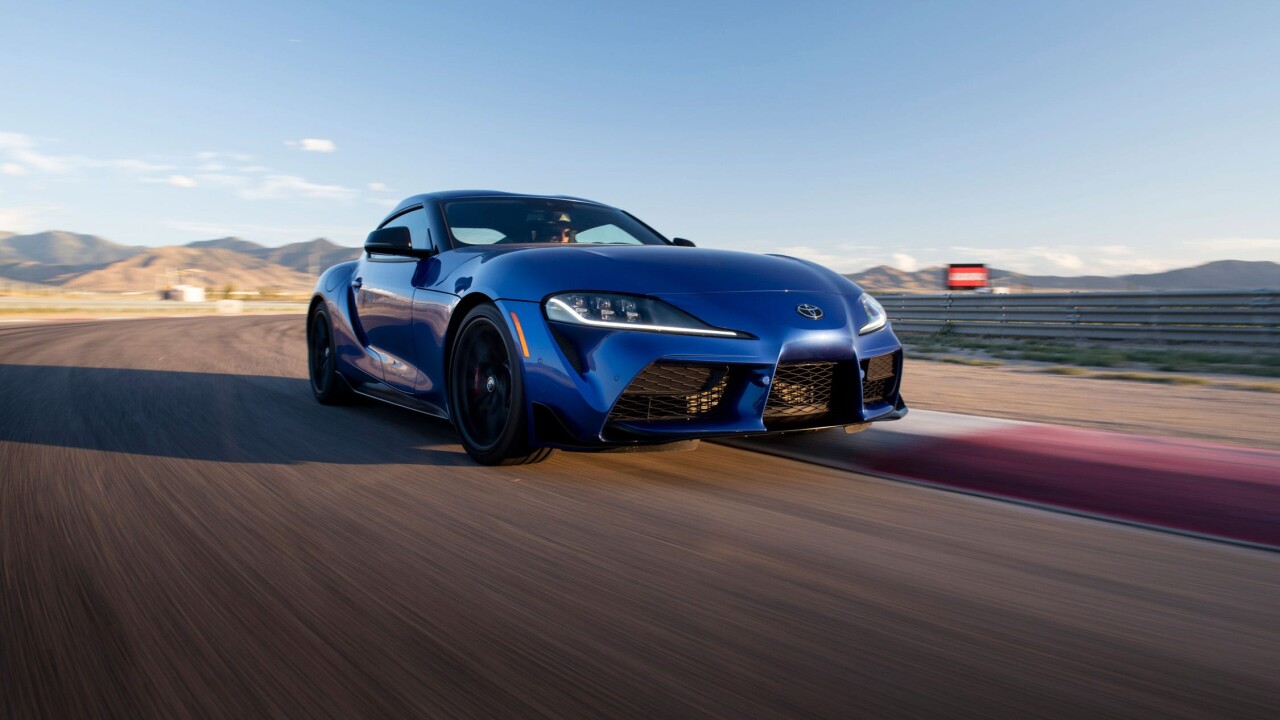

From the first glance the 2025 Supra betrays what Toyota set out to do: package a focused, rear-drive sports car with a long hood, compact greenhouse and short rear deck. Those proportions are not merely stylistic; they tell you about weight distribution, polar moments of inertia and how the car will behave when you ask it to change direction. The fundamental architecture — a front-mounted engine driving the rear axle with a concentrated mass between the axles — gives the car a low polar moment and a tendency to rotate eagerly. The result is a car that, when provoked, will pivot with the kind of immediacy that rewards precise inputs. The wheelbase is compact and the overhangs are short, which increases agility but also means the ride can be brisk over imperfect surfaces; Toyota’s engineers have tuned the compliance and damping to straddle civility and discipline.
Underneath that sculpted shell the Supra retains a close kinship with a European roadster in terms of basic underpinnings. That collaboration shows in the suspension layout: MacPherson struts up front and a multi-link setup at the back, a combination that gives a predictable, communicative balance between mechanical grip and compliant response. The suspension geometry emphasises camber control and roll stiffness distribution; in practice this translates to a front end that bites predictably into a corner and a rear end that follows with measured, controllable bite. The steering is quick-ratio and engineered for minimal friction through the rack, although there is an electronic assistance layer that tempers raw feedback compared with older, purely mechanical sports cars. For a weekend warrior who wants maximum mileage from a single road trip, the steering's immediacy and the chassis' willingness to be tipped into a line are worthwhile compromises.
The 2025 Supra’s braking system is engineered to be confident and progressive — a necessity when you mix mountain passes with spirited highway stretches. The pedal has a firm initial bite and a predictable modulation range, which is especially valuable when trail-braking or adjusting the line mid-corner. Brake cooling and fade resistance were tangible through repeated fast laps on public roads and a short, controlled session on a closed circuit. When you carry weekend gear and a passenger, the car's ability to decelerate with composure is a safety margin you quickly come to appreciate; the Supra’s brakes deliver that without drama.
Packaging for real-world use is one of the Supra’s more revealing aspects. It is, and will always be, a sports car first, so trunk volume is modest — sufficient for a pair of reasonably sized weekend bags or a set of soft luggage, but not designed to swallow bulky outdoor equipment. The cabin is compact and driver-focused, with ergonomics that prioritise the essentials: shifter or paddles close to hand, pedals in a familiar heel-and-toe alignment and a low seating position that reinforces the connection to the chassis. Rear accommodation is best described as occasional — useful for short stints or for stashing incidental items, but not a replacement for a true second-row. That reality shapes how you plan a weekend: you pack light, use duffels instead of rigid suitcases, and treat the Supra as a two-seat touring machine rather than a family hauler.
Inside, the 2025 Supra's instrumentation and control layout are functional and geared towards effortless interaction while driving. The infotainment system is modern and responsive, with physical controls retained where rapid adjustments are necessary. For the sort of weekend escapes that involve toggling traction modes or adjusting damper settings on the fly, that tactile feedback is invaluable; you do not want to be fumbling through nested menus when the road tightens and the weather shifts. I appreciated the thermal comfort systems as well: predictable HVAC performance and seats that are supportive for long stints reduce fatigue, which in turn keeps the driver's inputs precise late into a long day on backroads.
Performance in the real world is where the Supra's engineering comes into sharper focus. Rather than recite factory numbers, I'll describe what the car delivers during a typical mixed-surface weekend run. Acceleration is visceral and linear, with a torque delivery that is useable across a broad rev range. The transmission — an automatic with manual-shift capability — is calibrated to stay out of your way when you're exploring the countryside, but to be assertive when you demand rapid downshifts or hold a gear for a sweep of corners. The interplay between engine character, transmission responsiveness and differential behaviour makes for a package that encourages late-apex entries and committed exits. The traction management suite offers selectable levels of intrusion, allowing you to dial in stability for treacherous wet roads or reduce intervention on dry tarmac when you want to explore the car's dynamic limits.
Ride quality is a key measure of a weekend warrior's utility, and the Supra's suspension tuning is a study in compromise. On well-surfaced mountain roads the car is taut and composed, with body motions tightly controlled so that drivers can place the tyres with confidence. On rougher secondary roads and long stretches of highway where micro-bumps are constant, the firm spring rates can transmit more detail through the chassis than some might prefer. However, the adaptive damping — when fitted — does an admirable job of broadening the envelope, allowing a single car to be both a precise canyon tool and a tolerable long-distance cruiser. For me, that tuning reflects clarity of purpose: Toyota has prioritised dynamic fidelity while giving owners enough flexibility to soften the ride when the weekend calls for a dawn-to-dusk drive rather than a flat-out sprint.
One of the practicalities that often gets overlooked in a sports-car review is thermal management during sustained use, especially if you intend to run the car hard between cafes and campgrounds. The Supra’s cooling systems — both for the engine and transmission — are engineered to prevent performance drop-off over repeated hard accelerations and rapid decelerations. I pushed the car through a sequence of uphill runs and found that temperature control remained stable, allowing the engine and gearbox to maintain their calibration without the need for enforced cooling periods. For owners who treat their weekends to both spirited runs and a quick entry-level track day, that robustness is central to usability.
From an ownership and maintenance standpoint, the Supra sits in an interesting place. It is engineered with tight tolerances and performance-grade components, which means it will reward attentive care. Service intervals and consumables will be more intensive than for a family sedan, and brake and tyre wear can be higher if the car spends many weekends being driven on the edge. My practical advice to potential buyers is to plan for that reality: invest in a set of slightly grippier road/track tyres if you intend to push the car and adopt a maintenance schedule that tracks brake pad condition and fluid service closely. For the classic-car inclined, the Supra's sensibilities make it an excellent base for sympathetic modifications: suspension upgrades, bespoke exhausts and lightweight flywheels are logical routes, but they should be done with an appreciation for the factory balance.
What gives the Supra a particular resonance for me as someone who names the old lines among their pleasures is the way it translates sporting heritage into a modern, usable tool. It isn't a museum piece, and nor does it want to be. Instead, it is a modern interpretation of the sports coupe ethos: taut, directive and concentrated. There is an emotional thread that runs from earlier Supra generations — the sense of a car built around a driving purpose — and the 2025 model carries that thread forward with a technical, measured approach rather than an overtly nostalgic one. For weekends that require both speed and civility, it is a compelling compromise.
Where it cannot be everything is where it echoes the genre's limits. If your weekend itineraries demand modular utility — bikes on a roof, sleeping gear the size of a small island, or long family trips — the Supra is the wrong tool. It is happiest as a two-person performance machine with a small tailgate lifestyle: think overnight trips, coastal runs with beachside stops, or basecamping for a day of hiking where the car serves as a command post for gear and food rather than the primary storage vessel. Within those constraints it is highly competent: easy to park, enjoyable in tight roads, and efficient enough to make repeat runs without inducing constant stops for fuel.
Finally, I consider collectability and long-term appeal. The Supra name carries cultural weight and a racing pedigree that makes any modern iteration interesting to enthusiasts. The 2025 car's engineering clarity and driver-focused packaging make it a practical candidate for long-term appreciation among the right buyers — those who will use the car rather than bury it under covers. For me the ideal owner is a person who wants a weekend machine that offers both sporting capability and a level of everyday civility; someone who delights in mechanical nuance and will maintain the car with an eye to preserving and enhancing its dynamic balance.
Driving the 2025 Toyota Supra for a long weekend reinforced that sports cars still have pragmatic roles to play beyond track times and sheen. It is an accessible, technically minded performance car that rewards attention, fits into a lightweight-luggage lifestyle and carries a lineage that will continue to matter as it ages. For weekend warriors who want a car that is honest about its intentions — precise, disciplined and engineered with an emphasis on driver control — the Supra is hard to beat. It is not the most practical vehicle for every mission, but for the purposes it is built around it is exceptionally well-suited: an articulate companion on windy roads, a dependable anchor for short getaways, and above all a modern interpretation of a classic sporting ideal that I remain fond of.
As a lifelong fan of classic sports cars, I find the 2025 Toyota Supra a commendable continuation of a storied nameplate — one that marries the visual cues and proportions I admire in vintage coupes with modern engineering discipline. Its long‑hood/short‑deck stance and concentrated mass between the axles feel deeply familiar to anyone who appreciates chassis balance and a low polar moment; the result is an immediately communicative, eager car that rewards precise inputs. Technically, the Supra is refreshingly honest: a rear‑drive layout, quick electric assistance to the steering, and a conventional MacPherson front / multi‑link rear suspension package tuned for camber control and roll stiffness distribution. Those choices produce predictable weight transfer, confident brakes and a chassis that stays composed through repeated hard use — traits I respect in both classic and contemporary performance cars. I particularly value the car’s thermal robustness and the way its transmission and engine tuning support both relaxed cruising and committed driving without being intrusive. Packaging is appropriately sporting: a compact, driver‑centric cabin, modest luggage capacity (two weekend bags fits comfortably) and occasional rear seats make it ideal as a two‑person weekend machine rather than a family hauler. The available adaptive damping and selectable intervention levels for traction and stability broaden the car’s usability without diluting its character. From a collectability standpoint, the Supra badge and the 2025 model’s clear engineering intent work in its favour. It isn’t a do‑everything vehicle, but for enthusiasts who will use and maintain it — who understand the tradeoffs between spring rates and ride comfort, or the faster wear that comes with spirited driving — it represents a durable, enjoyable modern classic in the making. I recommend it to buyers seeking an articulate, usable performance coupe for coastal runs, canyon carving and weekend escapes; those who want SUV practicality or family flexibility should look elsewhere. In short: the 2025 Supra is a technically disciplined sports car with a classic soul — precise, focused and eminently usable for the purposes it was built to serve.
Specifications
| Specification | Value |
|---|---|
| Market | UK |
| Model year | 2025 |
| Layout | Rear-wheel Drive |
| Front suspension | MacPherson Strut |
| Rear suspension | Multi-link |
| Steering | Electric Power-assisted, Quick-ratio |
| Transmission | Automatic With Manual Mode |
| Traction and stability | Selectable Traction/stability Intervention Levels |
| Adaptive damping | Available (when Equipped) |
| Brakes | Confident, Progressive With Good Modulation; Resists Fade Under Repeated Hard Use |
| Cooling | Engine And Transmission Cooling Tuned For Repeated Spirited Use |
| Seating configuration | 2+2 (rear Seats For Occasional Use) |
| Luggage capacity | Modest (comfortably Fits Two Weekend Bags / Soft Luggage) |
| Infotainment and controls | Modern Responsive System With Retained Physical Knobs And Buttons |
| Intended use | Compact, Driver-focused Sports Coupe For Weekend Escapes And Spirited Driving |
| Maintenance note | Performance Components Require Attentive Maintenance; Increased Wear Expected Under Hard Use |