
City Commute Challenge: Tangoing Through Traffic in the 2025 Volkswagen Touareg
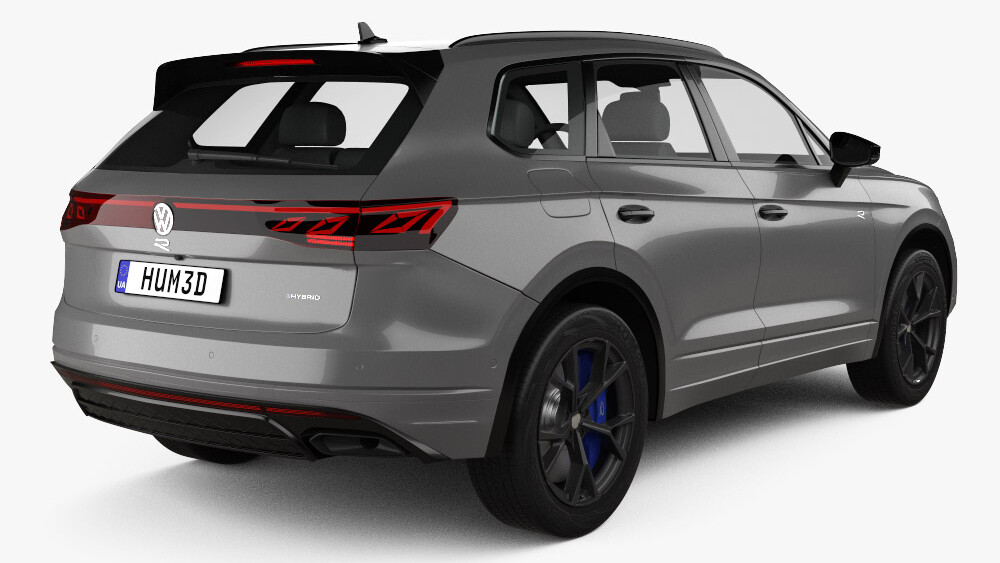

Let me begin with a confession: I own a small classic car that fits into niches of town that modern SUVs laugh at. The Touareg laughs back, politely, then offers me a cup of coffee and a fold-out tray. It is a car that announces its presence with the calm confidence of someone who has paid their parking tickets on time for years. This is not a nimble pocket-car; it is a city-capable grand tourer that happens to spend its weekdays stuck in traffic lights and its weekends pretending to be off-road. The City Commute Challenge is unforgiving — we measure usefulness not just by how quickly you shuttle from A to B, but by how the car negotiates the small indignities of urban life: tight parking garages, impatient delivery cyclists, and the eternal search for the parking spot that did not exist five minutes ago.
Exterior first impressions matter in town because people will make assumptions about you based on your bonnet. The 2025 Touareg wears its bulk like a well-cut coat: dignified rather than ostentatious. Its proportions give it authority in traffic without feeling like an armored personnel carrier. From a pedestrian’s viewpoint it is a presence, but not a provocation. That presence, inevitably, has consequences when it comes to parking. I tried squeezing it into the sort of city bays that were obviously designed by people who never saw a roof rack. It can be done, with patience and a liberal use of the mirrors, but there is no pretending — tight parallel parks will leave you doing the little back-and-forth dance the size of a polka.
Thankfully, modern motoring aids are the new ballet instructors for the urban commuter. The cameras and sensor systems on the Touareg are like having a nervous but meticulous friend whispering in your ear as you perform the shuffle. They are not a substitute for judgement, but they are an invaluable assist when you need to thread the car into a gap beside a lamp-post or apologise silently to a kerb. I would not rely on them for artistic backing in a theatre, but in a city garage where every millimetre counts, they are worth their weight in parking receipts.
One of the most delightful things about driving a vehicle with a higher seating position in town is the view. You see traffic lights over the heads of hatchbacks, spot pedestrians preparing to jaywalk before they leap, and you feel oddly presidential when claiming your lane at a junction. It is practical theatre. The Touareg’s driving seat invites you to take in the panorama with a composure that is, frankly, addictive. Visibility is not perfect — no modern car gives you the unobstructed glass-house feel of a 1960s saloon — but it is competent. Mirrors are generous and the rearview camera (again, a blessing in narrow city spaces) turns reversing into an exercise in calm reversing rather than blind fumbling.
City driving is not all about seeing; it is about moving predictably and smoothly through pockets of chaos. In daytime traffic the Touareg settles into a rhythm like a well-read but tolerant taxi driver. Acceleration at low speeds is measured and refined. It does not lunge or flirt with theatrics; instead it encourages you to take the easy route through town, the one that involves fewer horn bursts and more efficient lane changes. The steering is weighted to reassure rather than excite — think polite handshake rather than boxing glove. That is not a criticism: this is a car that wants you to enjoy the commute without inventing stress where none was necessary.
One thing I always check in a city car is the behaviour of the transmission. There is nothing more infuriating than a gearbox that hunts, jerks, or insists on being temperamental at roundabouts. The Touareg’s transmission — at least in the car I drove — preferred to keep its cool. Gear changes in traffic were smooth and unobtrusive, which is an underrated virtue when your stop-start rhythm resembles a metronome belonging to a very caffeinated orchestra.
Ride comfort matters in the city because our streets are not always kind. Potholes, tram tracks, speed humps, and the treacherous satisfaction some drivers take in dropping a bollard across your path are all part of the urban landscape. The Touareg absorbs these with a polite resilience. It isn’t floaty in a dreamy, out-of-touch way; rather, it smooths the road in a manner similar to an experienced concierge guiding you past the less flattering parts of a hotel. You feel cared for. Passengers will nod approvingly rather than twitch with every bump — a small victory if you chauffeur your ancient aunt to the opera.
That said, a large SUV in the city is always a trade-off. You gain real-world comfort and presence but lose some of the immediacy of small-car agility. Lane filtering in congested streets is possible, depending on the flow, but it is not something you undertake delicately with this car. The Touareg wants to be invited into a lane, not barge in. It is more diplomatic than a moped and less impetuous than a hot hatch. If you live in a city where narrow alleys are considered primary roads, the Touareg will do the job but will not fall in love with the architecture.
Practicalities are the scaffolding of urban motoring. The Touareg is thoughtful here. Getting people in and out is easy, thanks to doors that open wide and seats that sit at a facile height for ease of access — a blessing when you are loading children, small guests, or grocery bags after visiting the market. Cargo space is generous for daily needs: grocery bags fit like they were expected, pushchairs tuck away without protest, and shopping trips stop feeling like Tetris matches against the boot lip. The tailgate is obliging and the load sill is sensible, details that make life less fiddly on wet Tuesday evenings.
Technology is a double-edged sword in the city. On one hand, modern infotainment and connectivity can turn a frustrated commute into a two-way conversation with your calendar, navigation, and music. On the other hand, in-car gadgets can be a distraction if they require fiddly interactions while you are trying to negotiate a roundabout. The Touareg’s systems are generally arranged with an eye for usability. They do not demand your attention at every traffic light, and when they do prompt, the interface is polite about it. Voice control, if you make friends with it, can be a genuine city ally: find a parking spot, tweak the climate because the sun’s come out, or set a route that cleverly avoids the roadworks that the city planners decided to place precisely where you need to be.
Fuel efficiency in urban driving is a topic of eternal negotiation. Heavy, refined vehicles do not dance through the city in the same way lighter machines do, and stop-start traffic can be unforgiving. The truth is practical: depending on which engine and drivetrain you choose, a Touareg will perform differently. It is wiser to consider driving style and route rather than assume a particular economy figure. If your life is chiefly a pied-à-terre across town, the Touareg will not be the cheapest daily carriage in terms of fuel usage, but it is not designed for penny-pinching at the expense of comfort. There are smarter ways to economise: plan trips, avoid peak congestion when possible, and make use of the car’s eco-driving prompts if you enjoy a game of financial restraint with your right foot.
Noise levels are a subtle part of the city experience. You want the outside world muffled enough to have a civil conversation and your podcast to sound like it was recorded in a professional studio rather than a bus shelter. The Touareg is measured here as well. Road and tyre noise are subdued, and urban wind buffeting is not a constant companion. When a delivery lorry roars past and your carriage does not feel like a tin can in distress, you appreciate the refinement. It makes city driving less of an endurance test and more of an impersonation of civilized life.
Safety and driver assists are now indispensable for urban peace of mind. Modern traffic behaviours — cyclists weaving between lanes, pedestrians who treat crossing lights as polite suggestions, and the occasional driver who believes blinkers are optional — require tech that watches your back. The Touareg I drove came equipped with the sensors and warnings that are frankly a godsend in heavy traffic: cross-traffic warnings when reversing out of a tight spot, parking aids, and blind-spot warnings that cut down on the guesswork when merging lanes. They don’t write the rules for you, but they nudge you away from mistakes you didn’t know you were about to make.
There is a social side to city driving that often goes unnoticed. Cars convey identity, and large SUVs like the Touareg give off a subtle signal: you value comfort, you have a practical streak, and you enjoy low-key competence. As a classic-car enthusiast I find this quietly satisfying, like seeing a well-tailored coat on someone at a modern art opening. It is not shouty, but it is unmistakable. I also noticed a practical result of that signal — people tend to give you the benefit of the doubt at junctions and hold back just a little more, which in urban driving terms is like being granted extra seconds by the traffic gods.
Now for the part where my vintage sensibilities get their say. A car like the Touareg is not destined to be a classic any time soon, not in the romantic sense that makes collectors salivate over patina and carburettors. It is modern metal, packed with electronics, and designed around comfort, not mechanical drama. But as a classic-car lover I can still admire its lines, its honest utility, and the way it makes daily life easier. If someone asked me to park my old roadster for rainy commutes or family errands, I'd hand them the Touareg without hesitation. It performs its civic duty with dignity and a kind of understated flair that, in another era, might have been judged as good manners.
In terms of ownership considerations in the city, think practically. An SUV occupies more parking bandwidth, costs in parking tariffs may be higher in some zones, and manoeuvring in narrow streets requires a calm approach. Servicing for modern, tech-packed vehicles can be more complex than tinkering with a carburettor, so consider that part of the ownership package. On the flip side, you get a car that is comfortable, refined, and well-suited to the mixed requirements of modern urban life: school runs, weekend markets, and the occasional escape to the countryside without needing to fret about ground clearance or fragile suspension.
After a week of urban tangoing I reached a verdict that sits comfortably between my classic inclinations and my appreciation for sensible modern motoring: the 2025 Touareg is an excellent city companion for someone who values comfort, visibility, and a calm demeanour over tight-arsed nimbleness. It will not charm you with analogue quirks, nor will it reward hooligan driving, but it will make your daily commute less of a chore and more of a civilized ritual. If your city life demands space, refinement, and a car that makes the small indignities of urban motoring less irritating, the Touareg is a practical and surprisingly urbane choice.
Would I trade my beloved classic for one? Not permanently. There is an irreplaceable joy in rowdy gearboxes, mechanical noises, and the charming unreliability that keeps you emotionally invested in your car. But for daily life, the Touareg is an affable companion that earns its keep. It is the sensible pair of shoes you put on when you know the pavement will be unkind — comfortable, reliable, and with just enough style to make you feel involved in the city without being consumed by it. In short, the Touareg turns city commuting from endurance into etiquette, and as someone who appreciates the subtler pleasures of motoring, I tip my flat cap to it.
As a dyed-in-the-wool classic-car buff who still dreams in chrome and carburettors, I confess the 2025 Touareg won me over in the same way a sensible pair of brogues does after a night in velvet slippers: it’s grown-up, comfortable and makes city life less of a battle. It won’t make you wax lyrical about steering feel or spark a roadside love affair with mechanical simplicity, but it will ferry the pushchair, the shopping and the elderly aunt with impeccable manners—and with fewer roadside dramas than many flashier alternatives. Parking may still require patience (and the cameras), and it lacks the elbow-room poetry of an old Jaguar, but it rewards you with composure, quiet refinement and technology that actually helps rather than dazzles. I’d never sell my classics for one, but if someone asked me to be sensible and choose one car to do everything from school runs to country Sundays, I’d tuck the Touareg into the garage with a wry smile and a note: "Look after her—she’s boringly brilliant."
Specifications
| Specification | Value |
|---|---|
| Model | Volkswagen Touareg (2025) |
| Body style | 5-door Mid-size SUV |
| Seating capacity | 5 |
| Drivetrain | All-wheel Drive (4MOTION) |
| Transmission | 8-speed Automatic |
| Fuel type | Petrol, Diesel And Hybrid Options Are Offered Depending On Trim (varies By Market) |
| Market | UK |
| Primary focus | Comfort, Refinement And Practical Urban Usability |