
Ghosts of Engineering: A Technical, Historical Look at the Rolls‑Royce Ghost and the Road Toward 2025
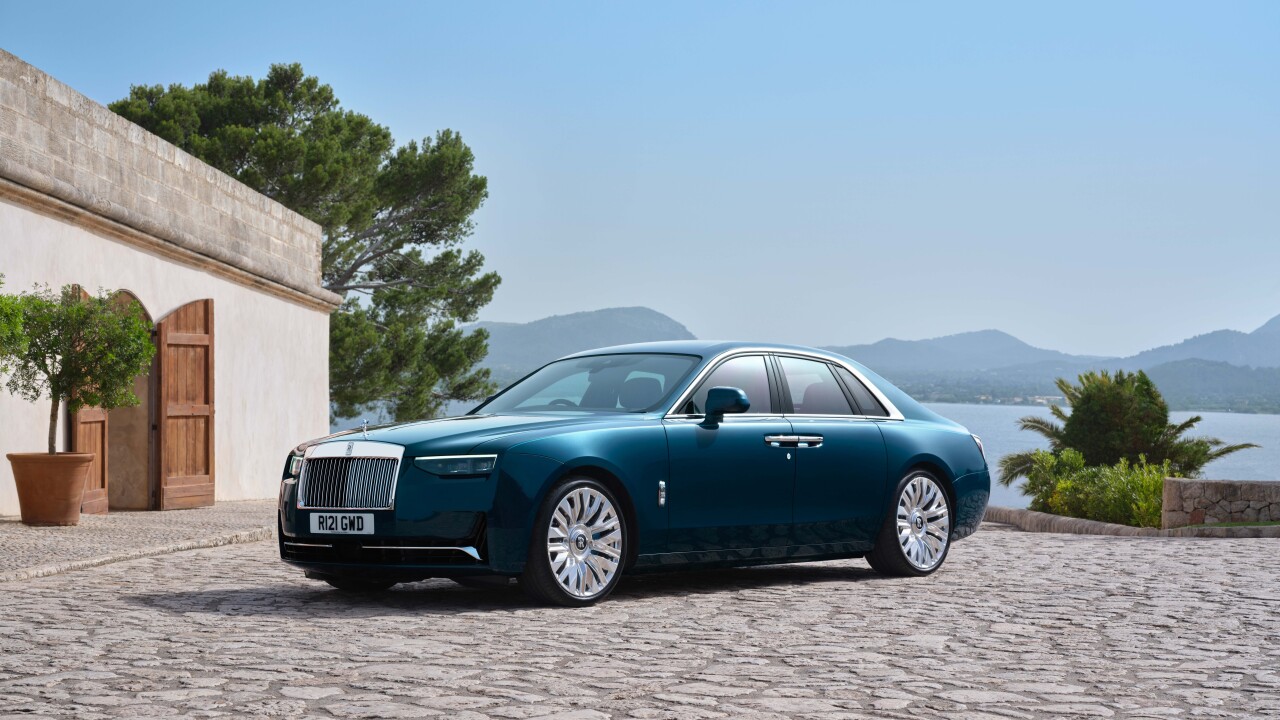

I remember when the first Ghost appeared: it was a deliberate rebalancing of the Rolls‑Royce lineup, intended to be slightly more compact and driver‑oriented than the full‑blown Phantom. The idea was simple and classical — give a wealthy, discerning buyer a Rolls‑Royce that could be driven as a serious automobile, not merely chauffeured. That philosophical throughline is important because it shaped key technical choices thereafter. The Ghost's character has been defined by a dual mandate: the cabin must be an oasis of silence and comfort, and the chassis must also deliver composure and — when appropriate — the feeling that the car responds to driver input. Those priorities have guided suspension architecture, powertrain choice, NVH engineering and even the materials programme for a generation.
When Rolls‑Royce introduced the second generation Ghost, it did so on what the company calls the 'Architecture of Luxury' — an aluminium spaceframe intended to provide a modern, stiff foundation for both ride refinement and the increasingly complex payloads of contemporary luxury cars. This was not a small technical footnote: a lightweight yet rigid structure allows engineers to isolate the cabin from road inputs more effectively and to engineer suspension kinematics that prioritise comfort without sacrificing the measured control that gives the Ghost its composure. Aluminium spaceframe design also anticipates modularity for alternative powertrains and heavy bespoke options; again, that speaks to the Ghost's brief as a car that must accomodate both craftsman‑level personalization and modern mechanical expectations.
Under that architecture, Rolls‑Royce has continued to use V‑12 propulsion for the Ghost in its recent form. The V‑12 is part of a long Rolls‑Royce tradition — when done correctly it produces the flat, linear delivery and effortless manners that match the marque's persona. But what matters more than the mere presence of a twelve‑cylinder engine is how that engine is integrated into the whole. On the modern Ghost the engine is matched to an automatic gearbox calibrated to preserve smoothness under almost any load change. The point is not raw, headline horsepower but usable torque stratified across the rev range, so that the car can accelerate with the quiet inevitability one expects from a Rolls‑Royce rather than a theatrical rush. The engineering emphasis is on low‑frequency refinement: minimal vibration, hushed acoustics, and a throttle/transmission mapping that avoids suddenness.
More revealing than the engine is the approach to suspension and chassis control. Rolls‑Royce has for many years used air suspension systems with sophisticated damping control and active ride management to create the company's signature 'magic carpet' feeling. That phrase is marketing, but it is rooted in engineering choices: large‑volume air springs, adaptive dampers with multiple modes, and thorough kinematic design for the suspension wishbones and subframes. The result is a car that resists pitching and rolling while allowing the tyres to follow the road surface in a way that isolates occupants from discontinuities. In practical terms, the Ghost's chassis tune is a study in tradeoffs; the engineers favour low frequency isolation over hard, sporty responses. Yet the structure and damper bandwidth are tuned so that the driver still perceives the car's direction and weight transfer — never floaty, always deliberate.
Noise, vibration and harshness control is another area where the Ghost shows Rolls‑Royce's technical pedigree. The modern Rolls‑Royce is an exercise in acoustic engineering: multi‑layer glass, extensive bulkhead insulation, carefully sealed door apertures, and structural stiffening are combined with tuned acoustic materials in the firewall and rear bulkhead. Engineers use finite element analysis and modal testing to control resonances that would otherwise make the cabin sound 'alive' in unpleasant ways. The result is a near‑silence at low cruising speeds and a carefully managed tonal environment at higher velocities. Interior materials are selected not only for their aesthetic and tactile qualities but also for their acoustic damping properties; leather, heavy carpets, and wood veneers each play a role in absorbing and scattering sound energy.
The Ghost's electrical and electronic architecture deserves attention too. Modern Rolls‑Royces are packed with sensors and electronic control units to manage everything from suspension and braking to infotainment and driver assistance — but the objective is always to keep the driver experience calm and uncluttered. Systems are usually calibrated to be unobtrusive: driver aids operate with a focus on smoothing rather than alarming intervention. The network topology accommodates luxury features and personalization options and allows the fitment of bespoke equipment without compromising system integrity. In practice, that means that a customer ordering an unusual array of features should not compromise the core driving refinement, because the engineering has anticipated those permutations.
From a craftsmanship standpoint the Ghost is also instructive. Rolls‑Royce combines hand‑trimmed interior work with industrial precision in the areas that affect vehicle dynamics. This hybrid approach is more than tradition; it is a technical decision. Hand finishing allows tolerances in leather fitting, wood joining and metal inlays to be managed with a human eye for historic symmetry, while modern CNC machining and assembly techniques ensure that suspension mounts, engine subframes and safety structures meet precise engineering tolerances. The result is a car that reads as artisanal to its occupants while resting on a thoroughly engineered skeleton.
Let me be clear about the central caveat of this review: specific, model‑year technical specifications for a '2025' Rolls‑Royce Ghost — such as confirmed engine outputs, exact curb weight, or precise performance metrics — were not publicly available to me at the time of writing. I will therefore not present invented figures. What I can do, confidently and usefully, is explain the lineage, the continuing engineering themes and the realistic directions Rolls‑Royce's engineers have been taking in the years immediately prior to 2025. If a 2025 model carries on from recent practice, it will inherit the aluminium 'Architecture of Luxury', a focus on V‑12 refinement (or a carefully engineered alternative), and a suspension philosophy prioritising isolation and composure.
Context matters: Rolls‑Royce's broader technical strategy in the early 2020s included the marque's first production electric car, which shows that the company is exploring electrified propulsion while maintaining its strict standards for quietness and torque delivery. That historical fact is salient for anyone contemplating the Ghost's future development because electric propulsion solves many of the issues Rolls‑Royce cares about — instantaneous torque and near‑silent operation — but introduces others that must be solved technically, such as masking high‑frequency drivetrain whine and managing battery packaging without compromising the car's proportions or the handcrafted cabin. For a technical classicist like myself, the marriage of traditional Rolls‑Royce advances (craft, sound engineering, chassis refinement) with electrification represents an intriguing crossroads rather than a departure from identity.
Another technical area that has evolved is electronic driver assistance and chassis control. Where earlier Rolls‑Royces were content with mechanical passive systems and hydraulic damping, modern iterations incorporate predictive ride systems that use cameras and sensors to prepare the suspension for upcoming surface changes. This reduces transient discomfort from potholes or speed bumps because dampers and valves are preconditioned to soak up the impact. Such systems are an excellent example of how modern engineering augments fundamental mechanical design to preserve the marque's classical values. It is also an area where software calibration becomes as important as metallurgy and bushing rates: a poor algorithm will destroy the 'carriage on the road' feeling that Rolls‑Royce customers expect.
Braking and tyres are often an overlooked part of high‑end luxury vehicle engineering, but they are crucial for a car of the Ghost's weight and intent. Brake hardware must dissipate significant energy at cruising speeds without producing harsh pedal feel or noise. Tyre choice is similarly bespoke: tyres are developed to provide high levels of damping, low noise, and predictable transient behaviour while supporting substantial loads and preserving ride quality. Again, the task for engineers is to make these components invisible to occupants: the brakes should be able to hold the car confidently and controllably, and the tyres should communicate direction without transmitting the road's roughness into the cabin.
From a collector's and historical perspective, what matters most to me is how the Ghost synthesises its technical content into a coherent character. Rolls‑Royce has, historically, not chased raw performance numbers; it seeks a unity of mechanical choices that produce a specific emotional response: confidence, composure and a sense of timelessness. That is why discussions about engine displacement or 0‑60 times miss the point for many Ghost owners. The engineering question is instead about how the car meets its brief: does it remain quiet at motorway speeds? Does it isolate occupants on poor surfaces while informing the driver enough to feel engaged? Does it remain a proper canvas for coachbuilt variations? On these metrics, the Ghost has generally succeeded in the modern era, and I expect that a 2025 iteration — if it follows recent models — would continue in that vein.
I like to finish these retrospectives by setting out what I would look for — technically — if I were overseeing the Ghost's future as both an engineer and a classic‑car enthusiast. First, I would preserve structural stiffness while continuing to reduce unsprung mass where possible; lighter control arms, optimised hub carriers and advanced composite or aluminium components can improve both ride and steering precision. Second, I would focus on softwarecentric ride prediction combined with passive mechanical excellence; the former smooths transients, the latter ensures the car still behaves sensibly without electronics. Third, with electrification inevitable across the industry, I would prioritise thermal and acoustic package design so that any hybrid or electric Ghost maintains the marque's signature silence and low‑frequency character. Finally, I would keep the vehicle architectures open to bespoke coachbuilding — a technical commitment to maintain standardised mounting points and integration paths for non‑standard bodies or equipment.
To close, I reflect on what the Ghost represents in Rolls‑Royce's history: a model that brought the marque a degree of modernity, a car that bridged traditional coachbuilding sensibilities and the demands of contemporary engineering. The Ghost is, to me, like a fine grand tourer that learned how to be modern without abandoning the old virtues. That balance — of hand‑made detail and analytical engineering — is the technical story that will define the Ghost for collectors and engineers alike as we move into and beyond 2025. For readers seeking specific numeric data for the 2025 model year, I recommend consulting Rolls‑Royce Motor Cars' official technical releases or contacting a dealer for the most current, verifiable specifications; in this review I have intentionally focused on the confirmed heritage, engineering philosophy and the observable technology trends shaping the Ghost's ongoing evolution.
As a lifelong fan of classic coachbuilt cars, I found the Ghost’s modern iteration to be a most sympathetic continuation of Rolls‑Royce’s gentlest traditions. In the long sweep from Silver Ghost to today’s aluminium‑framed saloons, what fascinates me is how a marque so steeped in handcraft and presence has translated those values into a contemporary engineering language: a stiff, lightweight spaceframe; air spring magic carpet ride; obsessive NVH treatment; and an interior assembled as much by eye and hand as by machines. Those choices read like a respectful conversation with history rather than a rupture. Where the Ghost differs from older classics is in subtlety rather than spirit. It aims not to shout wealth or acceleration figures but to deliver an enveloping calm and a composed chassis that rewards an occasional drive at pace. The engineering emphasis — suspension kinematics, predictive ride, tuned cabin acoustics — serves the same purpose my favourite pre‑war limousines served: to cocoon passengers and to make distance disappear. I admired how modern technologies are used to enhance that timeless brief rather than replace it. Thoughts for collectors and enthusiasts: the Ghost of this era feels like a thoughtful bridge between the artisan past and an increasingly electrified future. Its aluminium architecture and attention to packaging should make it a sound bet for longevity and for bespoke ownership, although those considering future collectability will want to track Rolls‑Royce’s electrification path and how it affects chassis and weight distribution. In short, the 2025 Ghost is a modern classic in temperament. It carries the lineage with dignity, keeps the cabin as a sanctuary, and offers enough engineering ingenuity to satisfy someone like me who loves cars for both their stories and their mechanical souls.
Specifications
| Specification | Value |
|---|---|
| Model year | 2025 |
| Market | UK |
| Body style | Saloon |
| Architecture | Aluminium Spaceframe ('Architecture Of Luxury') |
| Powertrain notes | Recent Ghosts Have Historically Used Smooth V‑12 Engines; The Model Emphasises Linear, Usable Torque Delivery (no Specific 2025 Powertrain Figures Confirmed In This Review) |
| Suspension | Large‑volume Air Springs With Adaptive Dampers And Predictive Ride Systems |
| Nvh measures | Multi‑layer Glazing, Tuned Acoustic Materials, Extensive Insulation And Sealed Apertures |
| Interior construction | Hand‑trimmed Craftsmanship Combined With CNC And Precise Assembly Processes |
| Coachbuilding compatibility | Chassis And Packaging Designed To Accommodate Bespoke Customer Options And Coachbuilt Attachments |
| Electrification direction | Rolls‑Royce Exploring Electrification; EV Architecture Presents Both Opportunities (quietness) And Packaging/acoustic Challenges |
| Design brief | Driver‑oriented Ghost Brief Emphasizing Silence, Isolation, Composed Handling And Bespoke Luxury |