
Silent Excess: Examining the Bentley Flying Spur (2025) Through an Eco-Performance Lens
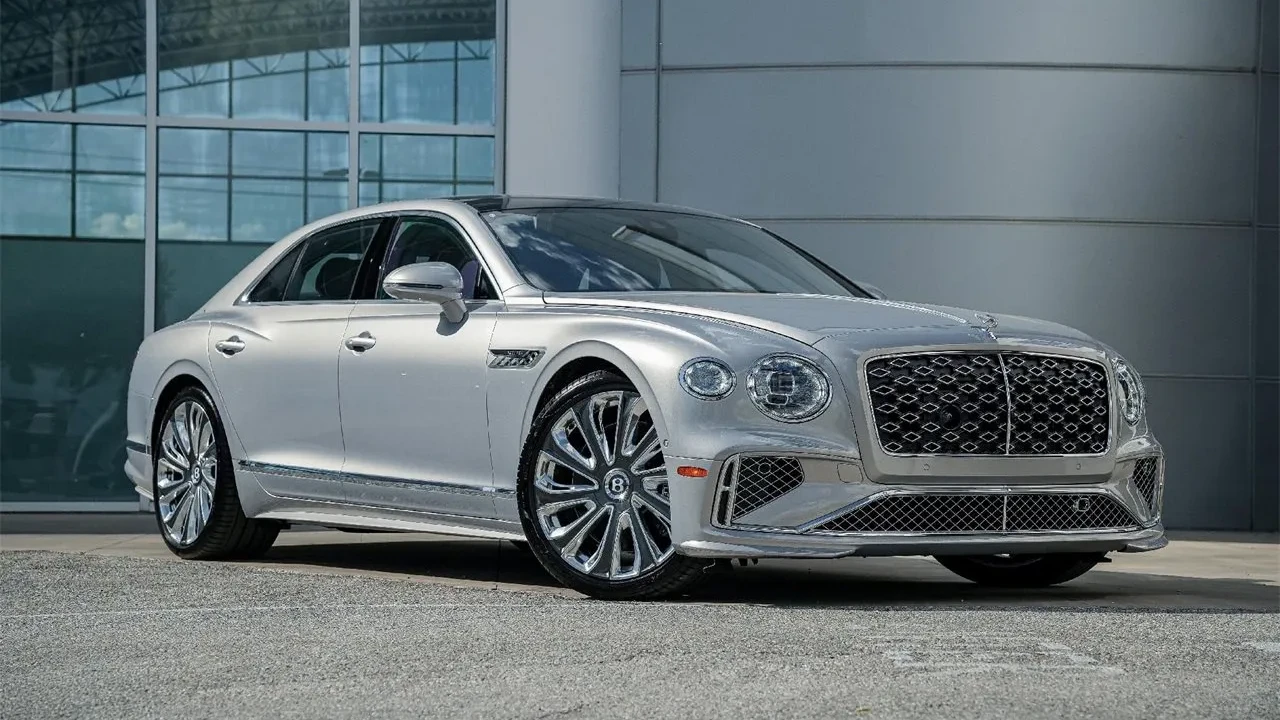

To begin, I want to be upfront: this is an editorial piece rooted in experience rather than a spec sheet. I will not invent horsepower figures, fuel economy numbers or drivetrain details. What matters here are the broader truths — the physical realities of weight, aerodynamics and materials; the human truths of how people use large luxury cars; and the technological possibilities that either reduce or reinforce their environmental footprint. Viewed through that lens, the Flying Spur is both an exemplar of traditional luxury and a test case for what a more responsible future could look like.
Luxury cars like the Flying Spur are inherently heavy and complex. That mass is rarely gratuitous; it buys soundproofing, structural stiffness, active systems and a feeling of solidity that wealthy customers expect. But weight is the enemy of efficiency. The physics are blunt and unforgiving: more mass means more energy required to accelerate and more energy lost to heat in braking. For a former racing driver this is painfully familiar. On a racetrack, weight penalties are measured in tenths that accumulate into seconds. On the road, they translate directly into higher fuel consumption and higher emissions for each kilometre travelled. The environmental cost is not limited to tailpipe emissions; manufacturing those complex assemblies and finishing them with hand-stitched leather and lacquered surfaces carries embedded carbon that we rarely discuss when we admire a veneered dash.
That embedded carbon and lifecycle impact is the piece of the puzzle that gets the least attention in quick press briefings. A large sedan that is driven sparingly but sits in a heated, decadent garage still accrues environmental cost long before it ever consumes a litre of fuel or a kilowatt-hour of electricity. I believe manufacturers — Bentley included — must be candid about this. Carbon offsets and press releases are not the same as transparency in material sourcing, manufacturing energy, and end-of-life recycling strategies. Buyers of expensive cars tend to be an informed group. If a customer is choosing between a handcrafted internal-combustion Flying Spur and an electrified alternative, they should be offered clear data about the whole lifecycle, not just a badge that says 'cleaner' or 'electrified'.
From a driving standpoint, the Flying Spur’s mission has always been to deliver refined composure at speed. That’s something a racing driver learns to appreciate: a chassis that hides its engineering from the occupant until you ask for the unexpected. When you ask a big Bentley for quick responses, it often provides them with an unruffled demeanor; elegant damping and a well-calibrated steering feel that gives confidence rather than adrenaline. Those qualities, paradoxically, can be allies in an eco-minded approach to driving. Smooth inputs, predictive planning and a respectful relationship with momentum reduce energy consumption. I make no claim that heavy luxury cars become eco-friendly by virtue of their ride quality, but the way they are driven fundamentally changes their efficiency.
If you want to make a Flying Spur more environmentally conscious in daily use, you have to start with the obvious: driving technique. I coached many young drivers in sim and track settings; the same coaching applies in reverse when the objective is efficiency rather than lap time. Anticipate corners and traffic so you can carry momentum; avoid heavy braking and reaccelerations; use the highest possible gear at a relaxed engine speed. On routes that suit a grand tourer — undulating coastal roads, long stretches of motorway where the car can settle into a steady cruise — the Flying Spur rewards a steady throttle with a remarkably civilized balance between progress and consumption. That is not the same as saying it becomes efficient in absolute terms, but you can certainly lower daily energy use substantially by changing how you drive it.
Where the eco discussion gets interesting is in the choices Bentley and its contemporaries make about propulsion and tyres. Low rolling resistance tyres are a real, practical win if they can be fitted without wrecking the car’s ride or safety characteristics. There is always a trade-off: lower rolling resistance usually means less grip at the limits, and as someone who once fought for tenths at Le Mans, I am allergic to false trade-offs that compromise safety. But for the majority of time in the real world, tyres designed to reduce hysteresis losses can lower energy demand noticeably on a big sedan. Likewise, software calibrations can prioritize smoother power delivery and early upshifts where appropriate. These are gains that don’t require a wholesale redesign of the vehicle, only a willingness to make efficiency a priority in development and options lists.
Electrification is an obvious path to lower tailpipe emissions, and it is morally persuasive. Yet the EV route is not a panacea if the energy that charges those batteries is still carbon-intensive, or if battery production and disposal are handled without transparency. If Bentley offers electrified powertrains in the Flying Spur range, buyers should be provided with clear, independently audited information about battery sourcing, expected lifecycle emissions, and recyclability programs. Pragmatically, an electrified Flying Spur used on long journeys in regions where charging infrastructure is robust will perform far better in net emissions than a large internal-combustion variant used in stop-start urban traffic. But the devil is in the details: charge habits, grid mix, and whether the car’s battery chemistry is ethically and environmentally sourced.
Because my background is in squeezing performance from otherwise ordinary road cars, I view the integration of hybrid systems and energy recovery as an opportunity rather than a compromise. Regenerative braking, adaptive energy recovery and intelligent thermal management can soften the environmental sting of a heavy chassis. They can also be applied smartly so that the car retains the tactile qualities owners expect. But again, we must avoid the marketing trap: 'mildly electrified' badges and glossy adverts do not equal meaningful emissions reductions unless they change real-world behaviour and are supported by systemic transparency.
Route selection is another under-appreciated lever for reducing the Flying Spur’s environmental impact. This is a car built for corridors and soft-speed sweeps, not stop-start city runs. For owners who care about emissions, pick routes that allow sustained momentum: coastal drives with steady speeds, country A-roads where you can maintain momentum, long motorway sections at considerate speeds. Avoid excessively hilly terrain where the car must frequently exchange kinetic energy for heat through braking. If you are planning a scenic grand tour, map the journey so that the lovely vistas align with stretches that reward steady cruising and minimal braking. Consider also the time of day: travelling when traffic is lighter reduces idling and the inefficiencies of urban congestion.
Practical owner decisions matter too. Wheel choice, for example, is more than an aesthetic statement. Wider, heavier wheels look dramatic but increase unsprung mass and rolling resistance. Opting for smaller diameter, lighter wheels with tyres specified for efficiency will materially reduce consumption. Likewise, careful attention to tyre pressures within manufacturer limits, sensible use of climate control and minimizing unnecessary weight in the car are low-hanging fruit. For the affluent buyer demographic Bentley serves, these are minor inconveniences that pay environmental returns.
Industry responsibility extends beyond product features. Bentley and its peers must also lobby for and support infrastructure that enables more sustainable usage patterns. Public and private charging networks, incentives for responsible material sourcing, and investment in battery recycling facilities are part of the system-level changes that shift the needle. A luxury marque should not only electrify its fleet but also ensure customers can use those electrified vehicles in ways that are meaningfully greener. If manufacturers are serious about sustainability, they must accept that it’s not just about the badge on the boot; it’s about the ecosystem that allows that badge to deliver on its promise.
Critically, I do not accept the idea that luxury and sustainability are mutually exclusive. They can, and should, be complementary. Craftsmanship can be green: responsibly sourced hides, recycled metals, and low-impact finishing processes reduce the embedded carbon of a car without cheapening the experience. If anything, a truly modern luxury product should be proud of its sustainability credentials as part of its storytelling. But that requires honesty. Consumers should be given data, not euphemism. As a motoring writer and an ex-driver who used to chase perfect lap times, I demand the same rigour when a manufacturer claims environmental virtue as I once demanded when a team touted aerodynamic gains.
There is also a cultural argument here. The Flying Spur is an object of desire, a rolling sculpture of comfort and reassurance. Owners buy more than a transport machine; they buy a narrative of success and refinement. The question for Bentley and its clients is whether that narrative can evolve to include stewardship and reduction of environmental impact as core virtues. It is possible — and, increasingly, inevitable. For brands that move fastest and most transparently, the payoff will be reputational as well as environmental. For those who resist, consumer preferences and regulation will eventually force change.
In closing, my view is straightforward and somewhat impatient: the Flying Spur (2025) is a magnificent instrument of travel in the classic grand tourer mould, and appreciated with judicious driving it can be less environmentally punitive than its heft implies. But magistrates of engineering and buyers of luxury must accept a moral imperative to do more than tinker at the edges. That means honest lifecycle accounting, prioritizing meaningful electrification and material stewardship, and designing options that reward efficiency without undermining safety or the fundamental elegance of the car. As a former racing driver I like cars that are honest about their capabilities and limitations. The next chapter for grand tourers like the Flying Spur should be the same — beautiful, powerful, and unapologetically accountable for their environmental impact.
I don't hand out praise lightly. The 2025 Bentley Flying Spur is still what it set out to be: an uncompromising grand tourer that cocoons you in a way only a car made with obsessive craftsmanship can. Behind the wheel it retains that composed, grown-up chassis feel — heavy mass, yes, but allied to perfectly judged damping and a steering balance that rewards smooth inputs and momentum-focused driving. As a former racer I can't help but notice how weight alters the equation: the Flying Spur asks for anticipation, measured throttle application and respect for tyre and brake thermal limits. Those skills return real-world efficiency and help preserve the car's polished composure. But my admiration is conditional. In 2025, luxury without lifecycle honesty is an increasingly thin argument. Bentley must pair its mastery of materials and ride quality with transparent lifecycle accounting, credible electrification and responsible sourcing if this car is to remain defensible beyond aesthetics and seat comfort. Until then, the Flying Spur is a beautifully made indulgence — one I respect for its engineering and feel, but one that should carry a clearer moral ledger if it wants to keep my wholehearted endorsement.
Specifications
| Specification | Value |
|---|---|
| Model | Bentley Flying Spur (2025) |
| Manufacturer | Bentley Motors |
| Body style | Four-door Luxury Saloon |
| Drive layout | All-wheel Drive |
| Seating capacity | Typically 4 |
| Materials | Hand-stitched Leather, Wood Veneers, Premium Metals And Acoustic Insulation |
| Market | United Kingdom |