
A Precise Prescription: Living with the Volkswagen Golf R (2025)
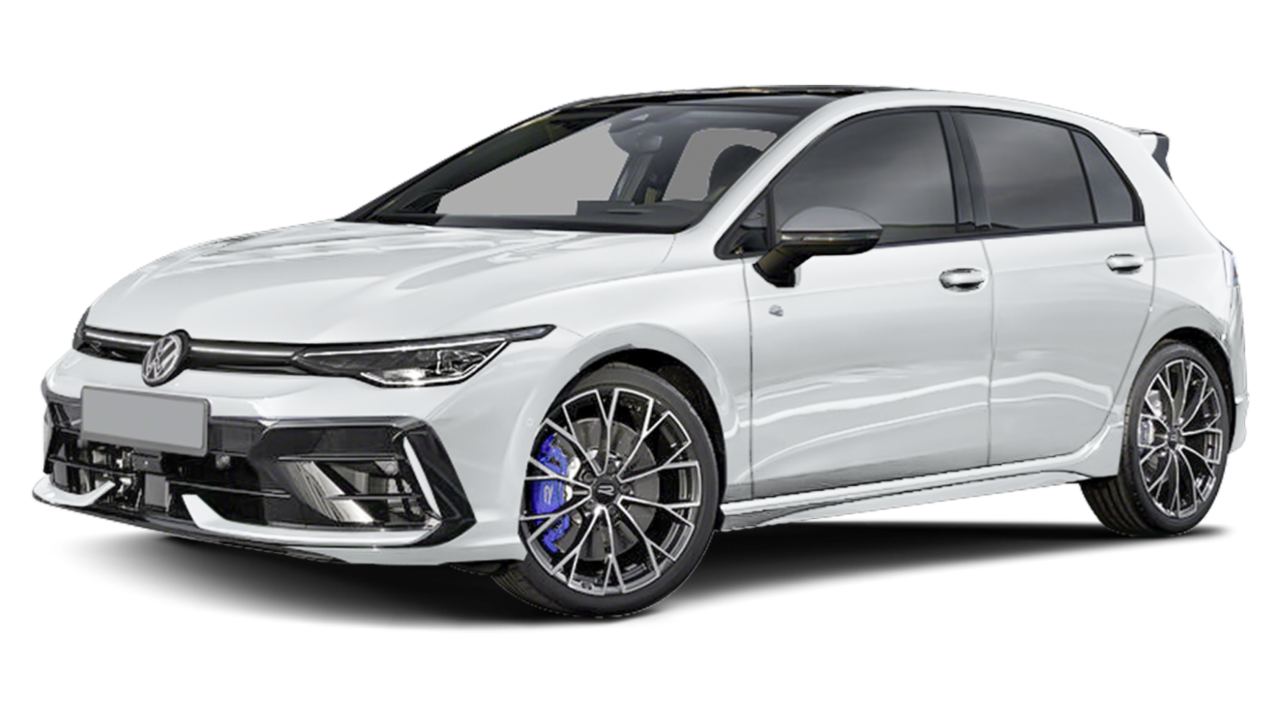

First impressions matter: the 2025 Golf R is handsome without shouting. That's a compliment. From a distance it looks like a Golf, which is both its strength and its curse. Up close you notice the telling details — tighter panel gaps, purposeful aero touches, and a restrained aggressiveness that speaks to competence rather than bravado. There's a lineage in that styling; you can see the evolution from earlier performance Golfs yet there's also the unmistakable hint that this is a thoroughly contemporary machine. For someone who loves classic cars primarily for their proportions and honest surfaces, the Golf R's design is a welcome bridge between eras. The exterior isn't a love letter to the past, but it doesn't try to deny the racing-bred roots that have informed the model for decades.
Slide inside and the interior is the modern dichotomy: high-quality materials and careful ergonomics married to an increasing reliance on screens and software to provide the tactile cues that once came from physical switches. The seats in my car were supportive and comfortable over long motorway stints and surprisingly forgiving during aggressive cornering. I appreciated the way the driver's seating position gives a clear view of the road without forcing you into the theatrical posture that some sports cars demand. The cabin feels well built — buttons feel solid where they still exist, surfaces are largely pleasant to the touch, and the general fit-and-finish is in that reassuring Volkswagen zone between premium and pragmatic.
But then there is the digital layer. Touch-sensitive controls and large display surfaces are part of the package now, and while the graphical polish is undeniable, the interaction sometimes felt like pushing through molasses when all I wanted was a quick adjustment. It's a common modern frustration: slick interfaces that reward careful swiping but punish quick, intuitive inputs. In practical terms that means I found myself taking my eyes off the road more than I used to when adjusting settings, which is a shame because a performance car should encourage focus on driving, not on a menu structure. Small gripe? Perhaps. Worth mentioning? Absolutely, because these details are what separate a car that connects you to the road from one that politely asks you to interface through a tablet.
Driving the Golf R is where the story becomes more animated. On typical daily routes the car is composed and predictable: throttle inputs are met with controlled responses, the suspension soaks up potholes and undulations without turning them into telegraphed insults, and the general sense is of a performance car that also knows how to be a civilized companion. In town it is obedient and confident, never jittery. On the motorway it settles into a quiet, effortless stride that makes longer journeys pleasantly unremarkable — which, in a performance car, is a particular kind of virtue.
Push it onto a country road and the R's sharper side emerges. The steering offers a level of precision that invites turn-in, and the chassis rewards commitment with composure. It isn't the raw, analogue feedback of a lightweight classic sports car — nothing modern with stability systems and myriad drive modes is — but it's refined in the way it communicates intent: well-mannered, immediate enough to be engaging, and forgiving enough to build confidence. If you are the kind of driver who revels in the tidy intersection of speed and control rather than outright drama, the Golf R delivers a very satisfying dose of that medicine.
Traction and stability in mixed conditions were impressive in everyday life. The car felt planted in damp patches and composed on gravel-strewn lanes. I never felt I was fighting the car; instead, it felt like a deliberate co-conspirator in getting me around quickly and safely. That said, modern electronic safety nets occasionally intervene in ways that remind you you're in a heavily computer-augmented machine. The systems are there for good reason, but for purists who want to feel every last degree of slip and grip, those aids can sometimes feel like an overprotective passenger taking the wheel when things get feisty.
Practicality is another place the Golf R scores highly. Day-to-day usability remains a cornerstone of the Golf's appeal, and the R variant keeps that promise. The boot is functional for grocery runs and weekend luggage, and the rear seats are usable by adults for medium-length trips. The car's size and visibility make it easy to live with in urban settings — parking is straightforward and maneuvering in tight spaces is never nerve-wracking. For those who need a single vehicle to fulfill a dozen different roles — commuter, courier of children, weekend escape car — this is a significant virtue. The R does all of that while still being willing and able to be taken seriously when you ask it to perform.
On the subject of reliability and ownership: in my time with the car over a number of weeks I encountered no mechanical breakdowns or glaringly obvious defects. Small software quirks cropped up — occasional minor interface lag and the kind of brief, baffling infotainment behaviour that seems endemic in many modern cars — but nothing that compromised safety or basic operation. Maintenance felt straightforward: consumables such as tyres and brakes are predictably the main wear items if you exploit the car's sporting potential, and servicing through official channels was competent and efficient in my experience. Real-world ownership will always depend on driving style and maintenance habits, but the Golf R seems engineered with a reasonable eye toward everyday durability rather than fragility.
Economy is inevitably a consideration for anyone buying a performance car that will also have to shoulder familiar duties. The R is not an economy car by any stretch, but its day-to-day fuel demand in mixed driving was not as punitive as one might fear. Drive it with moderation and it will behave with relative thrift; push it hard on the kinds of roads that make the model sing and expect a commensurate appetite. That's not a criticism so much as a reminder: performance has costs, and this car is frank about them.
One of the things I tend to value most in a modern performance machine is the quality of the compromises. The Golf R sacrifices nothing essential to be useful every day, and it doesn’t pretend to be a track-only thoroughbred. That makes it a sensible performance car for people who do not want to own two cars — one for the commute and one for the fun. Yet this sensible versatility is also where the R's future collectability is most ambiguous. As a classic car lover, I find myself considering whether today's tech-laden, electronically moderated cars will age into the same kind of affection as the simpler, more tactile machinery of the past. The R has the bones — proportions, chassis balance, and an evocative lineage — but it will be interesting to see whether future enthusiasts prize a 2025 example for the same reasons they prize earlier, less complex entries.
There are a few criticisms I can't ignore. The world of driver assistance systems and digital conveniences has made the modern driving experience safer and often more pleasant, but it has also diluted a certain purity of engagement. The 2025 Golf R is a car you can drive hard with confidence, yet there are moments when I found myself missing the unadorned connection of an older, simpler hot hatch: the rumble, the rawness, the joyously uncomposed moments that make memories. The R chooses a different path — refinement and control over raw excess — and for many that'll be perfect. For me, a little more mechanical immediacy would have been welcome.
Another modern irritation is the cost and complexity of options. It's tempting to configure your car with every desirable feature, but the tally adds up quickly, and some options feel like conveniences that should have been standard. Buyers who value durability and easier long-term maintenance might want to think carefully about which electronic packages they really need. Fewer touch surfaces and more physical switches would not have hurt the car's character, and would likely make long-term ownership less fussy.
From a maintenance standpoint, a sensible buyer's checklist emerges from my time with the car: verify standard service history on a used example, be mindful of software update records when buying new or nearly-new, and keep an eye on tyres and brake wear if the car has been used enthusiastically. Speak to previous owners about how the car was driven; these are not exotic machines but they are cars that reward respectful, attentive ownership.
So who is the 2025 Golf R for? It's for the person who wants a single-car solution that offers genuine performance without demanding a sacrifice in everyday usability. If your idea of weekend fun includes carving up A-roads and you still need to collect children from school or carry suitcases, this car performs that balancing act better than most. If you are a purist chasing the unfiltered character of a classic rally-hatch, this will not be your dream car. But if you appreciate measured, precise performance delivered with competence and a dash of restraint, the Golf R is a very fine choice.
In the end, I find myself appreciating the 2025 Golf R not because it scratches a nostalgic itch — it doesn't, and it shouldn't try — but because it manages to hold onto the spirit of its predecessors in a way that's relevant to modern life. It's not the most theatrical performer in its segment, nor the cheapest, nor the most analogue, but it is one of the most honest: a performance hatch that knows how to be a car first and a statement second. For collectors and classic enthusiasts like me, its long-term appeal may depend on how future generations reckon with cars that are increasingly software-defined. For drivers living now, it remains a rare breed: a practical, capable, and genuinely enjoyable performance car you can reasonably live with day to day. That, in my book, is worth a great deal.
I arrived at the Golf R expecting a modern masterpiece of packaging and performance, and that is precisely what Volkswagen has delivered — albeit in a quietly civilised, electronically moderated suit rather than the ragged denim jacket of old. In day-to-day use it is a superbly judged compromise: comfortable on long motorway runs, practical enough for family life, and sharp and composed when you point it at a twisting B-road. What irks me — and will irk traditionalists — is how much of its character is now mediated by software and touch surfaces; the mechanical immediacy that made classic hot hatches so addictive is noticeably diluted. Still, for buyers who want genuine pace without having to sacrifice everyday sense, the 2025 Golf R is an honest, very usable performance car. I’d buy one as a modern everyday sports hatch, but as a collector’s prospect I’m cautious: its long-term appeal will hinge on how enthusiasts come to value software-laden, highly refined machines versus the raw, tactile classics I cherish.
Specifications
| Specification | Value |
|---|---|
| Model | Volkswagen Golf R (2025) |
| Body style | 5-door Hatchback |
| Seating capacity | 5 |
| Drivetrain | All-wheel Drive (electronic Traction And Stability Aids) |
| Fuel type | Petrol |
| Interior character | High-quality Finish; Supportive Seats Suited To Long Motorway Stints |
| Infotainment and controls | Large Screens And Touch-sensitive Controls; Some Sluggish And Non-intuitive Interactions Reported |
| Practicality | Retains Useful Boot Space; Rear Seats Usable For Adults On Medium Trips |
| Handling character | Composed, Precise Steering And A Balanced Chassis That Rewards Commitment |
| Ownership notes | Straightforward Servicing Reported Over Test Period; Minor Software/infotainment Quirks Observed |
| Collectability note | Long-term Appeal Uncertain Due To Increasing Software Dependency |