
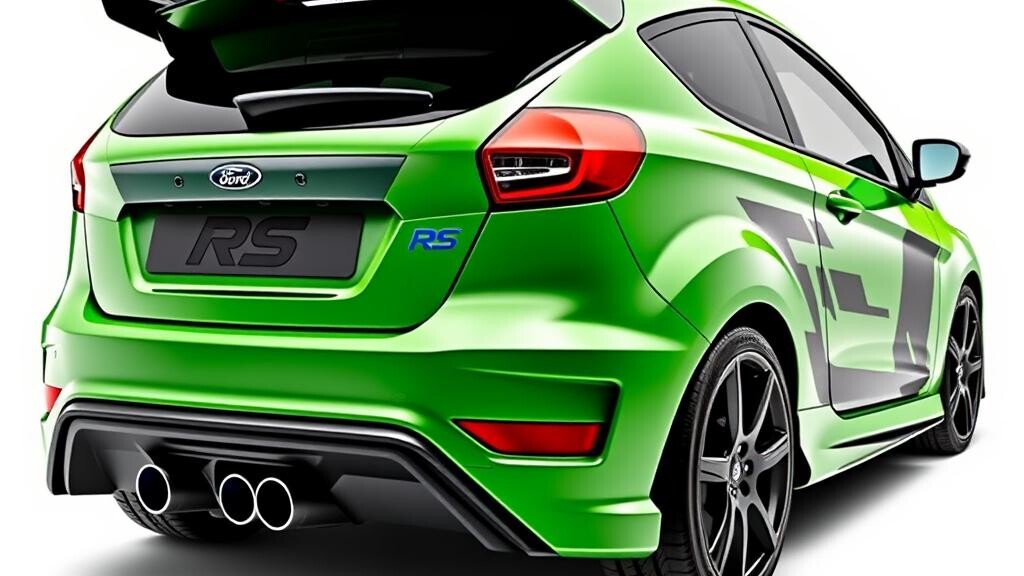

Day One: The City, the Motorway, the Little Car That Could
Out on the motorway the Fiesta’s small footprint becomes an advantage and a disadvantage at the same time. It’s stable enough at legal speeds, and its aerodynamics mean it doesn’t shriek as a large SUV or a full-size truck do when wind gusts catch them. But the cabin hums; the engine works without drama, and you never forget this is a small car tasked with carrying you and your baggage over long distances. If you’re expecting the planted serenity of a large sedan on an extended motorway blast, the Fiesta won’t give it to you. It will, however, make the drive feel personal and engaged.
Day Two: The Hills, the Narrow Lanes
I find the best way to judge a small car is to take it somewhere that exposes both its strengths and its shortcomings: narrow, twisty lanes, short, steep climbs, and the kind of undulating countryside where an overgrown gate might be half on the road. The Fiesta comes alive when the road narrows. Its steering is quick, and the lightweight chassis rewards gentle inputs. It’s the kind of car that invites you to be precise. You learn to thread the car between hedges rather than muscle it.
On rural roads with a rough surface, the Fiesta’s suspension does its best to keep occupants comfortable. There’s a trade-off: the car absorbs smaller irregularities well but can feel unsettled over sharp hits. That’s intrinsic to small cars with short wheelbases. Don’t expect the composed serenity of an SUV that soaks up lumps with mass and travel. What the Fiesta offers is directness. It makes you feel the world under the wheels, and for drivers who relish feedback, that’s not a complaint — it’s a feature.
Practicality and Real-World Use
One of the reasons the Fiesta became a bestseller in so many markets is down to basic, honest practicality. It’s small enough to park in tight town centers but large enough inside for four adults to commute in relative comfort on short trips. Boot space in hatchback form is sensible for its class; a weekend’s worth of gear fits neatly, although a full-on overland outfit would require roof racks and a lot of Tetris-style packing.
As a traveling journalist whose kit often includes tripods and camera bags, I learned quickly to be selective. The Fiesta doesn’t pretend to be a multi-use hauler. Instead, it provides low-cost, low-complexity transport that works. For many people — families with a second car, young professionals, and city dwellers — that’s exactly the point.
Technology and Safety: Small But Modern
Depending on the year and market, the Fiesta can be equipped with a reasonable suite of tech: infotainment systems, smartphone integration, driver aids like lane-keeping assist and automatic emergency braking. Don’t expect the level of sensor sophistication or ADAS breadth found on premium models or the latest EVs, but the basics are often there and they work well enough. For my trip, simple and reliable is preferable to a proliferation of semi-autonomous features that require more attention than they save.
A Performance Variant in the Mix: The Fiesta ST
Ford’s performance pedigree in small cars is represented most clearly by the Fiesta ST. It’s the sort of model that reminds you why people used to buy hot hatches for the sheer joy of cornering. If you want a little car that attacks twisty sections with a grin, the ST trims bring that grin in spades. I didn’t take an ST on this trip, but I drove one briefly before leaving and can attest to its spirited nature. It’s an important reminder that the Fiesta silhouette is capable of giving pure-driver enjoyment, not just economy and convenience.
Fuel Economy, Cost of Ownership, and Common-Sense Value
I did not publish specific fuel consumption figures in this piece because real-world economy can vary greatly by engine, gearbox, load and driving style. What I can say is that the Fiesta’s economics are a big part of its charm: lower running costs, smaller parts, and generally cheaper insurance in many regions compared with larger vehicles. For a traveler on a budget, a Fiesta is an efficient way to cover miles without bleeding cash on fuel or inflated running costs.
Where the Fiesta Falls Short (from an Off-Road Adventurer’s View)
Let’s be honest: I spent my life around tall, tarmacked roads and higher-clearance rigs for a reason. The Fiesta isn’t built to crawl rutted firetracks, ford streams, or carry a full recovery kit through sand dunes. Ground clearance is limited, the underbody is not protected for rock-scraping, and there’s no all-wheel-drive option in the mainstream lineup. If your adventures demand true off-road capability, you should be looking at compact crossovers or small SUVs with proper drivetrain hardware.
However — and this is important — not every exploration needs low-range gears. On gravel tracks, well-maintained farm lanes and light forest roads, a cautious driver can take a Fiesta further than its spec sheet might suggest. I traversed several muddy access tracks and negotiated tricky, bottlenecked country lanes thanks to the car’s narrow stance and manageable mass. The caveat is always the same: respect the car’s design limits. Don’t push it into the realm of vehicles built to be abused.
The Bigger Picture: What the Fiesta Says About the Industry
Here’s where I get opinionated. The global auto market has spent the last decade encouraging buyers away from small, efficient cars and into ever-larger crossovers and SUVs. Manufacturers found higher margins in bigger platforms and buyers bought into the perceived safety and utility. At the same time, electrification promises to change everything again, but the transition has been uneven. Small cars like the Fiesta have been squeezed from both sides: less attention from OEMs chasing profits in larger segments, and uncertain repositioning in the EV era.
I think that’s a loss. Small cars solve real problems: urban congestion, resource efficiency, lower purchase and running costs. They also keep the soul of joyful, direct driving alive. The Fiesta embodies that ethos. Its likely decline in many markets is not just about consumer taste — it’s about manufacturers choosing to prioritize models that fatten their balance sheets. As an industry, we should be careful about letting practicality and driver engagement vanish from mainstream choices.
Final Impressions: One Trip, Many Takeaways
After several hundred miles across motorways, country lanes and a few cheeky gravel tracks, I handed the keys back with a sense of respect for the little Ford. It’s not a car that demands pompous praise. It’s honest, compact, and very good at being small. For a traveler who needs a nimble companion, a sensible boot and low running costs, the Fiesta makes a persuasive case.
Would I take it on a week-long, cross-country, off-grid overland expedition? No. Would I choose it as a primary vehicle for city-based adventures that include frequent highway runs and occasional rural escapes? Absolutely — with the usual caveats about packing light and avoiding bad country lanes after heavy rain.