
Mini Countryman (2024): The Stylish Compromise — A Technical Love Letter to a Practical Pretender
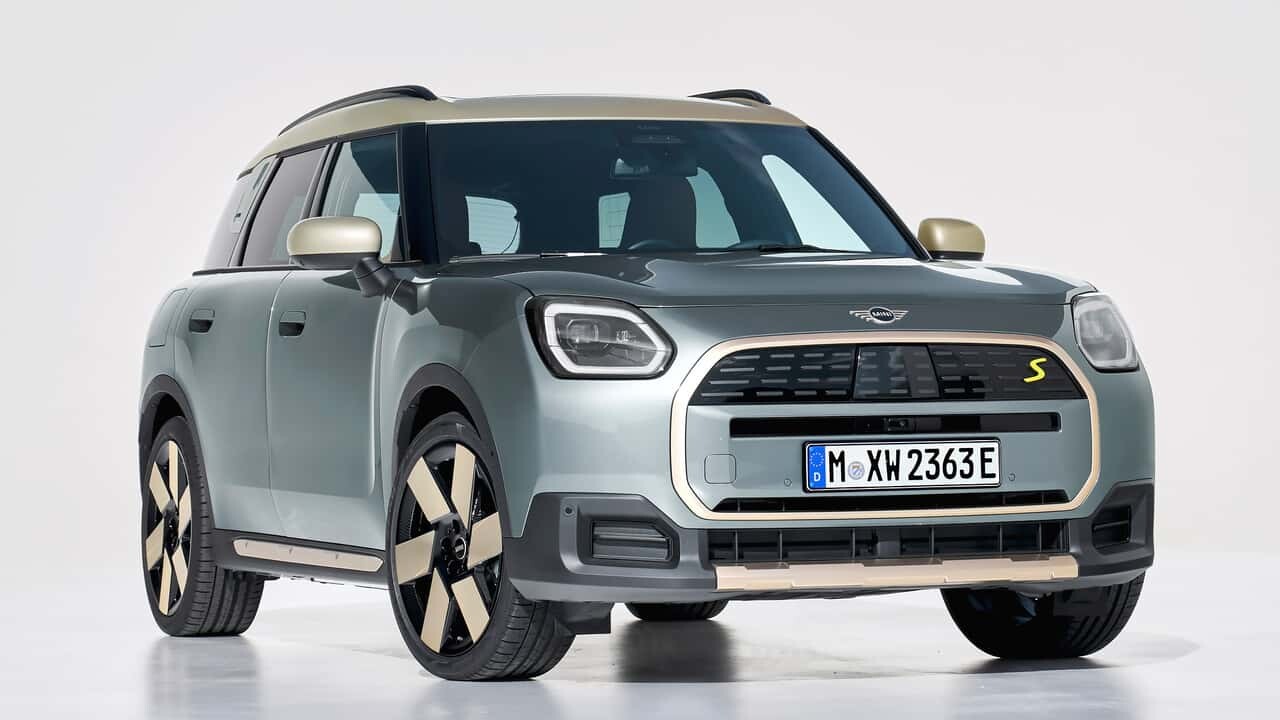

The Countryman’s bones are familiar to those who watch BMW’s handiwork: it sits on the compact-car architecture developed under BMW’s stewardship of MINI. That’s not just a bureaucratic footnote — it shapes everything about the car. Front-wheel-drive is the default, with an intelligent all-wheel-drive system offered on certain variants that can route torque rearward when traction demands it. The platform is tuned to straddle two masters: retain the brand’s cheeky go-kart-ish character, while stretching into SUV territory with higher ride height and additional room. In practice it’s a masterclass in compromise; awkward compromises can be offensive, but this one is thoughtfully done.
Under the bonnet, MINI’s philosophy is very much of the modern era: small-displacement, turbocharged engines paired with electrification options. There’s a selection that covers the practical buyer — people who want a perky, efficient runabout — through to those who want punchier, sportier variants. I won’t insult your intelligence with numbers I can’t absolutely verify; what matters less is cubic centimetres and more is character. The petrol engines are turbocharged, which means they bring the usual modern virtues and vices: immediate mid-range shove, frenetic low-down manners compared with a naturally aspirated engine of old, and a tendency to layer on a pinch of artificial urgency when you prod them. They’re matched to automatic transmissions that favour rapid, efficient shifts in normal driving and tighter, more eager changes when you select the Sport mood.
The plug‑in hybrid variant is the automotive equivalent of a sensible friend who’s also into weekend wellness retreats. It pairs an internal combustion engine with an electric motor and a battery pack, permitting short trips under pure electric power and improved overall efficiency for mixed use. The packaging of that battery is cleverly integrated so it steals less cabin space than you might fear — there is inevitably a weight penalty, and that changes the Countryman’s dynamics in subtle but important ways. The extra mass calms the chassis when cruising and raises its center of gravity a touch, which softens the car’s previously snappy responses. This is not a complaint — it is an observation. If you prefer your MINI with a touch of serenity and fewer fuel stops, this is the one.
Speaking of dynamics, the Countryman’s suspension layout is orthodox but well-judged: MacPherson struts up front and a multi-link setup at the rear, which is precisely what you want in a heavy-ish small SUV that still wants to be fun. This arrangement allows the front end to be incisive without making the rear behave like an overexcited terrier. There is a trade-off, naturally — ride comfort versus communicative feedback — and MINI leans toward the latter. On rough urban surfaces the Countryman can feel taut, refusing to indulge in floaty softness. But the damping is clever rather than crude: it soaks small, high-frequency bumps effectively while resisting mid-band pitch, which keeps the driver honest without battering passengers into submission.
Steering is electrically assisted and tuned to give a sense of directness far greater than the Countryman’s dimensions might suggest. Some modern cars have steering with the personality of a corporate apology; the Countryman’s is more like a terse handwritten note. It’s not telepathic, nor is it lazy. Turn-in is crisp, the front tyres tell you what they’re doing, and that gives the car a lively feel through bends. The weight of the steering changes with drive modes, so in Comfort you can loaf on lanes and in Sport the wheel firms and sharpens the turn-in. It’s a simple trick, but one that significantly affects the personality you get from the car.
The ALL4 all-wheel-drive system, when present, is not a full-time mechanical monster; it’s intelligent, lending torque to the rear axle when the front wheels need help. The system is designed for grip and composure rather than off-road vanities. If you want to climb sheer cliffs or ford rivers, buy a truck and stop insulting yourself with fashionable footwear. For slippery tarmac, compact snowbanks and gravel forest tracks, ALL4 is the right tool. The engagement is prompt and discreet rather than theatrical: the Countryman doesn’t roar about its competence, it simply keeps going — which in my book is infinitely preferable to boastfulness.
Brakes are firm and progressive, which is vital in a heavier vehicle — particularly variants with the hybrid battery. Regeneration in the hybrid is sensible and adjustable; you can generally rely on the system to capture kinetic energy without feeling like you’re being held back by an invisible hand. The transition between regenerative braking and the hydraulic brakes is properly honed so there’s no sudden grab. Owners who like single-pedal driving will find a usable level of regeneration, but those longing for the absolute theatricality of one‑pedal driving will be left mildly uninterested.
Inside, the Countryman is a study in stylistic self-confidence. MINI has always sold more than transport — it sells an aesthetic lifestyle. The dashboard and appointment are composed with a fashionable eye: materials feel premium in the touch points, switchgear has satisfying mechanical detents, and the layout is jaunty rather than austere. Space is a headline benefit over smaller MINIs. Rear-seat occupants get reasonable legroom and the boot swallows what typical buyers will throw at it: golf bags, dog crates, ludicrous amounts of craft-beer. Where the plug-in hybrid is specified, there is a small knock to cargo volume because of battery packaging, but the Countryman’s practical bones remain intact.
The infotainment and driver-assistance suite is modern, with smartphone mirroring, voice control and a suite of active safety features. MINI’s software has evolved to be less decorative and more usable; there’s a sense that functionality has been allowed to catch up with fashion. Adaptive cruise control, lane-keeping assist, automated emergency braking and parking aids are all present in varying levels depending on trim, which is the expected state of affairs in this segment. I’ll note — as any contrarian must — that while these systems are useful and sometimes brilliant, they are not magical. The car wants you to be present, and that’s how it should be.
From a thermal management perspective, MINI has paid attention to the issues that battery-equipped cars throw up. Battery cooling and heating are orchestrated so that performance is not sacrificed in everyday climates. Thermal management matters for longevity and repeatability, particularly for drivers who expect the same crisp throttle and consistent regenerative behaviour across seasons. The engineers have been discreetly thorough here; it’s the sort of diligence you only notice when things would otherwise be flaky.
Sound insulation in the Countryman is generally good. The insulation is targeted — tyres and wind noise are suppressed at the speeds that matter, while engine character is allowed a polite presence. It’s curiously satisfying: the car sounds competent but not theatrical. Modern cars often over-emphasise synthetic engine notes or belt you with bass from door-mounted subwoofers; the Countryman largely resists that temptation and allows the mechanical noises to be what they are. Enthusiasts will appreciate the restraint.
One technical caveat for the prospective buyer concerns weight distribution. The hybrid variants, as noted earlier, carry a weight penalty due to batteries and electric motors, and that changes the handling envelope. It reacts with a slightly more grounded, less eager character in direction changes. For day-to-day driving, especially in urban environments where the hybrid’s electric capability is most useful, that trade-off is a rational compromise. For those seeking the purest driving thrills in a MINI-badged package, a lighter combustion-only variant will feel more alive.
Fuel economy and emissions depend heavily on how you drive and which powertrain you select. The non-electrified petrol models reward restraint and steady speeds; the PHEV rewards short commutes by allowing frequent electric-only operation. If you live near a charger and your morning commute is under the electric range, you can eliminate large quantities of petrol consumption, which is precisely why these variants exist. As ever, do not be a zealot: choose the car that suits your actual life, not the social media version of it.
Where the Countryman excels is in its ability to carry style and sensible engineering together without either becoming ridiculous. There are plenty of cars that offer the same practical footprint but are anonymous; the Countryman refuses anonymity and does so with technically sound foundations. The packaging is smart, the chassis is adeptly tuned, and the variety of powertrain choices allows buyers to prioritise economy, performance or compromise. It’s a small luxury crossover that understands the market it lives in and plays the role with aplomb.
Now, for the part where I get to be predictably grumpy. I dislike the way modern car buying decouples the act of driving from the experience of ownership. The Countryman is, in some trims, heavily accessorised with brandable lifestyle trinkets — roof rails that double as Instagram props, finishes that will look dated in a few seasons if trends shift, and trim packs that turn what should be a simple compact SUV into a fashion statement. I understand the economics; carmakers need to sell variants and options like a boutique sells scarfs. But if you buy a Countryman purely for the lifestyle devices and not for the engineering beneath, you are missing half the point. The engineering is the quiet star here and it would be a shame to be distracted from it by throw cushions and coloured stitching.
Serviceability and ownership are banal but important. Being a product of BMW’s ecosystem means parts access and dealer support are generally solid — the sort of practical backing that many quirky marques lack. Warranty and support packages vary by market; investigate them and don’t be seduced by the spec sheet alone. The Countryman is not an exotic; it rewards sensible maintenance in the same way any well-built machine does.
So what is the 2024 MINI Countryman, in the end? It is a stylish compromise handled with technical credibility. It’s not a hardcore enthusiast’s toy, nor does it pretend to be. What it offers is a compact SUV that can be both a daily commuter and a weekend companion, with a chassis that still speaks to MINI’s performance heritage, and a set of powertrains that cover the sensible-to-sporty spectrum. The plug-in variant offers the kind of practical electrification that fits real lives without demanding ritual penance at charging stations every hour. The engineering choices are measured, modern and, importantly, implemented with attention to detail.
If you want a fashionable small crossover that doesn’t skimp on how it drives, the Countryman is a persuasive proposition. If you want raw, undiluted nostalgia — an analogue wallow of the 1990s — look elsewhere. The 2024 Countryman embraces modernity while keeping a wink in its eye, and that, for me, is the definition of successful design. I like to think of it as the car equivalent of a well-cut blazer: fashionable enough to turn heads, sensible enough to be lived in, and put together well enough that you can tell the tailor knew what they were doing. And as much as I rant about modern cars being either over-styled or over-engineered, this one manages both without becoming a caricature. It’s pragmatic, polished and mildly rebellious in the right ways — exactly the sort of machine a trendsetter grudgingly admires.
I’ve always suspected that modern car buyers are part style-hunter, part spreadsheet — and the 2024 MINI Countryman delights both camps while giving the purists a mildly exasperated shrug. It’s handsome, buttoned-up and just enough of a hooligan on twisty roads to make you feel young without actually endangering your pension. Underneath the jaunty exterior sits sensible BMW/MINI engineering: front-wheel drive by default with an optional ALL4 system, automatic transmission, MacPherson front struts and a multi-link rear, and (for the numerically inclined) a plug-in hybrid if you insist on pretending your commute is a moral act. The PHEV is the obvious modern compromise — brilliant for short electric hops, slightly saddening for enthusiastic cornering thanks to the extra weight, and perfectly sensible if you remember to charge it. Interior and infotainment are stylish and up to date, safety tech is present without being clingy, and packaging is clever enough that most owners will forget they were ever worried about space. Would I buy one to recapture the analogue thrills of yore? No. Would I recommend it to anyone who wants a fashionable, practical small SUV that still drives with some personality? Absolutely — just don’t buy it as a personality transplant and expect it to do your cycling and poetry for you.
Specifications
| Specification | Value |
|---|---|
| Platform | BMW/MINI Compact-car Architecture |
| Drivetrain | Front-wheel Drive Standard, Optional ALL4 All-wheel Drive |
| Powertrains | Turbocharged Small-displacement Petrol Engines; Plug-in Hybrid (PHEV) Option |
| Transmission | Automatic |
| Front suspension | MacPherson Strut |
| Rear suspension | Multi-link |
| Regenerative braking | Adjustable Hybrid Regenerative Braking Blended With Hydraulic Brakes |
| Steering | Electrically Assisted Steering, Weight And Response Vary By Drive Mode |
| Infotainment | Modern System With Smartphone Mirroring And Voice Control |
| Driver assistance | Available Adaptive Cruise, Lane-keeping, AEB And Parking Aids (trim Dependent) |
| Battery packaging | Integrated PHEV Battery That Reduces Cargo Volume Compared With Non-hybrid Variants |
| Noise vibration harshness | Targeted NVH Insulation: Tyre And Wind Noise Suppressed, Engine Given A Polite Presence |
| Market note | UK Market Specification Varies By Trim And Options; Exact Figures (power, Torque, Mpg, Battery KWh) Depend On Chosen Variant |