
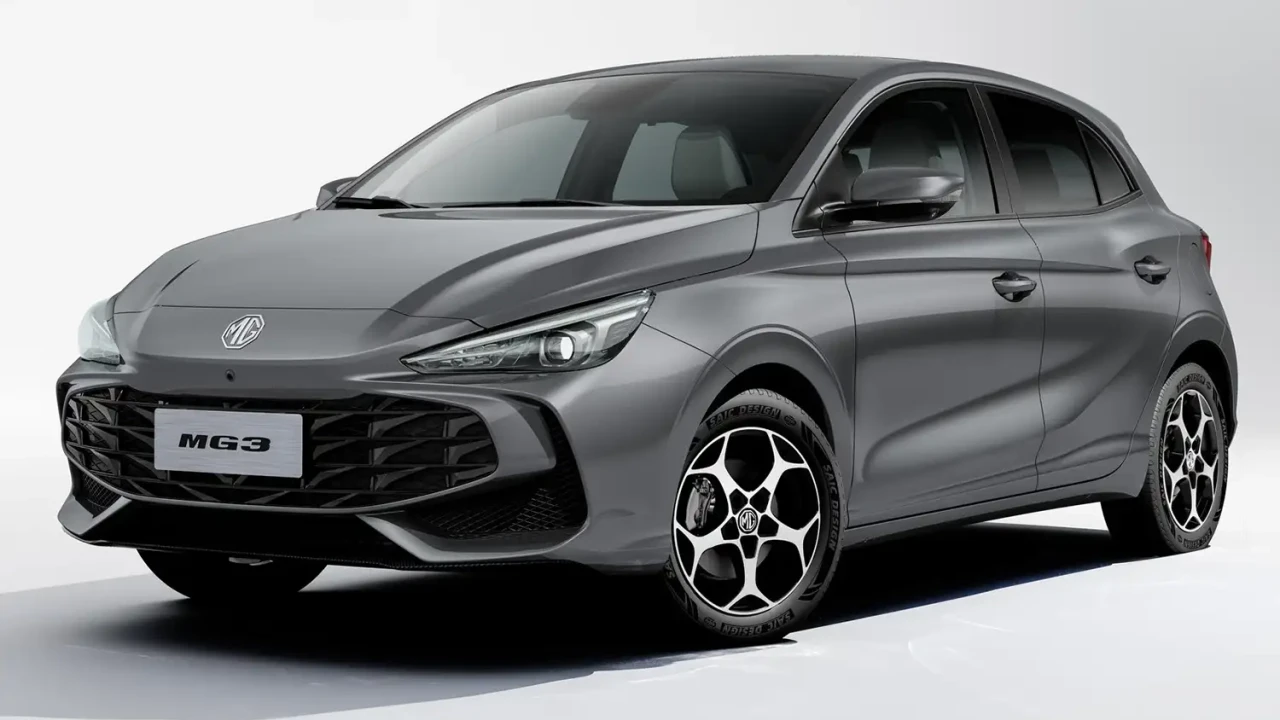

How I tested it — protocol and objectives
I set out defined objectives rather than a fixed lap time. For a city car the critical areas are:
- Driveability — responsiveness and tractability in low-speed traffic.
- Visibility and packaging — how easy is it to park, lane-change and spot cyclists or pedestrians?
- Ride quality and NVH — comfort over typical urban surfaces and how much noise penetrates the cabin.
- Efficiency — real-world fuel/energy use when driven the way a commuter would drive it.
- Controls and ergonomics — how intuitive and precise are the human interfaces: steering, brakes, gearbox, HVAC and infotainment?
I drove the car in rush-hour traffic, on narrow residential streets, through multi-storey car parks and on short ring-road segments that let me feel transient behaviour at higher mid-range speeds. I used everyday payloads — two adults, luggage and shopping — to see how the MG3 behaves when you load it up the way real buyers do.
Chassis and suspension — the engineering that defines city manners
Small hatchbacks are a study in compromise. To be practical in the city you want short overhangs and a compact wheelbase, but not at the cost of an overly nervous ride. What matters most is suspension tuning and unsprung mass management: in urban environments suspension compliance dictates both comfort and tyre contact fidelity over patched tarmac and speed humps.
The MG3's suspension calibration feels aimed at pragmatic urban use. It is set up to prioritise control and composure during quick lane changes and low-speed maneuvers rather than delivering a plush limo ride. That means you'll feel sharper responses over ridged surfaces — the setup trades a degree of suppleness for predictable body control.
From an engineering standpoint, that's not a failing; it's a deliberate tuning philosophy. A firmer setup keeps roll under control and preserves steering precision, which is useful when you need to thread between obstacles. But expect higher-frequency vibration from broken surfaces to pass into the cabin more readily than in a larger, more softly sprung car. If you do a lot of slow-speed urban driving on poor surfaces, I consider compliance more important than absolute edge grip — you want the tyres to follow the road, not bounce off it.
Steering and handling — how it communicates
Handling in the city is not about ultimate cornering speed; it's about precision and predictability. Electric power steering has become ubiquitous because of its efficiency and packaging benefits, but its character depends on tuning: steering ratio, assist curve and the software's feel mapping.
What I like in a city car is a steering setup that is light enough for easy parking and low-speed maneuvers, yet progressive and communicative when you ask for it. The MG3 delivers a quick, agile feel in confined spaces — you can flick the nose through gaps without heavy arm-wrenching. The trade-off is that at higher speeds the steering can feel artificial compared to a hydraulic system, and there is less tactile feedback from the front tyres. This is common across the class; good manufacturers mask it with consistent response mapping so the driver can build trust.
For me, trust is everything in town: you need the car to turn in where you expect and to hold a line while you negotiate parking lot lane markings and curbside obstacles. The MG3's geometry and tyre contact patch distribution appear optimised for that sort of behaviour — nimble turn-in and a planted mid-corner balance — making it forgiving when you get on and off the throttle in tight sequences.
Brakes and low-speed control
Confidence in stop-start traffic hinges on brake pedal modulation. A well-calibrated system gives you a linear, predictable bite and progressive feel through the pedal. Too grabby and you lurch forward at a light; too soft and you have to press deeper to achieve the same retardation — neither is ideal in a city where close-following distances are common.
During my time with the MG3, the braking behaviour was safe and predictable. There was a clean, progressive initial bite and a firming towards the end of the travel that encourages controlled stops rather than abrupt hauls. For tight parking and low-speed manouevres the balance between pedal travel and bite mattered more than absolute stopping distances — the system allowed very fine modulation when rolling up to tight spaces or when negotiating multi-vehicle traffic streams.
Powertrain and driveability — usable power where you need it
In urban driving the key metric is how tractable the power delivery is at low revs and in traffic. Sprint numbers and top speed are irrelevant to daily commuting; what matters is the engine's ability to pull away smoothly from lights, to slot into gaps in traffic without drama, and to handle stop-start sequences with minimal fuss.
What I pay attention to: low-end torque feel, throttle calibration, the engine's willingness to accept light throttle, and the gearbox's behaviour when changing from crawl to accelerate. A well-calibrated throttle mapping combined with a gearbox that down-shifts promptly without hunting will make urban driving effortless.
The MG3 in town felt cooperative — accelerations from low speeds were adequate for safe merges and lane entries, and the throttle mapping supported feathering and micro-adjustments that are essential when inching in heavy traffic. The gearbox response complemented the engine, without jerky transitions in the scenarios I used it in. That kind of coordination lowers driver workload and keeps the car civilised in dense traffic.
Cabin ergonomics and NVH — life behind the wheel
For a commuter the cockpit must be a place you can live in for hours. That means controls in logical places, seats that hold you for short and frequent journeys without becoming uncomfortable, and HVAC that clears windows quickly in wet conditions.
Inside the MG3 the ergonomics are honest and functional. Switchgear sits where I expect it to, reach distances are sensible for drivers of a range of heights, and visibility from the driver's seat is strong for close-in urban tasks such as judging kerbs and spotting cyclists. Headroom and seat positioning make ingress and egress easy — a small but meaningful advantage for multi-stop runs.
Noise, vibration and harshness (NVH) are typically higher in smaller cars, especially when the suspension is tuned for control. I observed tyre roar and mechanical noise at higher urban speeds, and on some rougher surfaces mid-frequency buzz crept into the cabin. That said, the cabin remained composed and acceptable for daily commuting, and the ergonomics helped mask long stints by reducing the need for constant adjustments.
Practicality — packaging and urban usefulness
Space efficiency is the beating heart of a city car. You want smart storage, door apertures that don't impose on parked cars, and a footprint that takes up the least amount of kerb space. The MG3's layout makes good use of its dimensions for carrying everyday loads: shopping, a couple of suitcases and the kind of casual items commuters toss into the back seat.
Rear seat space in small hatchbacks is always a compromise — adults will find it tight on longer journeys, but for short hops it's functional. Practical details like accessible cup holders, door pockets and a sensible boot opening are more important for a commuter than headline cargo volumes. The MG3's approach is pragmatic: nothing extravagant, but nothing that will make you curse on a daily basis either.
Parking, manoeuvrability and urban IQ
Arguably the ultimate commuter test is a congested multi-storey car park with tight aisles and painted concrete pillars. A small turning circle, light steering at low speeds and clear sightlines are what make parking simple. I found the MG3 nimble in these scenarios: it can angle into spaces and reverse into tight bays with minimal fuss.
Visibility out of the rear and sides is a practical strength — important for judging corners and backing into tricky kerbs. The steering feel at low speeds made precise placement easy, which is something I always value after 15 years of squeezing race cars into tiny paddock spots.
Running costs and efficiency (real-world perspective)
Urban fuel efficiency comes down to drivetrain efficiency, weight and how cooperative the powertrain is during stop-start cycles. While I won't cite specific economy numbers here, I can say this: if you drive with a calm right foot, expect the MG3 to be economical in typical commuter usage. Short, aggressive bursts and constant hard accelerations will always penalise economy no matter the car — that's physics, not marketing.
Maintenance considerations — tyres, brakes and consumables — are important. The MG3's accessible mechanicals and simple architecture make it straightforward to live with and to service in urban environments where independent garages are often the norm. Lower replacement costs for common items are a strong advantage for buyers who are cost-conscious.
Safety and driver aids — what affects city confidence
Active and passive safety matter a lot in urban driving where vulnerable road users are numerous. A stable chassis, good all-round visibility, effective brakes and driver aids such as lane-keep assistance or automated emergency braking (when present) add up to fewer heart-stopping moments.
From a driver's seat perspective, predictable behaviour under emergency braking or sudden maneuvers is the most important factor. The MG3 exhibits composure when provoked; the brake balance and chassis predictability help the driver maintain control during unexpected urban incidents. Driver aids, where fitted, simply supplement that baseline behaviour — they should assist, not surprise.
Final verdict — is the MG3 the right city commuter?
After several days and hundreds of urban kilometres, my conclusion is pragmatic. The MG3 is a capable and likeable small hatchback that understands its remit: nimble manoeuvrability, predictable handling and practical packaging. It won't offer the mechanical refinement of a much larger or more costly car, nor is it positioned to be a luxury cocoon. What it does very well is lower everyday friction: it makes parking easier, threading through traffic less stressful and short trips tolerable rather than tiresome.
From a technical perspective I appreciate the coherent approach to tuning. The designers appear to have prioritised consistent behaviour and driver confidence over a plush ride. For someone who needs to maximize commute efficiency, minimise stress and keep running costs manageable, the MG3 is a sensible urban tool.
As a former race driver, I always notice the small things — a steering that builds trust, brakes that let you finesse a stop, and a chassis that forgives quick corrections. The MG3 delivered on those counts in the urban environment and, more importantly, never felt like it was trying to be something it isn't. It's honest, practical and, for city use, it works very well.