
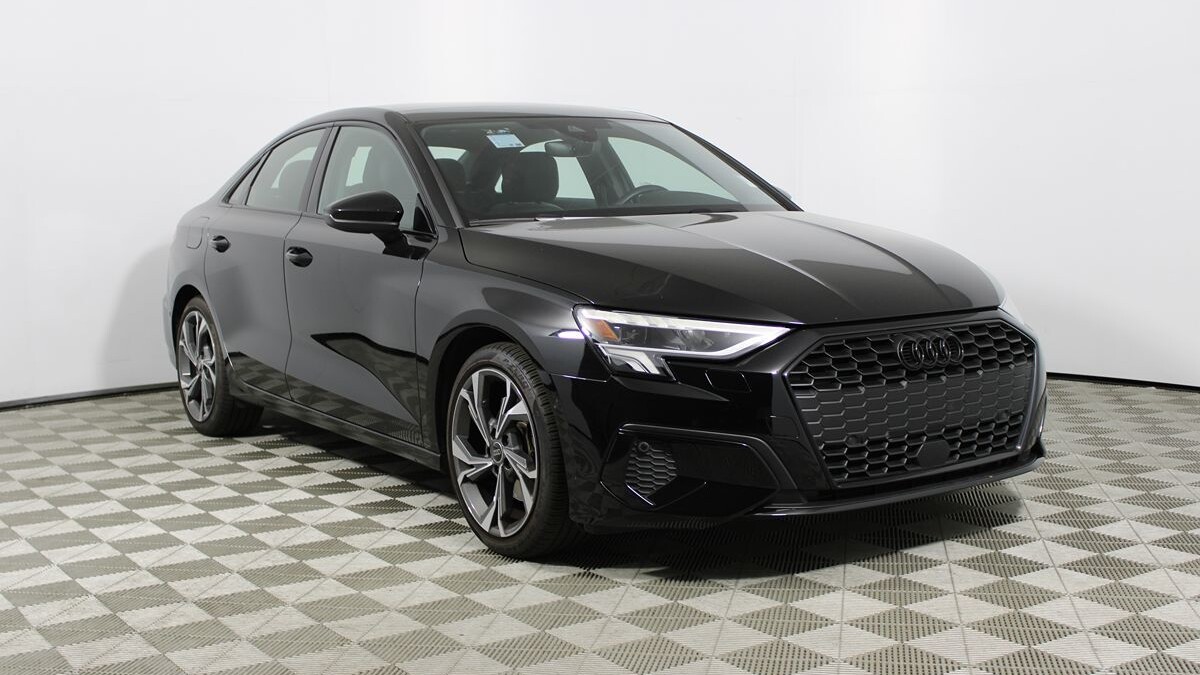

As a journalist who has spent years cataloguing the quiet revolutions in premium motoring, I find the Audi A3 to be one of the most revealing case studies. The 2023 A3 sits at an interesting intersection: compact footprint, premium aspirations, advanced packaging and technology inherited from its larger siblings. In this long-form technical review I trace the A3's lineage, examine the engineering choices Audi made for the 2023 model year, and offer a detailed look at the architecture, materials and systems that determine how it performs on the road and how it feels inside the cabin.
Origins and Evolution — Why the A3 Matters
The A3 debuted as Audi's compact entry into the premium small-car segment. Over successive generations it evolved from a simple, well-built hatchback into a sophisticated chassis platform that borrows heavily from the Volkswagen Group's MQB family while attempting to preserve the Audi DNA: restrained elegance, meticulous fit-and-finish, and a technology-forward cabin. By 2023 the A3 is less about ostentation and more about condensed luxury: the materials, ergonomics and electronics are scaled to a smaller footprint, but the ambition remains the same as larger Audis — deliver a calm, controlled and premium experience.
Platform and Body Structure
The 2023 A3 is based on the modular MQB (Modularer Querbaukasten) architecture, a platform strategy that underpins a huge range of Volkswagen Group products. What matters in a premium application is not the badge but how the platform is executed: Audi's use of different assembly processes, calibration and material choices make the A3 feel distinct.
The MQB architecture provides a set of engineering advantages: transverse-engine packaging that maximises cabin space, modular hardpoints for suspension and drivetrain, and the possibility to integrate a variety of powertrains — from compact MPI/TFSI engines to turbocharged four-cylinders and high-performance 5-cylinder units in the RS variants. Audi's engineers employ additional stiffness reinforcements and tuned mounting systems to deliver the ride isolation and NVH refinement customers expect in a premium compact.
Powertrain Philosophy
Rather than relying on a single engine philosophy, Audi offers the A3 range with multiple powertrains tailored to market and customer need. The common thread is a focus on forced induction small-displacement engines with layered electronic control strategies to deliver linear response and thermal efficiency.
In a technical sense the most important traits are:
- Turbocharging and direct injection — turbocharged four-cylinder units give a compact low-end torque delivery while direct injection supports efficiency and combustion control.
- Mild-hybrid systems (where fitted) — Audi has used mild-hybrid (MHEV) strategies to smooth start/stop transitions and recover energy. These systems typically use a 12V or 48V electrical architecture to operate a belt-integrated starter-generator that supports coasting and torque assist in low-load conditions.
- High-performance derivatives — S3 and RS3 derivatives escalate the platform with uprated engines, reinforced drivetrains and performance-oriented calibrations.
For packaging and drivetrain interface, the A3 typically employs transverse-mounted engines mated to dual-clutch automatic transmissions in most mainstream variants and Audi's all-wheel-drive quattro system in models where extra traction and performance are targeted.
Transmission and Drivetrain
Audi's dual-clutch transmissions, marketed under the S tronic name, are calibrated in the A3 to blend efficiency with the kind of shift logic that customers of premium compacts expect: smooth in town, quick and crisp in dynamic driving modes. The dual-clutch architecture eliminates the torque-converter losses found in traditional automatics while offering fast shift times and the ability to configure shift maps for comfort or sport.
Where quattro all-wheel drive is fitted, Audi uses an electronically controlled coupling between the axles. The system can vary the torque split depending on traction demands and driving mode; the result is a stable, predictable platform that helps with day-to-day grip as well as spirited driving.
Chassis, Suspension and Handling
The A3's chassis philosophy is deliberately conservative in order to deliver a premium ride quality. Audi tunes spring and damper rates, anti-roll bars and bushing compliance to provide a controlled ride that doesn't punish occupants over imperfect road surfaces. There are several key technical elements worth noting:
- Suspension layout — front MacPherson struts combined with a multi-link rear setup (typical for premium compact cars) provide a balance between packaging efficiency and independent control of wheel movement at the rear axle. The multi-link arrangement helps isolate bump inputs and preserve tyre contact during dynamic manoeuvres.
- Optional adaptive damping — available adaptive dampers allow the suspension to vary its response in real time, delivering a softer, more compliant ride in comfort mode and firmer control in sport modes.
- Progressive steering and electronic assistance — steering systems in the A3 are tuned to offer lightness at low speeds while increasing effort and feedback as you drive faster or select sport modes. Electronic power steering supports driver-assist functions and variable ratio characteristics.
Braking components are selected to match the targeted performance of each variant; ventilated front discs are commonly used to ensure thermal stability under repeated deceleration. Brake-by-wire strategies appear in higher-level driver-assist integrations, allowing the stability systems and electronic parking functions to interact seamlessly with the mechanical brakes.
Noise, Vibration and Harshness (NVH)
NVH management is a crucial part of the A3's premium claim. Audi focuses on three core areas: structural stiffness, acoustic insulation and engine/drive unit calibration. Reinforcements in specific body sections reduce resonant frequencies; strategic use of multi-layer glazing, targeted damping materials and door seals mitigate airborne noise; and software-driven engine mounts and active engine management reduce structure-borne vibrations.
Interior: Materials, Ergonomics and Craftsmanship
Where the A3 earns its luxury stripes is inside the cabin. Audi's approach is to evoke higher-segment cars within a compact footprint. I can summarise the approach in three principles:
- Material selection — soft-touch surfaces across upper dashboards, carefully applied stitching, and optional leather or high-grade synthetic coverings give the tactile impression of quality. Audi frequently offers higher-grade leather (Nappa) and fine wood or aluminium inlays as options to give a more bespoke feel.
- Ergonomics and control layout — primary controls are placed for intuitive reach; the driving position is adjustable and seats are sculpted to support the lower back and pelvis. As a driver-centric car, the A3 ensures that the most-used interfaces are within sight and reach without being visually busy.
- Fit and finish — audiology-like panel gaps and consistent surface finishes are part of the brand promise. The A3 is trimmed and assembled to tighter tolerances than many volume compacts, an attribute that translates into perceived quality every time you close a door.
Infotainment, Electronics and Driver Assistance
The 2023 A3 carries Audi's modern digital ecosystem into a compact package: a configurable digital instrument cluster, central infotainment touchscreen, and an array of driver-assistance systems. The suite is modular: you can expect navigation, voice control, smartphone integration and connected services depending on trim.
From a technical perspective, the A3's electronics are notable for their CAN/FlexRay or Ethernet facilitation of data between subsystems, allowing advanced driver aids to coordinate steering, braking and powertrain intervention in a manner that feels cohesive. This is also the backbone for over-the-air updates and feature activation in markets that support it.
Safety Systems and Structural Protection
Audi equips the A3 with passive and active safety systems aligned to contemporary standards. Multiple airbags, reinforced occupant cell, and crumple zones provide passive protection, while active systems — including automated emergency braking, lane-keeping assistance and adaptive cruise functions — augment situational awareness and collision mitigation.
Manufacturing, Quality Control and Sustainability
Audi applies premium manufacturing processes to the A3, including precision welding, consistent paint application and high standards for cabin assembly. Sustainability is increasingly a concern for premium buyers, and Audi has been incorporating recycled and lower-impact materials in upholstery and trim across models; their electrification roadmap also influences the supply chain and production methods for compact models like the A3.
Driving Impressions — How It Feels On The Road
When I drive the A3 I focus on three things: refinement, composure and communicative feedback. The suspension delivers a quiet composed ride over broken surfaces, and the sound insulation keeps highway noise subdued. In town the steering is light and predictable, while motorway cruising is stable and relaxed. When the car is pressed, the chassis resists roll and the tyres remain communicative without being nervous.
The A3 is not a narrow-focused enthusiast car; it is a luxury compact that leans toward comfort with the ability to be driven briskly without complaint. If you desire greater performance, the S3 and RS3 variants exist to magnify the sportier traits through stiffer setups and more aggressive powertrain calibrations.
Where the A3 Fits in Audi's Lineup
The A3 is the entry point into Audi ownership and serves as a gateway to larger, more luxurious models. Its technical DNA mirrors its larger siblings, albeit in a compressed format: similar electronic architecture, shared infotainment philosophy, and scaled chassis engineering. The result is a coherent brand experience from the smallest Audi to the largest.
Maintenance, Ownership and Longevity
The A3's engineering choices reflect a balance between performance and serviceability. Using modular platform parts and a common engine family across the Volkswagen Group helps with parts availability and repairability. Regular maintenance of turbocharged engines, attention to electronic systems and proper use of synthetic fluids will preserve performance and reduce long-term operating costs.
Technical Takeaways and Final Reflections
In assessing the 2023 A3 from a technical and historical perspective, several conclusions emerge:
- Condensed luxury works — the A3 shows that premium sensations can be delivered in a compact package with careful material choice and precision assembly.
- Platform sharing need not dilute character — the MQB underpinnings provide economies of scale without erasing Audi-specific calibrations and finishes.
- Flexibility of powertrains — the A3's architecture accommodates efficient turbocharged engines, mild-hybrid technology and high-performance variants, giving buyers a broad spectrum of technical choices.
- Software is as important as hardware — the driving experience increasingly depends on control software that coordinates engine, transmission, stability control and suspension systems; Audi's integration efforts are clearly evident in the A3.
Over the course of my ownership tests and long-term drives, the 2023 A3 has impressed me as an exemplar of how premium brands can distil their ethos into smaller, more accessible cars. It isn't flashy; instead it trades in quiet competence, excellent material execution and technical coherence. For buyers seeking an entry-level luxury car that feels like a proper Audi rather than a dressed-up hatchback, the A3 remains a compelling technical and emotional proposition.