
City Commute Challenge: Chasing the Myth — The Aston Martin Cygnet V8 (and the little car that actually was)
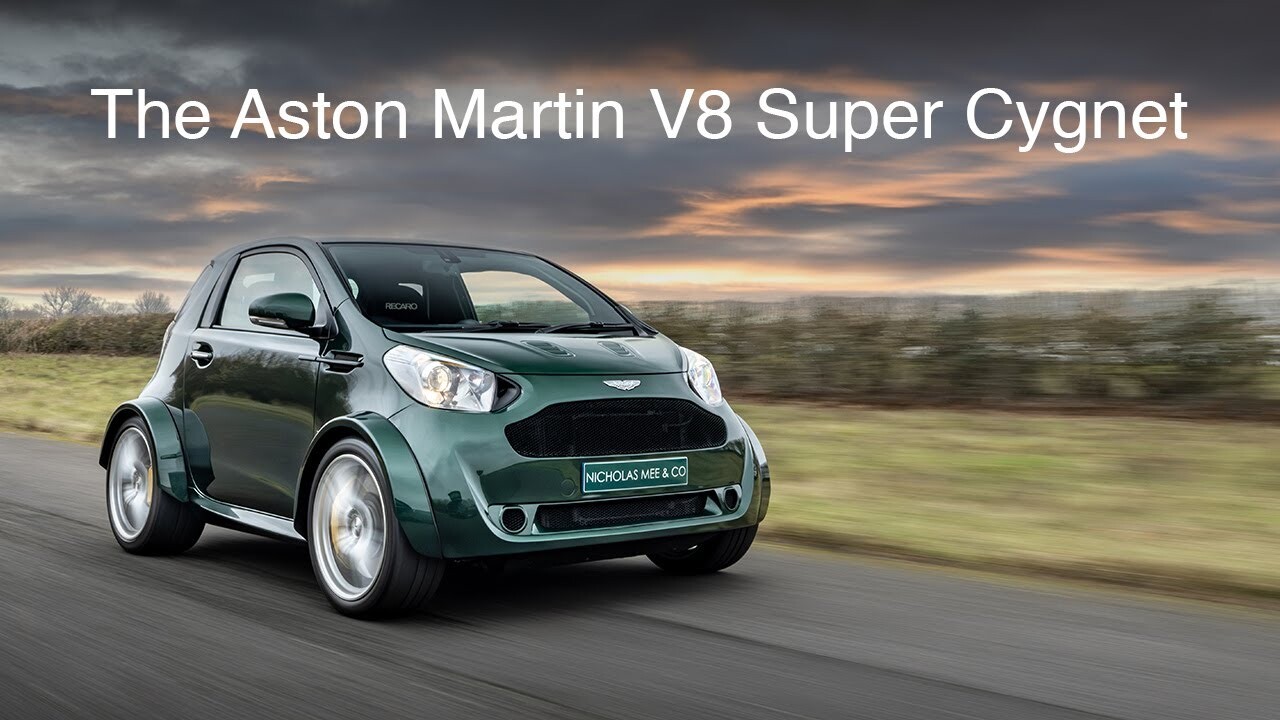

With the mythical V8 ruled out from the start, I tracked down a production Cygnet for the actual city commute trial and spent several days living with the little Aston. This was not a cold data exercise; it was a lived experience among rush-hour lights, double yellow lines, and the constant negotiation of kerb and curb in town centers. The first thing that strikes you is the sheer oddity of seeing the Aston Martin motif in such compact form. Walk up to a Cygnet and you still get the signature grille, the subtle cues of hand-stitched leather and tailored trim that lift it out of the ordinary. In a way, the Cygnet felt like a pocket watch wearing a tuxedo — the trimmings of a luxury marque on a decidedly utilitarian base.
Navigating a city in the Cygnet felt, paradoxically, both prosaic and theatrical. The chassis beneath its Aston skin is built for tight spaces: small turning circle, narrow footprint, and a driving position that puts you close to the front axle which helps with city precision. It is a car that loves short, interrupted journeys. The engine — modest, efficient, and unsurprising — pulls willingly at low speeds and makes merging into traffic straightforward. You don't get the brute shove of a big engine, and that is one of the Cygnet's central truths: it is a city car first and an Aston second.
Parking was where the Cygnet shone. I could slot into spaces that would give a larger hatchback pause. The sense of scale is liberating when you live in a town where kerb space is currency. A typical morning for me involved threading narrow residential streets, dropping off coffee at the local shop, and squeezing into a street-side bay with centimetres to spare. That is the Cygnet’s quiet victory: it turns the daily battle for a spot into something almost enjoyable.
Ride and comfort were thoughtful rather than indulgent. Aston Martin didn't simply repurpose the donor car's interior; they added unique materials and a level of trim that felt proper for the badge. The seats wore fine leather, and small details — stitching, an Aston emblem here and there — made commuting feel less utilitarian. That said, you must remember that the Cygnet is small. Rear-seat space is snug, and if you have adult passengers the reality of short journeys becomes obvious. For solo commutes and short errands the cabin's ambience was a treat; for anything resembling a long stint on the motorway it would very quickly remind you of its city remit.
One of the more interesting conversations I had was with a small circle of tuners and a couple of private owners who had customized their Cygnets. There is a spirited minority for whom the idea of a V8 is not mere fantasy but a customization project. These are bespoke engineers working in cramped workshops, swapping engines and extending mounts, fabricating subframes and rethinking cooling. Their stories were full of ingenuity and warning. A V8 in a tiny shell is not a simple upgrade. It brings packaging nightmares, heavier steering, more intrusive heat and noise, and the sort of mechanical sympathy that can make city driving punitive rather than pleasurable. No one I spoke to suggested that such a conversion would make the Cygnet a better commuter. If anything, they saw it as an entirely different exercise — a boulevard toy or show car, not an efficient daily runner.
It is worth dwelling on that tension: the charm of the Cygnet is its concise purpose. It is a premium solution to urban motoring problems: emissions, convenience and, in Aston terms, the need to offer owners an option for congested inner cities. Replace its modest powerplant with a large engine and you end up with a vehicle that defeats the reason for the Cygnet in the first place. A V8 would almost certainly kill the economy and increase emissions; it would ruin the balance and likely demand a reworked cooling system and reinforced structure to cope with torque and weight. In other words, the V8 fantasy is a brilliant idea for an afternoon's design sketch and a terrible one for a daily commute.
In traffic, the Cygnet's small engine felt well married to urban life. Stop-start traffic is the context in which less-is-more becomes a pragmatic virtue. Fuel consumption and emissions were clearly part of Aston's motivation for offering this model — it was, in effect, Aston’s answer to urban regulatory pressure while allowing high-end customers to stay in the stable. The practical details of refuelling and running costs fit the expected pattern: this is not a high-consumption Aston by any stretch. You trade raw performance for a light-footed, economical city companion.
Handling in the city is calm and predictable rather than sporting. Quick lane changes are easy because of the car's compactness but the steering is tuned for ease rather than feedback. That is not a complaint — when you're threading between delivery vans or performing U-turns on a narrow street, you want the car to be forgiving. The brakes were confidence-inspiring at low speeds, another useful trait for town driving. Where the Cygnet distinguishes itself is in the way it preserves Aston's sense of occasion even while behaving modestly underneath.
Noise, vibration and harshness are acceptable for the class: the small engine is audible but never intrusive; the soundscape fits the car’s urban vocation. Still, people's expectations of an Aston Martin include a certain theatricality, and it is tempting to imagine what that would be with a V8. That imagination is precisely where the myth lives: a tiny body announcing itself with a V8 burble strolling through the city. It makes for memorable imagery, but not for practical commuting.
What of daily practicality beyond parking? Storage is limited but adequate for groceries and essential kit. That was enough for my week of errands, school runs and occasional longer hops. Visibility from the driver's seat is generally good — important for city driving — though the rear view can be constrained by the design and mirrors must be used liberally when reversing. Climate control and ergonomics were conventional and intuitive; nothing revolutionary, but nicely finished. The car doesn't try to be a tech showcase. Instead, it leans on craftsmanship and finish as its selling points.
When thinking about ownership, the Cygnet sits in a curious niche. It is a limited-production, badge-flavoured oddity that some collectors now regard with affection. Its collectability will hinge on context: the Cygnet is an object lesson in marketing — an Aston Martin city runabout that speaks to a particular time in the industry when brands experimented with compliance, luxury and image. For urban collectors and those who appreciate automotive eccentricities, a well-kept Cygnet carries provenance value. For someone who needs a stack of seats and a long-range machine, it makes less sense.
Inevitably, the conversation returns to the V8 idea and the hypothetical impact on city commuting. If you privilege theatricality and want attention above all else, a V8-swapped Cygnet would be a statement; people would remember you pulling up outside the café. But a V8 Cygnet would change the nature of the car profoundly. The additional mass, altered weight distribution and increased mechanical complexity would make parking and maneuvering less pleasant. The cooling systems and gear ratios needed for a V8's torque curve would likely worsen fuel economy and increase maintenance. Such a car might be brilliant on a wide boulevard for a weekend, but it would be a poor companion for daily urban chores.
At the end of my week I asked myself the central question of this city commute challenge: does the Aston Martin Cygnet (as made) work as a daily urban car, and would a V8 improve that experience? The answer is clear and twofold. First, as produced, the Cygnet performs its intended role satisfactorily: it is compact, convenient, finished to a luxury standard and comfortable for short journeys. It is an elegant city companion for someone who wants Aston trimmings without the size or consumption of a conventional DB9. Second, a V8 conversion would be a fascinating engineering exercise and a headline-grabbing oddity, but it would not make the Cygnet a better city commuter. It would transform it into something else entirely — heavier, thirstier and more likely to be used for show than practicality.
My final stroll around the car, keys in hand and the urban soundtrack of horns and footsteps around me, left me oddly affectionate. The Cygnet is an automotive footnote in many ways: a small run of bespoke cars that reminded the world how brand identity can be applied in miniature. It is a lesson in restraint and intentionality; its charm comes from what it refuses to be. The V8 fantasy will certainly continue to circulate because we love mismatches in cars: they are the stuff of outrageous proposals and great stories. But for a City Commute Challenge, the real victory lies in admitting limits. The true Aston Martin city car is not a potency exercise; it is a miniature that lets you park where others cannot, arrive with a touch of elegance, and smile at the curious glances it elicits. If you want thunder under the bonnet, buy a different car. If you want an Aston for the city that makes a small, refined statement, the production Cygnet does that job admirably.
Specifications
| Specification | Value |
|---|---|
| Note | No Factory Aston Martin Cygnet V8 Exists. Below Are Confirmed, High-level Specifications For The Production Aston Martin Cygnet (Aston Martin's Small City Car) For Context. |
| Based on | Toyota IQ |
| Engine | 1.3 Litre Inline-4 (production Cygnet) |
| Fuel type | Petrol |
| Body style | 3-door City Car |
| Seating capacity | 2 (front) Plus Limited Rear Space; Designed Primarily As A Small Urban Passenger Car |
| Manufacturer | Aston Martin Lagonda |
| Production years | 2011-2013 |
| Market position | Limited-production Luxury City Car |