
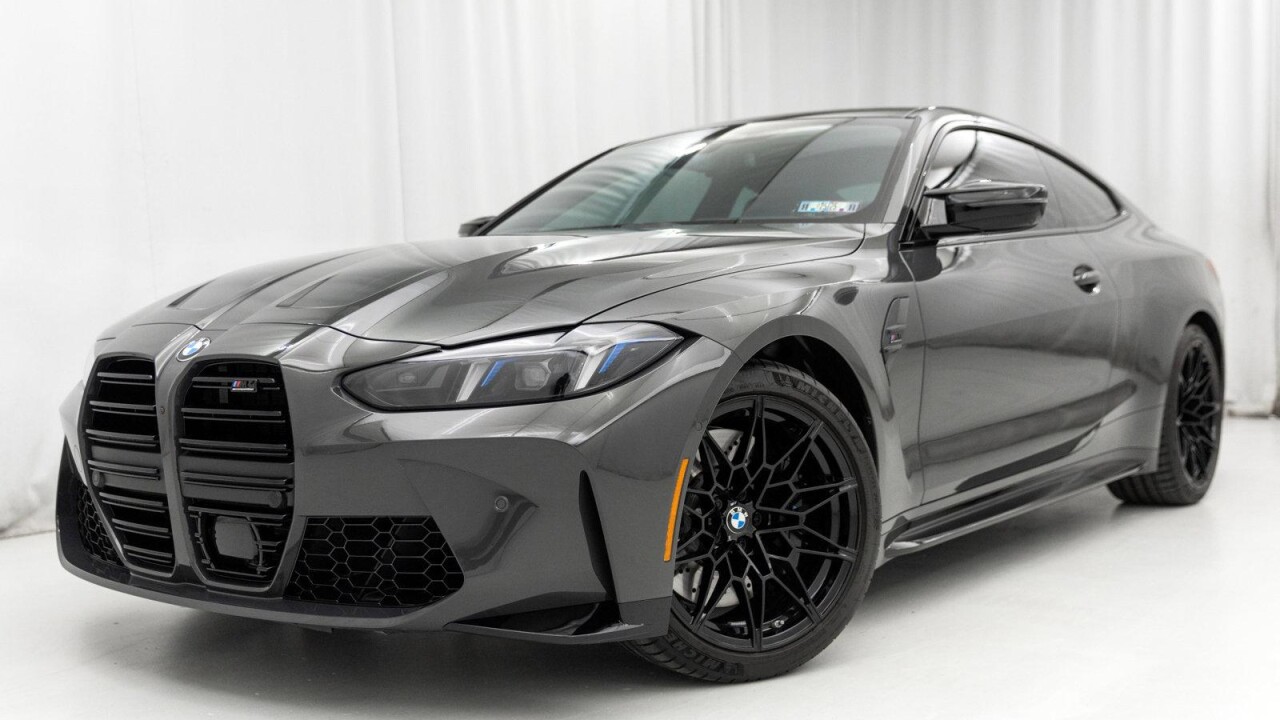

Introduction: A performance car with an environmental conscience (or trying to find one)
I drove the BMW M4 Competition for the week with a specific brief: see how a modern, focused performance car lives when I treat it like an eco vehicle. That sounds like asking a sprinter to enter a triathlon, but I wanted to find the compromise between grin-inducing performance and the kind of environmental responsibility most buyers ought to take seriously.
I write from the perspective of someone who cares about value and running costs. I also relish precise handling and mechanical feedback. That combination makes me suspicious of cars that package raw speed without thought for how they consume energy, wear components, and sit in the larger life-cycle calculus of emissions and resource use.
First impressions: performance-first packaging — can that be green?
The M4 Competition announces itself in a way the eco-conscious Prius never will: taut bodywork, a stance that suggests it wants to be on a racetrack, and cabin cues that make it clear the car is focused on driving. I'm not going to pretend the M4 is aiming for efficiency first; its whole design philosophy prioritises performance. But that doesn't mean you can't make more considered choices while owning one.
Inside, materials and ergonomics are positioned for engagement rather than pure economy. The seats hold you in place when you decide to explore the car's limits, and the steering and brakes are communicative. All of those things matter for eco-driving in a counterintuitive way: the better a car communicates, the easier it is to drive smoothly and avoid excessive throttle and brake inputs — the two fastest ways to eat fuel and create particulate pollution.
Environmental footprint: not just tailpipe emissions
When people talk about a car's environmental impact they usually mean tailpipe emissions. That's important, but it's only part of the story. Manufacturing, materials, tyre and brake wear, and eventual disposal or recycling all create environmental costs. Cars built for performance tend to use premium materials and manufacturing processes that can increase embodied carbon — not because the manufacturers want to harm the planet, but because performance requires robust structures, coolants, strong brakes and sticky tyres.
From an owner's perspective, the aspects you can influence most are how you drive it, what you fit to it, and how you maintain it. The M4 Competition arrives with features that encourage spirited driving; left to its own devices, that translates into higher fuel consumption and more rapid component wear. But if you intentionally choose gentler habits and some modest equipment changes, you can reduce the everyday environmental toll while preserving the aspects of the car that made you buy it in the first place.
Real-world fuel use and energy thinking
I won't offer specific consumption figures because the number you get depends heavily on how you drive, the roads you take, and the fuel you use. What I will say from experience is straightforward: a performance-focused car is less forgiving when you drive it like a normal commuter. Heavy throttle inputs, short-shifting for the sake of quick launches, and frequent high-speed bursts are the worst friends of fuel economy.
That said, precise drivers can extract reasonable economy from a big car. Smooth throttle inputs, anticipating changes in traffic so you can coast instead of brake, and using the highest practical gear for steady-speed cruising all help. The M4's chassis and transmission allow for that. By consciously driving for efficiency on long, flowing routes, you can make a tangible dent in fuel use compared with a trip full of hard accelerations and aggressive braking.
Eco-friendly routes: where enjoyment and efficiency meet
I planned most of my driving on two kinds of roads that, to my surprise, revealed how well the M4 can behave in an eco-focused itinerary:
- Flowing country lanes and coastal roads — These let the car cruise in a single gear for long stretches. The engine settles, and the car rewards you with a relaxed demeanour that uses relatively less fuel than a stop-start city run. The key is to keep momentum; long, steady arcs let you experience the chassis without repeatedly emptying the fuel tank.
- Eco-loop urban circuits — Near towns I used routes with fewer traffic lights and more roundabouts. They encourage steady progress and reward anticipation: lift early, coast into the junction, and apply modest power once you're clear. Those minor changes made a disproportionate difference in daily consumption and, crucially, reduced brake dust production.
I learned that the M4's communicative steering and brakes are tools for economy. They let you place the car precisely so you can maintain momentum through a sequence of corners rather than scrub speed and then accelerate hard. It's a small victory for the environment that translates directly into reduced fuel use and tyre wear.
Maintenance, component wear and running costs — the hidden eco factors
Owning a performance car changes the maintenance equation. Premium-grade tyres, high-performance brake pads and more frequent servicing add to your wallet's and the planet's burden. More frequent tyre replacement means more rubber produced and disposed of; heavy braking means more particulates generated by pad wear. These aren't abstract problems — they are real environmental costs you can control by choices you make.
Some practical, value-minded steps I recommend to owners who want to reduce environmental impact without neutering the car:
- Tire strategy — Fit a sensible compromise tyre if you don't track the car regularly. Ultra-sticky rubber offers magnificent grip but wears quickly and can increase rolling resistance. For day-to-day driving, choose tyres rated for lower rolling resistance with adequate wet grip; you'll save fuel and rubber over time.
- Brake stewardship — Avoid unnecessary heavy braking. Use engine braking and select routes that let you carry momentum. When pads and discs eventually need replacing, choose manufacturers who offer low-dust compounds if you can — it reduces particulate pollution around your neighbourhood.
- Service smart — Keep the car well serviced, and use recommended lubricants and filters. A healthy engine runs cleaner and uses fuel more efficiently. It also reduces the likelihood of costly repairs that result in replacement parts and more manufacturing impact.
Practical eco modifications that don't kill the fun
There are honest, reversible changes that make ownership kinder to the planet without fundamentally changing the car. I'm not endorsing cosmetic compromises; I'm advocating pragmatic measures that offer good value.
- Aerodynamics and luggage — Don’t habitually run bulky roof racks or large spoilers unless you need them. They add drag and increase fuel consumption on open roads.
- Weight discipline — Remove unnecessary heavy items from the trunk. It sounds obvious, but many owners accumulate weight that never contributes to driving enjoyment.
- Tune with restraint — If you choose aftermarket software or hardware, consider options that prioritise drivability and efficiency rather than maximum outputs. Tuned engines can behave more economically if the mapping smooths torque delivery and reduces abrupt throttle spikes.
Fuel choices and emissions reduction
Fuel quality matters. Use the manufacturer-recommended fuel grade and avoid cheaper alternatives that might reduce efficiency or increase long-term maintenance costs. Cleaner-burning fuels and well-maintained injection systems reduce unburnt hydrocarbons and particulates. If you have access to certified low-carbon fuels or biofuel blends approved by the manufacturer, they can be a pragmatic step towards lower net emissions without moving to a different drivetrain.
Driving techniques that preserve performance and the planet
Here are the techniques that let you keep enjoying the M4 and limit environmental damage at the same time:
- Anticipatory driving — Read the road: smooth throttle, anticipate braking and use momentum. This reduces fuel use and brake wear.
- Progressive inputs — Ease on the throttle and steer with precision; the car rewards finesse with efficiency.
- Moderate tyre pressures — Keep pressures at the recommended levels for mixed use. Overinflation might reduce rolling resistance but can compromise grip and wear patterns; underinflation increases rolling resistance and fuel use.
- Plan journeys — Combine errands and choose quieter roads with fewer stops. It sounds pedestrian, but it's practical and effective.
Is a car like the M4 Competition responsible in 2025?
The short answer: not by default. High-performance cars are not designed primarily to minimise environmental impact. They prioritise driver engagement, which often comes at the expense of fuel economy and component longevity.
The longer answer—my preferred answer—is that responsibility is partly about intent and partly about practice. If you intend to drive with awareness, make measured equipment choices and accept the higher baseline running costs, then you can reduce the M4's environmental footprint considerably compared with thoughtless ownership. But you won't get to the same low-impact place as a purpose-built economy car or an electric vehicle without accepting trade-offs: lower outright performance, different ownership experience, or investing in alternative propulsion.
Alternatives to consider (practical, not preachy)
If your priority is displacement of environmental impact rather than outright performance, consider a few broad alternatives:
- Smaller, lighter performance cars — Less mass means lower energy required for acceleration and a smaller ecological footprint in manufacture and running costs.
- Electrified performance — If you want near-instant torque with lower local emissions, plug-in or battery-electric performance models are the obvious alternative. They have their own manufacturing footprints, but many owners offset that with long-term reductions in tailpipe emissions.
- Track days instead of daily aggression — Own a reasonable daily driver and save the M4 for controlled track events. It's a pragmatic compromise that concentrates the environmental cost of spirited driving into occasional, intentional outings instead of everyday behaviour.
Value for money and the green ledger
As the Budget Buyer, I can't ignore the numbers even when I won't state them directly. Performance engineers and premium materials make cars like the M4 cost more to buy and maintain. That higher cost translates into a larger environmental footprint in manufacturing and more expensive replacement parts. If you accept that premium and make choices to reduce wear and inefficiency, the car can still represent a good personal value for a particular buyer: someone who wants performance but will also take responsibility for their driving habits and maintenance schedule.
Final verdict: can thrill and thrift coexist?
Yes — with caveats. The BMW M4 Competition is a car designed to excite. It will never be the most eco-friendly choice you can make, and it shouldn't be judged by the same metrics as a dedicated economy car. But measured ownership transforms a potential environmental problem into an opportunity for better driving practice.
If you're considering an M4 as your only car and you genuinely care about environmental impact and running costs, ask yourself one question: will you change how you drive and maintain the car? If the answer is no, look at alternatives that better match your priorities. If the answer is yes, then you can have both — controlled, responsible thrills and a more considered eco footprint.
In short: the M4 Competition rewards the precise driver. Precision is also the cheapest way to be greener. If you can own your impulses, the car will give you the thrills you paid for while you keep the environmental damage to a more defensible minimum. That’s a compromise I can live with — and, as a Budget Buyer, I’ll take the efficiencies where I can get them without asking the car to stop being what it is.
Practical checklist before signing on the dotted line
- Commit to mixed tyre choices rather than full race rubber if you don't track the car.
- Plan to service on schedule and use quality oils and filters.
- Map out eco-friendly routes and use them for daily driving.
- Avoid unnecessary aerodynamic accessories and roof loads.
- Consider occasional use of certified lower-carbon fuels if available and manufacturer-approved.
- Think about a second daily commuter car if you plan to use the M4 frequently for short trips.
Owning a high-performance car in an era that increasingly prizes sustainability requires compromise, ingenuity and, frankly, a willingness to be a little boring sometimes. That modest boredom pays back in lower bills, less wear and a smaller environmental footprint — and it preserves the moments when you really want to harvest the joy the car is designed to deliver.