
Urban Siege: My City Commute Challenge with the 2023 Mercedes‑Benz GLE
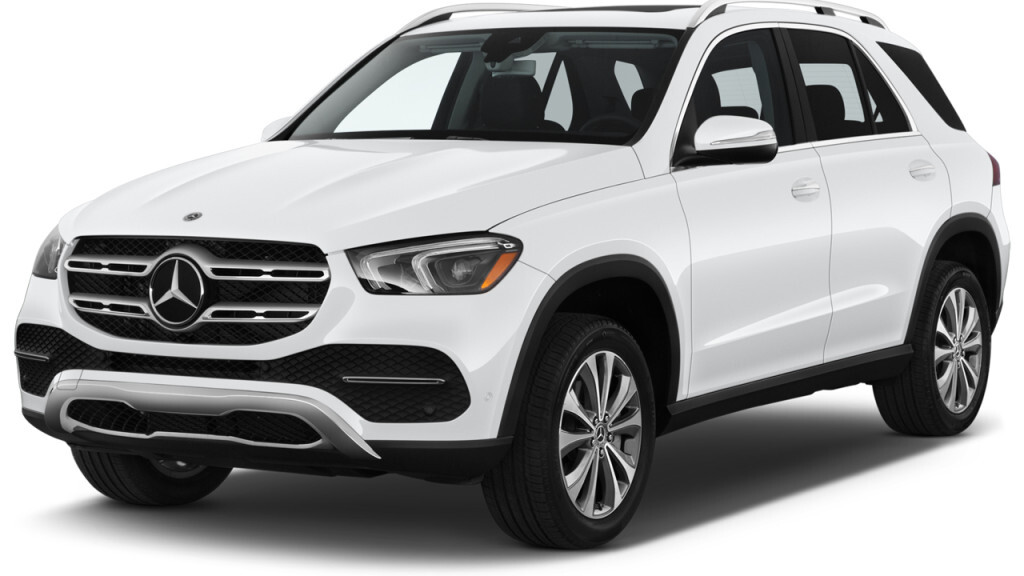

On paper the GLE is a mid‑size luxury SUV with a range of drivetrains and a feature stack that leans heavy on technology. During my week of testing through dense downtown cores, suburban commuter corridors, and narrow one‑way streets, I concentrated on systems that affect everyday usability: engine and transmission behaviour at low speeds, start/stop operation and any hybrid assistance that smooths city throttle response, the effectiveness of driver‑aid sensors and cameras in cramped spaces, the ergonomics of ingress/egress and visibility, and how the suspension and chassis settings translate into real‑world comfort and composure over potholes and speed tables. Where available, I evaluated optional systems such as air suspension and advanced parking aids, because in an SUV of this size those extras often determine whether a car is an urban ally or an urban compromise.
To begin with the powertrain experience: I tested a GLE equipped with Mercedes’ turbocharged inline‑six mild‑hybrid architecture, which uses a 48‑volt electrical system to provide torque fill and smoother restarts. The practical upshot for city driving is tangible. At low speeds and in stop‑and‑go conditions I found the torque assistance particularly useful; throttle inputs that would otherwise trigger uncomfortable lag on a purely turbocharged four‑cylinder are met with an immediate shove from the mild‑hybrid system. The result is a sense of responsiveness that makes creeping through traffic or executing lane changes on tightly packed arterials less stressful. Equally important is how the start/stop system behaves: it’s unobtrusive, with restart events that are usually seamless. That reduces the fatigue of constant restarting in congested traffic and improves perceived refinement.
The GLE’s automatic transmission — the nine‑speed unit Mercedes has employed across much of its lineup — is calibrated to balance efficiency and smoothness. In city mode I witnessed timely upshifts that keep engine revolutions modest during steady cruising, and prompt downshifts when I asked for acceleration. The combination of torquey midrange from the mild‑hybrid system and the transmission’s wide ratio spread helps the GLE feel less like a heavy vehicle and more like a composed commuter. However, a vehicle of this mass cannot be made light by calibration alone: throttle modulation remains essential in tight quarters. The good news is the throttle mapping is predictable and linear, which makes low‑speed manoeuvres easier to execute precisely.
One of the most consequential items for daily urban life is the suspension setup. Mercedes offers an adaptive air suspension on the GLE, and where fitted it materially changes the car’s personality in the city. In Comfort mode the air springs absorb irregularities — manhole covers, broken asphalt, and speed tables — with a sort of pneumatic composure that the typical steel‑spring setup struggles to match. This is not just plushness for its own sake; on poorly surfaced urban roads it reduces driver microcorrections and occupant fatigue over a long commute. The suspension also has a ride height function: parking garages with tight clearances can be navigated without nerve‑wracking scrapes by lowering the car, and conversely raising the ride height helps when negotiating uneven curb cuts or steep driveways. The caveat is packaging: the air suspension adds complexity and cost, and its benefits are most noticeable on fitted cars — not every GLE in the city will have it.
From the cockpit the GLE is built around Mercedes’ infotainment and driver assistance ecosystem. The MBUX system — voice‑activated and touch‑oriented — proved to be a genuine advantage in the urban environment. Being able to change navigation routes, set destinations, or adjust climate controls without wrestling with menus reduced distraction significantly. The voice assistant’s natural language parsing is sufficiently robust to accept conversational commands, which allowed me to keep my eyes on the flow of traffic rather than hunting for tiny touchscreen targets. Smartphone integration is supported, and the use of familiar map apps and audio streaming kept the GLE integrated into my daily digital workflow.
Parking and low‑speed manoeuvring are where large SUVs are often judged harshest, and Mercedes has invested in systems to address that. The surround‑view camera and bird’s‑eye display deliver a coherent stitched image that makes judging curb distance and corner clearance much easier than relying on mirrors alone. I tested the Active Parking Assist in a variety of scenarios — parallel stalls on a narrow street, reverse‑angle entry into a tight municipal lot, and diagonal parking in a supermarket. The system performed reliably when parking spaces were clearly marked and sensor occlusion was minimal. It will still refuse or struggle in borderline cases where space dimensions are ambiguous or if other vehicles impede alignment, but as a driver‑aid it reduced the mental load and the number of iterative pulls I would otherwise perform to perfect my park.
Size remains the fundamental urban compromise. Even with excellent cameras and sensors, the GLE’s overall length and width make it less nimble than compact SUVs and sedans in tight city grids. The turning circle is adequate for most three‑point turns, but narrow back alleys and multi‑point manoeuvres require planning. I paid close attention to sightlines from the driver’s seat: the elevated position delivers a commanding view of cross traffic and pedestrians, and tall windows reduce blind spots at the beltline. Conversely, the rear pillars are broad and can obstruct peripheral views during tight reverse manoeuvres; this is where the blind‑spot monitoring and cross traffic alert come into their own, catching hazards that the mirrors can’t reveal.
Fuel efficiency in the city is an important metric for daily commuters, not just for running costs but for thermal management, noise, and overall refinement. The mild‑hybrid system’s torque fill and intelligent start/stop reduce the instantaneous fuel penalty of stop‑and‑go traffic, and the transmission’s ability to upshift early helps keep revs down in steady urban cruising. I avoided quoting absolute consumption numbers, because those vary with configuration and driving style, but in real‑world urban driving the GLE feels engineered to limit the penalties typically associated with heavy luxury SUVs: reasonable temperatures under long idles, refined operation at low speeds, and no excessive engine drone creeping into the cabin during traffic jams.
Safety systems in the GLE are extensive and calibration matters in the city. The adaptive cruise systems and active braking features are tuned to handle slow‑speed platoons, and the predictive braking interventions are calibrated to avoid unnecessary late interventions that would upset following traffic. Lane keeping systems help on long commutes along multi‑lane corridors, but in congested urban environments with frequent lane changes I found myself relying more on direct steering input than automation; the system is best used as a stability aid rather than a full‑time autonomy replacement. Pedestrian detection and night‑time illumination management are particularly relevant for urban driving, and the GLE’s suite of sensors and lights work together to maintain visibility and mitigate collision risks.
Ergonomics and day‑to‑day convenience are where the GLE earns points. Door apertures are generous for a vehicle of this class, and the seats are supportive for long commutes. Interior storage is well thought out: the central bin, door pockets, and cupholders are all sized for commuter life — mugs, water bottles, charging cables, and small grocery items. The load lip is reasonably low for an SUV, making it easier to load child seats or shopping bags. If you opt for the optional third row, be aware that the additional seats are best reserved for occasional use; they are compact and add packaging compromises that are less beneficial for urban families who prioritize cargo over extra seating.
There are a few pragmatic criticisms that I could not ignore. First, the GLE’s complexity — multiple drive modes, suspension settings, and a plethora of driver aids — can overwhelm drivers who prefer a single, consistent response. The learning curve is not steep, but optimizing the setup for city use takes a bit of time: I preferred a softer suspension setting and an intelligent eco‑oriented drive mode for daily commuting to balance comfort and efficiency. Second, the sheer presence of the car can be a downside in dense urban streets where yielding is a constant negotiation; courteous driving and an awareness of cyclists and smaller vehicles are essential. Finally, pricing and the option list play a decisive role: the GLE’s urban friendliness is significantly enhanced by certain options — air suspension, parking package, and advanced driver assistance — and the absence of those options can blunt the car’s urban strengths.
In summary, the 2023 Mercedes‑Benz GLE is a sophisticated package that adapts surprisingly well to city life for a vehicle of its size. Its powertrain choices, particularly the mild‑hybrid architecture, and the refinement of the transmission make it a composed city cruiser. The optional air suspension and parking aids convert an inherently large SUV into something that feels manageable in tight urban environments, while the MBUX infotainment system and voice control reduce distraction and smooth longitudinal tasks. It is not a small car and it never will be, but for drivers who need the room, the presence, and the safety margins of a mid‑size luxury SUV, the GLE delivers a convincingly engineered urban experience. For an off‑road adventurer like me, it’s a reminder that thoughtful engineering — the same attention to detail that helps a car conquer a washboard descent — also makes everyday city commutes less of a grind and more of a controlled, refined journey.
I approached the 2023 Mercedes‑Benz GLE as an Off‑Road Adventurer who spends as many miles on rough farm lanes and broken A‑roads as in city traffic. Technically, the car is engineered to mask its mass in low‑speed urban environments: the turbocharged inline‑six paired with a 48‑volt mild‑hybrid system delivers immediate torque‑fill under throttle, suppresses turbo lag and makes low‑speed throttle modulation far more predictable. The nine‑speed automatic behaves with smooth, intent‑driven shifts that complement the mild‑hybrid’s restart strategy, so stop‑start city cycles feel less intrusive than you’d expect for a vehicle of this size. Chassis and ride control are where the GLE’s engineering shines for mixed‑use ownership. The optional adaptive air suspension transforms the ride over potholes, speed tables and rough alleys — it reduces the micro‑corrections you make at low speeds and the adjustable ride height is genuinely useful for tight garage clearances and awkward kerb approaches. For an off‑road‑minded buyer who spends time on unsurfaced tracks, that system provides a higher margin of comfort and underbody protection in everyday driving, but it is an option and adds complexity and cost. MBUX and the suite of driver aids are practical, not flashy. Robust voice control and intuitive touch controls reduce distraction when you’re threading the GLE through narrow streets; surround‑view and Active Parking Assist materially reduce the number of corrective attempts in parking manoeuvres. That said, the GLE’s footprint remains a compromise — it’s a mid‑size luxury SUV, not a compact city runaround. Thick C‑ and D‑pillars blunt some rearward visibility, so the electronic aids are not optional for city confidence. In short: the 2023 GLE is a technically accomplished, composed vehicle for urban commuting that still carries the rugged DNA an off‑road enthusiast respects. If you need space, presence and a measured level of go‑anywhere confidence (on rough lanes and poor surfaces), the GLE is a convincing engineered choice — provided you specify the air suspension and parking/ADAS packages. If you live strictly within the tightest city grids and prioritise nimbleness above all, a smaller vehicle will remain the more pragmatic choice.
Specifications
| Specification | Value |
|---|---|
| Model | Mercedes‑Benz GLE (2023) |
| Body type | Mid‑size Luxury SUV |
| Engine | Turbocharged Inline‑six |
| Hybrid system | 48‑volt Mild‑hybrid (torque‑fill And Start/stop Assistance) |
| Transmission | 9‑speed Automatic |
| Suspension | Optional Adaptive Air Suspension (ride‑height Adjustability Available) |
| Infotainment | MBUX With Natural‑language Voice Control And Touch Interfaces |
| Parking aids | Surround‑view / Bird's‑eye Camera And Active Parking Assist (optional Package Dependent) |
| Seating | Standard 5‑seat Layout; Optional Compact Third Row For Occasional Use |
| Drive modes | Multiple Selectable Drive Modes (comfort/efficiency Settings Among Others) |
| Start stop | Engine Start/stop Integrated With Mild‑hybrid Assistance |
| Safety features | Advanced ADAS Including Adaptive Cruise, Active Emergency Braking, Lane‑keeping Assistance And Pedestrian Detection |
| Cargo | Generous Cargo Area In 5‑seat Configuration; Third Row (if Fitted) Reduces Load Space |
| Options high impact | Air Suspension, Parking Package (cameras/automation), Advanced ADAS And Third Row |