
Top-Down, Low-Impact: My Eco Adventure with the Audi A5 Cabriolet (2025)
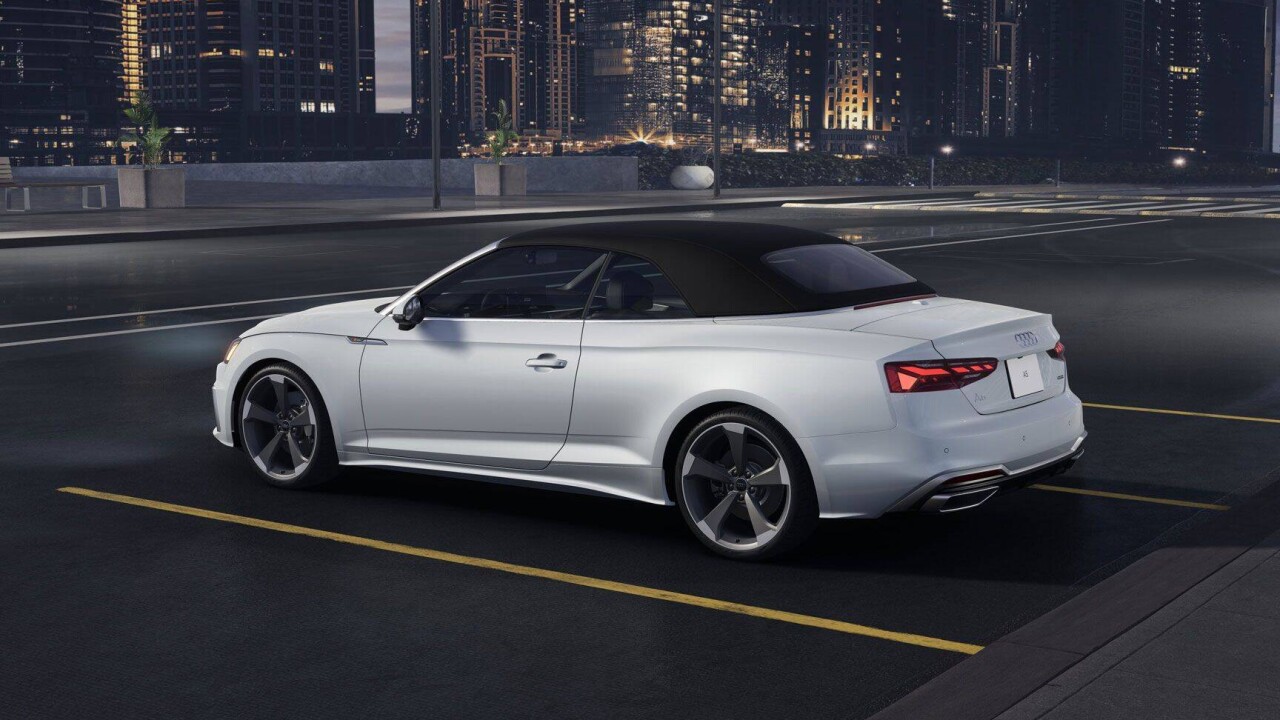

I’ll be honest: convertibles are a classic design compromise. Strip the roof off a coupe and you immediately create a structural challenge — more reinforcements, more bracing, more weight. That’s not a knock on Audi; it’s engineering reality. The A5 Cabriolet carries itself like a grown-up convertible: the fit and finish are Audi-level neat, the roof mechanism is seamless, and the cabin is undeniably refined. Those luxury trimmings are great for comfort, but they also contribute to the overall environmental cost: more metals, motorised mechanisms and insulation materials all add to the manufacturing footprint. So when I talk about eco performance with this car, I’m doing two things at once — assessing how the A5 behaves in use, and sizing up the design compromises that make a drop-top premium and pleasant to live with.
On the road the A5 Cabriolet surprised me in a good way. The suspension is tuned to find a comfortable middle ground: composed without being stiff, compliant without feeling vague. That’s important for eco driving because smooth suspension keeps energy losses down; bouncy, unsettled cars force you to correct more, brake more and waste momentum. With the roof up the A5 feels aerodynamically tidier — as you’d expect — and at modest speeds it will happily cruise without making you hunt for the gearbox or the throttle. If you’re trying to keep consumption low, that relaxed, steady state is your friend. Maintain steady speed, avoid heavy throttle inputs and the car rewards you with a quiet, dignified rhythm.
Now, and this is where the convertible-specific choices matter: running with the roof down is delightful at low speeds and through twisty, scenic lanes, but it has a cost. Open-top driving changes airflow around the car and increases drag, especially as speeds rise. For a green-minded outing I found a practical compromise: keep the roof down for short bursts — scenic viewpoints, village centres, coastal hairpins — and keep it up for long, faster stretches where the aerodynamics penalty would eat into fuel efficiency. It’s easy to romanticise endless top-down cruising, but if your priority is to lower emissions on a weekend escape, be pragmatic about when you drop the roof.
Tyres are an underrated factor in eco performance. As someone who spent years chasing grip and the last tenth, I know the intoxicating feeling of sticky rubber biting into an apex. That said, low rolling resistance tyres make an actual difference to real-world consumption. They do so at the cost of mechanical grip and steering feedback, so there’s a trade-off, and as a former racer I reckon it’s one worth thinking about carefully. For my eco route in the A5 I used tyres that offered a sensible balance: comfortable, predictable handling with reduced rolling resistance. The car didn’t feel neutered; it retained composure and steering feel. If you plan to use your cabriolet as a daily cruiser and eco tourer, specify tyres that prioritise efficiency without turning the car into a numb, uninvolving machine.
Driving technique matters more than you might expect. I’ve said it a thousand times on track: momentum is everything. The same principle works for sustainable driving. Anticipate junctions, use engine braking and carefully modulate the throttle so you don’t need to stomp on the brakes. In a conventional combustion-engined convertible like the A5, those brakes convert useful kinetic energy into heat — months of thrashing at town speed will ruin any eco credentials, whereas a calm, anticipatory style will keep consumption down. Use the highest appropriate gear, avoid unnecessary acceleration and try to keep the engine operating in its most efficient band. If the car is equipped with drive modes that bias for efficiency, use them; they’ll adjust throttle mapping and transmission logic to be less greedy.
One of the things I noticed on my eco loop was how much of the car’s environmental performance is influenced by human choices beyond driving style. Simple maintenance items pay dividends. Correct tyre pressures, aligned wheels and fresh engine oil reduce parasitic losses. A clogged air filter or a poorly maintained engine causes higher consumption and emissions — not dramatic overnight, but meaningful over a year of ownership. And the habit of packing light is crucial in a convertible: less weight means less energy required to move the car, and that’s an easy win for anyone planning an eco weekend. Ditch the heavy suitcases unless you really need them.
Heating and climate control present another nuance. In cool weather, a convertible's insulation is naturally worse than a coupe's, and that can mean more heating demand. Running the heater or blower aggressively eats fuel, so I tended to plan my trips during milder parts of the day or use the heated seats and steering wheel where available — they give comfort for less energy than heating the whole cabin. On mild days with the top down, dress for the weather; a lightweight layer keeps you comfortable and keeps the car from burning extra fuel warming the cabin. Little habits like that add up over a season of drives.
There’s also the question of route selection if your objective is to minimise environmental impact while maximising pleasure. I deliberately chose quiet coastal routes with smooth surfaces, gentle elevation changes and a flowing rhythm. Those roads let you keep momentum, stay out of stop-start traffic and enjoy the convertible experience without compromising economy. Avoiding large urban centres during peak hours is an obvious tip, but I’ll add a racer’s wrinkle: rolling hills with long, predictable gradients let you use a single gear for longer stretches, keeping the engine in a more efficient regime. Short, steep climbs that force frequent downshifts and heavy acceleration are a fuel-taxing nightmare. So set your route to prioritise flow over thrills if the eco objective is the priority.
Inevitably, a comparison with electrified alternatives crops up. Full battery-electric cars have a compelling case for lower local emissions and, depending on your electricity mix, lower lifecycle emissions. I won’t pretend the Audi A5 Cabriolet, in its conventional form, can match that. But people buy convertibles for reasons of emotion as much as logic. If you want a drop-top and also want to reduce your footprint, combine pragmatic choices: drive conservatively, maintain the car meticulously and plan routes that reward smooth, steady driving. Another pragmatic approach is to blend car use with other modes: take the A5 out for spirited scenic days, and reserve electric city transport for daily commutes. That synergy keeps the joy of open-top motoring while reducing total emissions across your transport footprint.
From a driving dynamics perspective, the A5 Cabriolet handled my eco mission with dignity. Steering is communicative without being hyperbolic; it allows precise inputs and rewards smooth driving. Brakes were progressive and strong — useful when you want to scrub speed without dramatic late braking — and the chassis never felt compromised in a way that would force me to over-correct. There’s an elegance to how Audi engineers tune these cars: they’re not designed to be the last word in track aggression, but they are tuned to be composed and confidence-inspiring, which is exactly what you want on a long, low-impact outing. If you push it hard, you can still find smiles in the bends, but do remember that any spirited driving erodes the eco gains you’ve been working for.
Another angle that gets overlooked is the social and behavioural aspect of eco-adventuring. Drive with a purpose: choose routes that allow you to enjoy nature without being a burden on it. Respect local speed limits, avoid creating noise disturbance in sensitive areas and stick to designated parking spots and lookouts. A convertible makes you part of the environment — you feel the wind, smell the sea spray — and that immediacy carries a responsibility. If you want to be a credible ambassador for low-impact driving in a premium convertible, act the part.
At the end of my eco weekend the verdict was pragmatic: the Audi A5 Cabriolet (2025) is not an eco car in the way a dedicated electric model is, but it’s a well-engineered, arguably sensible way to have convertible motoring without being wasteful. With considered driving, clever route planning and attention to maintenance, you can significantly reduce the environmental cost of owning and using a drop-top. If your priorities are pure emissions reduction, look to electrified alternatives. But if the emotional reward of open-air driving is part of your life and you still care about doing the right thing, the A5 Cabriolet represents a capable compromise.
Finally, from a former racer’s perspective: being fast around a circuit and being efficient on the road are cousins that share the same DNA — smoothness, anticipation, and respect for momentum. The A5 Cabriolet rewards those traits. If you approach eco driving like a measured lap — anticipate, carry momentum, be precise with inputs — you’ll get the most out of this car while keeping your footprint as small as possible. Luxury and conscience need not be mutually exclusive; they simply demand a little discipline and a lot of care. And if, once in a while, you want to crack an extra smile through a twisty lane with the roof down, well — you’re human. Just make the rest of your driving matter.
I’ve spent time with the A5 Cabriolet as both a pleasure machine and a car you can drive sensibly — and that’s the line it walks best. From my seat as an ex‑pro driver, the chassis is composed and willing to be hustled politely; it rewards momentum and a smooth right foot, which is exactly the sort of driving that’s kinder to the environment and kinder to your fuel bill. The soft‑top mechanism is polished, the cabin feels upmarket, and the compromise between comfort and control is well judged — but don’t pretend this is an EV: the best way to keep the footprint down is to plan your runs, keep the roof up at motorway speeds, pick balanced low‑rolling‑resistance tyres, and use the car’s efficiency modes when you want to. I’d run the Cabriolet as my weekend toy and use an electric hatch or crossover for daily commuting if cutting emissions is the goal. Bottom line: I’d happily recommend the A5 Cabriolet to anyone who wants genuine open‑top motoring without sacrificing refinement — just drive it like you mean it, but drive it smart.
Specifications
| Specification | Value |
|---|---|
| Model | Audi A5 Cabriolet (2025) |
| Body style | Convertible (2+2) |
| Roof | Retractable Soft-top |
| Seating | 4 |
| Engine | Turbocharged Four-cylinder Petrol (TFSI) — Used Across The A5 Family |
| Transmission | 7-speed S Tronic Dual-clutch Automatic (commonly Specified) |
| Drivetrain | Front-wheel Drive With Optional Quattro All-wheel Drive |
| Fuel type | Petrol |