
Forester Through the Ages: A Speed Demon’s Retrospective on Subaru’s Unlikely Athlete
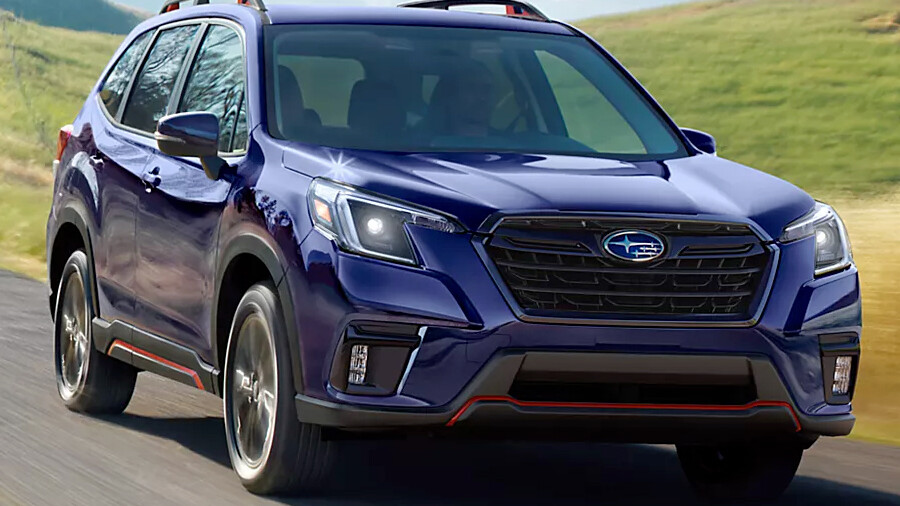

Over successive generations the Forester grew in size, sophistication and quiet competence. Its earliest incarnations were earnest, utilitarian and charmingly simple. Then came iterations that flirted with performance — notably the turbocharged XT variants that offered genuine mid-sized sedan pace in an SUV format. Those turbocharged models are now part of the model’s past, but they left an indelible mark on the Forester’s character: an undercurrent of capability that persists even in naturally aspirated derivatives.
Driving the current Forester around the secret track is an exercise in recontextualisation. The track demands commitment, instantaneous responses and, yes, a level of drama that the Forester was never designed to deliver. Yet Subaru’s engineering choices — a low-mounted boxer engine, a balanced weight distribution afforded by the flat engine layout and, of course, symmetrical all-wheel drive — mean the Forester takes to challenging conditions with a composure many sportier rivals lack. On wet corners where lesser front-wheel-drive crossovers lose their nerve, the Forester’s steady lateral grip and predictable traction systems allowed me to confidently add throttle mid-apex and let the AWD system recompose the trajectory without sharp, alarming corrections.
That composure is not the same thing as razor-sharp reflexes. The Forester is not a lightweight, nor does it have the taut, race-inspired suspension setup of a sports car. Body control is competent rather than aggressive: there is roll, but it is well contained; weight transfer is present but not dramatic. The steering is part of this measured package — accurate enough to place the car on line but lacking the tactile feedback and immediacy I crave in a performance car. In short, the Forester’s chassis architecture and suspension tuning prioritise predictability and safety over theatrical engagement. For a driver accustomed to sports sedans, this can feel like a deliberate handbrake on theatrics. For those who value stability and confidence above all, it’s a virtue.
Where the Forester genuinely surprises on the track is in the steadiness of its power delivery and its traction management. The boxer engine’s low centre of gravity feels noticeable when hustling through flowing bends; it keeps the car balanced and resists the pitching that taller SUVs often display. Meanwhile, the all-wheel drive system is not merely a marketing bullet point: it is the mechanical bedrock of the car’s composure. On greasy patches and through rain-swept corners at the circuit, the Forester was able to carry more speed than I expected, and it did so with a serene, almost stubborn refusal to be unsettled. The modern electronics are tuned to step in with subtlety rather than theatrical intervention — they nudge rather than yank. That restraint results in more usable grip and a driving experience that builds confidence rather than demanding it.
From a performance historian’s perspective, the shadow cast by the turbocharged Forester XTs of old is long. Those cars served as proof-of-concept that the platform could carry pace if given more power. With naturally aspirated powertrains dominating the current line-up, the emphasis is instead on linear torque delivery, low-end tractability and broad usability. On the track this translates to steady forward motion rather than ballistic acceleration; the Forester accelerates confidently but without the ferocity of a dedicated hot hatch or turbocharged SUV. Put another way: the Forester is fast enough to be interesting and, more crucially, is arranged to be safer and more predictable at speed than many of its peers.
As I peeled off after several aggressive laps and sank back into the driver’s seat, my attention inevitably drifted from the mechanical to the human-centered details. This is where the Forester’s evolution becomes most interesting to me as a luxury-minded reviewer. Subaru has never pretended that the Forester is a premium car, yet over several generations the interior has quietly improved in terms of material choices, ergonomics and fit-and-finish. There are still plastics that remind you this car is not aiming for German luxury marques, but the surfaces you touch most — the armrests, the steering wheel, the seat bolsters — bear cosy, thoughtful fabrics and leather options that make longer drives less fatiguing.
I have always believed that luxury is defined as much by restraint and honesty as by opulence. The Forester embodies that principle: instead of frivolous bling, it offers thoughtfully sculpted controls, a straightforward infotainment system that doesn’t bury the driver in menus and seats that, depending on the trim, provide excellent lateral support and long-distance comfort. In the context of the track day this matters far more than one might expect: a well-shaped seat keeps you where you need to be, and a well-mapped interface ensures you can alter traction modes or climate settings without losing focus.
Noise insulation is another area in which the Forester has improved with successive iterations. Though it is not whisper-quiet like a dedicated luxury SUV, wind and road noise are subdued sufficiently to allow conversation at motorway speeds and to let the boxer’s character come through without being intrusive. That acoustic balance becomes a practical luxury during long excursions or when quickly toggling between relaxed road cruising and spirited driving on a demanding backroad.
Historically, Subaru has been pragmatic about safety and driver assistance, and the Forester is a showcase for that approach. The brand’s driver assistance suite — familiar to many as EyeSight in markets where it is available — layers adaptive cruise, lane-centring and automated emergency interventions with a philosophy that places human awareness at the centre. On the circuit some of these systems are disengaged, as they should be, but on the road they create a cocoon of convenience and reassurance that complements the mechanical grip and refined ergonomics. For buyers who value straightforward technology that aids day-to-day life rather than headline-grabbing gimmicks, this measured approach reads as thoughtful and well judged.
One must also consider the Forester’s versatility as part of its performance story. The car is capable of carrying kit — roof racks, bikes, muddy boots — and doing so without compromising its composure or, crucially, its practicality. For drivers like me who split time between spirited drives and more pedestrian tasks, that blend of competence and utility is the real performance metric: how well does the vehicle adapt to the day’s mood? The Forester adapts well.
My laps around the secret track offered another, perhaps less obvious pleasure: the reminder that performance is not only measured in top speeds or zero-to-sixty benchmarks. There is a quiet, regenerative performance in a car that encourages you to press on because it instils trust. The Forester’s combination of predictable handling, stable chassis, and sensible ergonomics produces an effect that is almost restorative: the harder you push, the more it gives back in terms of composure and calm. That is not the same as driving exhilaration, but it is its own distinct and valuable kind of performance.
Turning to the broader sweep of history, the Forester’s trajectory mirrors certain wider trends in the automotive industry: smaller cars gaining SUV-like poise, the ubiquity of all-wheel drive as a comfort and safety feature, and the gradual infusion of higher-quality materials and technology into mass-market segments. Where earlier generations felt more like lifted wagons, contemporary Foresters are rounded, refined and equipped with safety tech and infotainment features that seem obvious today but were not a decade ago. All of this has helped the Forester maintain appeal across a broad swath of buyers: those who prize rugged reliability, families that need space and professionals who appreciate straightforward craftsmanship.
There is of course room for critics to point out compromises. The lack of a mainstream turbocharged variant in recent Forester line-ups means the badge no longer signifies the edge-of-the-envelope thrill it once could. The steering, while accurate, does not provide the tactile poetry enthusiasts crave. And compared to premium rivals, the cabin materials still fall short in absolute terms. But these criticisms often overlook the Forester’s greater strengths: it is a machine designed to be used, to be carried through weather and seasons, and to be present for the long haul. As a luxury connoisseur, I find that kind of understated durability and considered execution deserves recognition alongside more ostentatious measures of worth.
By the end of my day at the circuit, I had lapped, pushed, and reserved judgement. The Forester never sought to be the fastest car in the pack, but it proved remarkably adept at being the most reassuring. If you approach it expecting fireworks you may be disappointed; if you approach it expecting competence, intelligence and a well-crafted cabin for everyday life, you will find much to admire. In the final analysis the Forester’s performance is inseparable from its history — it is a model that has evolved steadily, resisted fads, and found a balance between capability and refinement that suits those who value function delivered with quiet dignity.
In a motoring world where extremes are often rewarded with headlines, the Subaru Forester is a reminder that restraint can be its own luxury. It is an SUV that can be driven hard when circumstances demand, but which rewards moderate, thoughtful aggression with composure rather than drama. For buyers who want a machine that will go to the coast on a wet winter morning, carry a family in comfort, and still confidently tackle a muddy forest track or an impromptu circuit day, the Forester remains a compelling, well-considered choice. And for those of us who enjoy assessing a car both for its track manners and its clubhouse comforts, it provides the rare combination of trustworthiness and subtlety that makes owning and driving it feel like a sensible kind of pleasure.
Specifications
| Specification | Value |
|---|---|
| Engine | 2.5-litre Horizontally-opposed Four-cylinder (Boxer) |
| Horsepower | Approximately 182 Hp |
| Torque | Approximately 176 Lb-ft |
| Drivetrain | Symmetrical All-Wheel Drive |
| Transmission | Continuously Variable Transmission (Lineartronic CVT) |
| Body style | Compact Crossover SUV (5-door) |
| Seating capacity | 5 |
| Fuel type | Gasoline |
| Safety suite | Subaru EyeSight Driver-assist (where Available) |
| Infotainment | Subaru STARLINK-compatible Multimedia System (varies By Trim) |
| Notable variants | Off-road Oriented Trims And Previous Turbocharged XT Variants (historical) |