
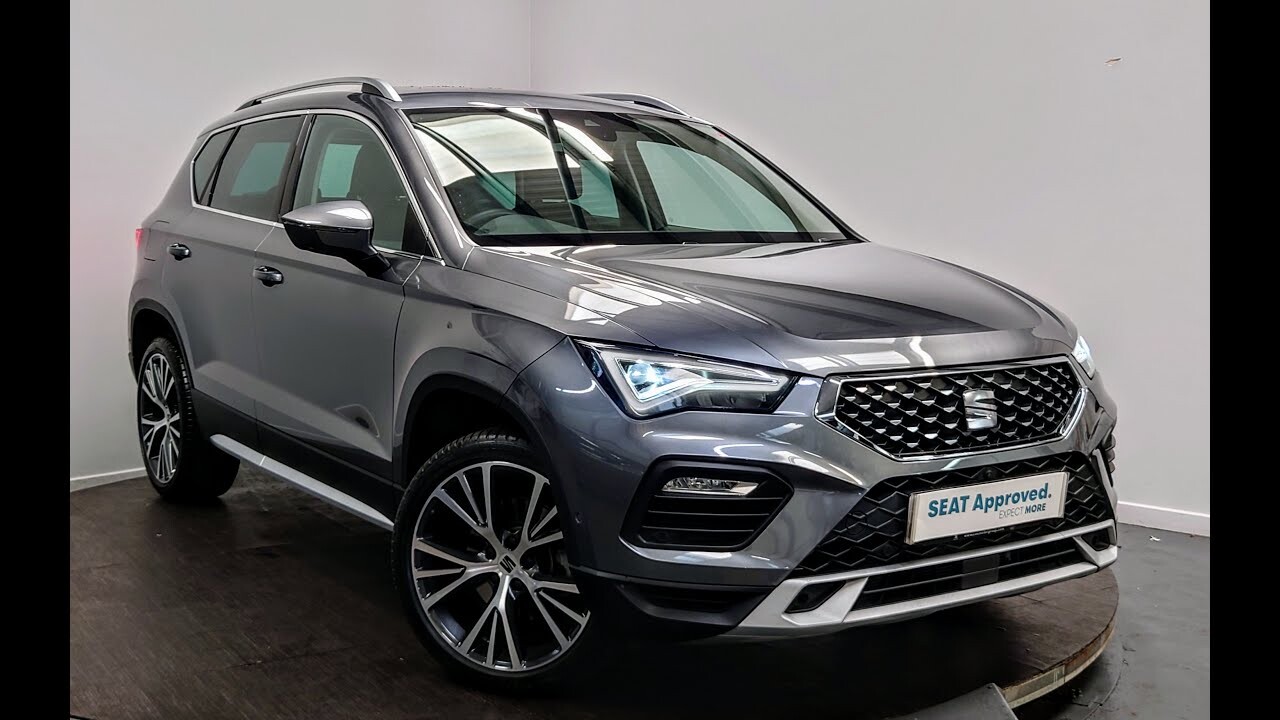

Overview and where the Ateca sits
The SEAT Ateca is SEAT’s compact SUV offering based on the Volkswagen Group’s MQB architecture. For buyers who want SUV practicality without SUV running costs, the Ateca has traditionally been one of the more sensible choices — compact footprint, familiar Volkswagen Group mechanicals and a range of engines that prioritise efficiency as well as convenience.
In 2023, the Ateca continued with the MQB platform and the family’s engine lineup: small turbocharged petrols, larger petrols for stronger performance, and diesel options for buyers covering high mileages. There’s also the hot Cupra-badged variant (the Cupra Ateca), which shares the bodyshell but is a different, high-performance product — I’ll keep the focus here on the standard SEAT Ateca range.
Powertrains — engines, induction and fuel systems
The Ateca’s engine range in 2023 is drawn from established Volkswagen Group units. The headline options available in many markets are:
- 1.0 TSI — a three-cylinder turbocharged petrol unit intended as the entry option, prioritising low running costs and good urban economy.
- 1.5 TSI — a four-cylinder turbocharged petrol that offers a pragmatic balance between economy and performance; this engine in VW Group use also features cylinder deactivation technology on some tunes (deactivating two cylinders under light load) to reduce fuel consumption.
- 2.0 TSI — a larger four-cylinder petrol used for higher-trim or all-wheel-drive Ateca variants where stronger acceleration and towing capability are required.
- 2.0 TDI — a turbocharged common-rail diesel engine in multiple output levels, aimed at high-mileage drivers needing efficient long-distance cruising.
These engines use turbocharging and direct injection (for petrols) to extract usable power from modest displacements. The diesel uses a modern common-rail system and exhaust aftertreatment to meet emissions standards. Across the range, the engines are engineered for durability and easy servicing — they rely on mature componentry and shared parts with other Volkswagen Group models, which helps parts availability and cost.
Transmissions and driveline
The transmission choices on the Ateca are conservative and proven: a 6-speed manual for the more economical petrol and diesel variants, and a 7-speed DSG dual-clutch automatic for those who prefer convenience and quick shifts. On higher-output petrol and diesel versions the 7-speed DSG is commonly paired with the 4Drive all-wheel-drive system.
The Ateca’s AWD system utilises the Volkswagen Group’s Haldex-style coupling to distribute torque between the front and rear axles as conditions demand. This arrangement keeps mechanical losses low in normal driving (the car behaves as front-wheel drive), while being ready to transfer torque rearward under slip — a sensible compromise for everyday efficiency with occasional low-grip capability.
Chassis, suspension and steering — how it feels
Built on MQB underpinnings, the Ateca uses a front suspension geometry and a rear suspension configuration typical for compact crossovers in this class. The front layout is a MacPherson strut arrangement, chosen for packaging efficiency and predictable behaviour. The rear layout delivers a balance of comfort and control at typical family-suv loadings.
SEAT’s tuning emphasises a composed, slightly sporty feel compared with more comfort-focused rivals — steering is electrically assisted which keeps parasitic losses down compared with hydraulic systems and helps fuel economy. The electromechanical rack provides reasonably linear responses for urban driving, while still providing hints of weight and feedback that help in stronger cornering.
In practical terms this means the Ateca rolls less than some soft-riding SUVs, and that helps with driver confidence when fully loaded. For the Budget Buyer this is an important trade-off: you get a car that feels more stable at speed and in crosswinds, at the expense of an ultra-soft ride that hides poor road surfaces.
Brakes, wheels and tyres
Braking hardware on the Ateca follows the modern convention: ventilated discs up front and solid discs at the rear on most variants. ABS, electronic brakeforce distribution and brake assist are standard; higher trims add driver aids such as automatic emergency braking with pedestrian detection.
Wheel sizes range across trims — smaller wheels for the base variants prioritise economy and tyre cost, larger rim options on higher-spec models improve looks and handling but increase rolling resistance and replacement tyre cost. As a budget-conscious buyer I always recommend sticking to the smallest practical tyre rim that meets your needs: lower replacement cost, lower road noise and slightly better economy.
Safety and driver assistance systems
The Ateca carries a comprehensive package of electronic safety aids. Across the range you can expect systems such as lane assist, adaptive cruise control, autonomous emergency braking (with pedestrian detection where fitted), and blind-spot monitoring on many higher trims. These are not just convenience features; they actively reduce the likelihood of low-speed collisions and help with fatigue on longer journeys.
The Ateca was assessed by Euro NCAP in earlier generations and earned strong ratings for occupant protection and active safety tech; SEAT’s focus on including electronic aids as standard on higher trims is a practical selling point for cost-conscious buyers who still want strong safety packaging.
Infotainment, connectivity and ergonomics
SEAT’s in-car technology is drawn from the Volkswagen Group parts bin — the infotainment units are straightforward, well-integrated systems that offer smartphone mirroring (Apple CarPlay and Android Auto), Bluetooth and USB connectivity. Physical controls are sensibly laid out, and the screen interfaces are designed for clarity rather than glitz.
From a maintenance and ownership perspective this is welcome. The software and hardware are widely used across many VW Group vehicles, which translates into easier software updates and familiar diagnostics at independent garages as well as dealer networks. For budget-minded buyers, that matters: cheaper diagnostics, more competitive parts pricing and broad technician familiarity keep running costs down.
Practicality — cabin, load space and day-to-day usability
The Ateca’s packaging is one of its strengths. While I won’t quote an exact boot volume here, the car’s boot and cabin are sized to comfortably handle family shopping, pushchairs and weekend luggage. Rear-seat headroom and legroom are generous for the class thanks to the MQB platform’s packaging, and the seatbacks fold flat to expand cargo area predictably.
Interior materials are durable where it counts: hard-wearing plastics in high-contact areas, comfortable seating fabrics (or optional leather-look trims), and a driving position that’s easy to set for drivers of varying heights. Small practical touches — USB ports, door pockets and a sensible central cubby — add up to a user-friendly daily driver.
Maintenance, ownership costs and value for money
As the Budget Buyer, this is the bit I pay closest attention to. The Ateca’s mechanical commonality with other Volkswagen Group cars is a financial advantage: service parts are widely available and many independent workshops are familiar with the engines and gearboxes. That drives down labour time and parts cost compared with boutique or specialist brands.
Two recurring elements to keep in mind are the turbocharged petrol engines and the DSG gearbox. Turbo engines reward regular oil changes done at the right intervals with quality oil; neglect will shorten turbo life. The DSG gearbox requires periodic service to change oil and filters — that service is not labour-intensive but should not be skipped if you want long-term reliability from those twin-clutch boxes.
Diesel variants come with diesel particulate filters and selective catalytic reduction for NOx control. These systems are robust when the car is used regularly on longer drives that allow regeneration cycles. If your ownership pattern is short urban hops, consider a petrol engine to avoid potential DPF-related maintenance headaches.
Driving impressions — real-world performance and economy
In everyday use the Ateca is predictable and efficient. The smaller turbo petrols are punchy off the line because of the turbo’s torque delivery, and the 1.5 TSI is the sweet spot for many owners who want a good mix of brisk mid-range performance and reasonable fuel consumption.
The 7-speed DSG is a civilised automatic: shifts are quick and generally smooth, with the dual-clutch arrangement giving sharper overtaking responses than many torque-converter alternatives. Where you need the final word on straight-line acceleration, the higher-output 2.0 petrols or the Cupra variant are the choices — but they bring higher running costs and insurance premiums.
For buyers who put on many motorway miles, the 2.0 diesel is the most economical long-run choice. Diesel Atecas cruise with a relaxed character and typically lower fuel bills on long runs, but remember the DPF and SCR systems need regular higher-speed runs to function optimally.
Common ownership considerations and points to check when buying used
If you’re looking at a used Ateca, here are the practical checks I recommend (rooted in known maintenance considerations for turbocharged, DSG-equipped VW Group cars):
- Check the service history for regular oil and DSG service entries — these are the two items that protect expensive components (the turbo and the gearbox).
- For diesel cars, ask about DPF regeneration history and whether the car has a pattern of short urban trips (which can indicate future DPF work).
- Look for software updates and recall completion in the service book; these cars share platforms with many VW models, so manufacturer updates are common.
- Inspect tyres and brakes for even wear — uneven wear can indicate alignment issues or suspension problems that will cost money to remedy.
Strengths and compromises — my bottom line
The Ateca is a textbook Budget Buyer recommendation when you want an SUV that does the sensible things well. Its strengths are:
- Proven Volkswagen Group mechanicals that keep parts and labour costs competitive;
- Practical cabin and sensible ergonomics that suit family life;
- A range of engines that cover efficient city/petrol use and long-distance diesel economy.
The compromises are the usual ones for this segment: higher-spec options, larger wheels and the sporty Cupra derivative increase running and insurance costs. Also, if your driving is overwhelmingly short urban trips, the diesel variants are less appropriate due to DPF behaviour.
Who should buy the Ateca?
If you want an affordable compact SUV with mature, proven engineering, straightforward servicing and a practical, comfortable interior, the Ateca is an excellent candidate. It’s particularly well suited to drivers who prioritise real-world economy and low ownership hassle over outright novelty or radical design. If you rack up long motorway miles, choose a diesel; if most of your driving is urban, a smaller TSI petrol is the pragmatic option.