
The Velvet Behemoth: Putting the Bentley Flying Spur (2023) Through a City Commute Gauntlet
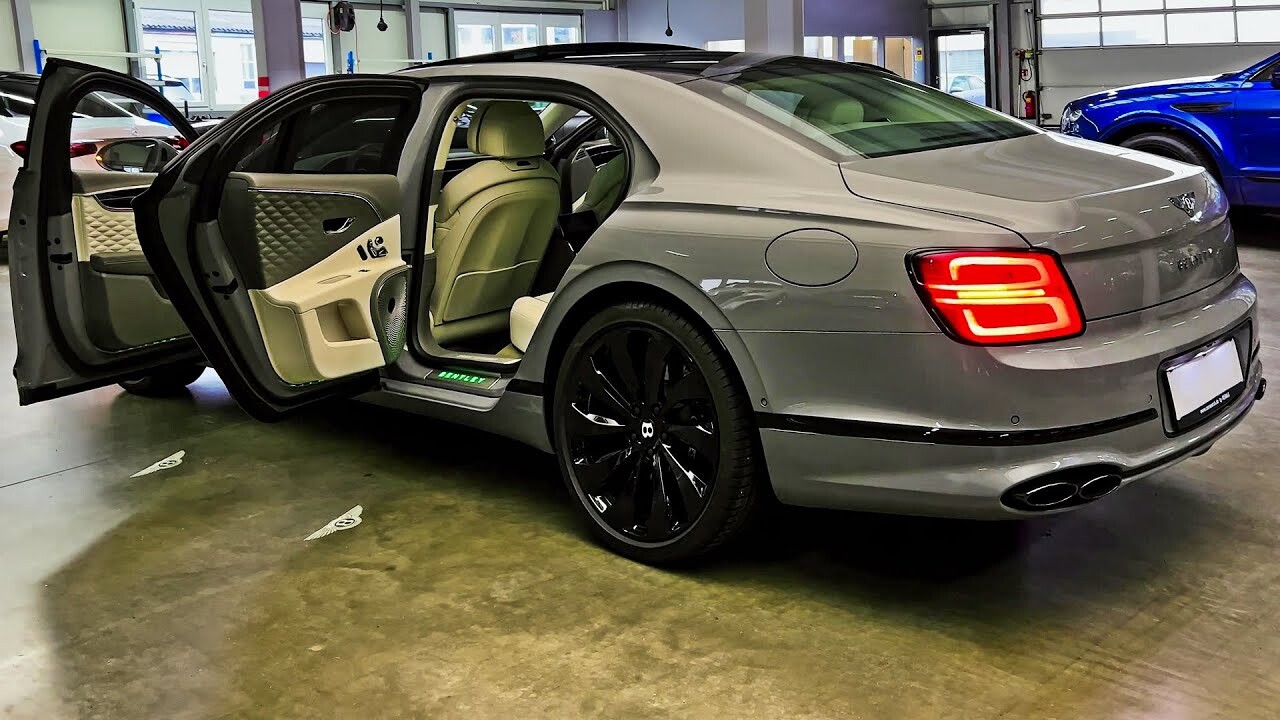

Sitting behind the wheel for the first time, the Flying Spur makes a promise: you will not be hurried, but you will be comfortable while things hurry past you. The cockpit is a study in traditional craftsmanship meeting modern convenience. The leather, the stitching, the veneers — these are the kinds of materials that invite finger tracing and a slow, approving hum. It’s the automotive equivalent of a Savile Row suit. For my city loops that matters: when you spend thirty to sixty minutes in stop-start traffic, the cabin matters. The plushness calms you down and, frankly, compensates for the small indignities of urban life like missed lights and overambitious scooters.
Practicality is where many large luxury cars stumble in the city, but the Flying Spur largely avoids the classic pitfalls. Visibility forward is generous thanks to a long, confident bonnet that feels more theatrical than obstructive — you learn the arc of that long nose quickly, and it becomes a guiding baton through lanes and roundabouts. Of course, the car’s sheer presence means you become part of the traffic landscape; drivers yield more readily, pedestrians pause appreciatively, and delivery drivers give you that resigned deference you’d expect if you’d just announced you were late for an important polo match. The trade-off is the usual one: despite the generous glass, the rear pillars are substantial and backward sightlines require a little more reliance on mirrors and cameras in tight urban maneuvers.
Maneuverability is a delicate subject when you talk about a car this size in a city. The Flying Spur is long, and long cars have a way of reminding you that urban streets were not designed for theatrical proportions. That said, the steering feels weighty and considered rather than ponderous. It’s not a hairpin-happy hatchback, obviously, but threading this Bentley through a narrow one-way lane or around a roundabout never felt like a fight. The car’s manners mean you approach junctions with the confidence of someone who knows their tools, and that helps when other road users are less patient or predictably erratic. Parking remains the most dramatic instance of urban friction; parallel parking in a tight kerbside slot is doable, though you will want to take advantage of the sensors and camera angles. There’s a delicious sense of theatre when the Flying Spur slips neatly into a space and the occupants behave as if nothing at all out of the ordinary has happened — which, frankly, is the real luxury.
Traffic jams are the real test of any commuter car, and the Flying Spur treats them like a king treating a waiting room. It is quietly bullish in stop-start conditions — instead of being a plaintive little city mouse, it’s a competent oak that refuses to be rattled. The refinement is impressive: road and engine noise are kept at bay to the point where your playlist remains the dominating soundtrack. That isolation can be both a blessing and a mild hazard; being cocooned from the world makes it easier to lose track of time, which in a city can lead to missed turns or a late apology at the school gate. I found myself appreciating the Bentley’s manners when the traffic thinned and I could make smooth, decisive progress again. For the commuter who values serenity over sportiness, this is a strong point in the Flying Spur’s favor.
Fuel economy is the kind of number I will not pretend to know exactly, and when you ask a car like this to be frugal you’re asking it to betray its character. What I can say is that the Flying Spur does not pretend to be a thrifty companion. It was designed to provide effortless performance and supreme comfort, and those priorities weigh on consumption during urban churn. If you live in a city and plan to use this as a daily driver, be prepared for visits to the petrol station, and factor in running costs that reflect the car’s stature. Many owners accept that as the cost of admission; they drive big-bore luxury because it makes the daily grind bearable if not blissful.
One of the joys of Bentley ownership is the attention to detail that elevates mundane tasks into little luxuries. In the Flying Spur that translates to conveniences that are quietly indulgent: doors that close with a reassuring thud, seats that seem to remember the exact shape of your back, and climate controls that turn the cabin into a precise comfort zone. For urban commuters who double as chauffeurs (or simply relish being chauffeur-driven), the rear seat is a proper sanctuary. Space is generous, and the kind of support offered means you can take a conference call or a brief nap without feeling like you’d been rolled out of a thespian’s dressing room. It would not surprise me to find executives who prefer this as a mobile office; the atmosphere is right, the ride is forgiving, and the sense of occasion helps keep daily stress in check.
Technology and driver assistance are the glue that makes big cars manageable in tight city conditions. The Flying Spur does not feel like a gadget car in the way some modern rivals do; instead, the tech is presented as a respectful assistant rather than an intrusive know-it-all. Parking sensors, camera systems and an armory of electronic aids take much of the worry out of low-speed maneuvers. I relied on those aids in a multi-storey car park with narrow lanes and steep ramps, and they made the difference between a harrowing experience and a mildly exciting one. For drivers used to compact hatchbacks, these systems will feel indulgent; for old-school enthusiasts, they’re a pragmatic concession that allows the car’s other virtues to shine uninterrupted.
Ride comfort over imperfect city surfaces is where the Flying Spur earns its keep. The suspension soaks up potholes and fractured tarmac with a composure that borders on the aristocratic. There is a sense that beneath the plushness there is engineering meant to blunt all the small aggressions of urban roads. You don’t feel every crack in the pavement; instead you glide past them as if the car is smoothing reality for your benefit. This makes long commutes less draining and short hops pleasantly unremarkable. If there’s a complaint, it’s that the car’s controlled grace can make it slightly detached from the tactile joys of spirited driving — but in town that detachment is a feature, not a bug. The Flying Spur turns the city into a stage and keeps the distractions backstage.
Noise insulation is exemplary. City environments are messy and noisy, and the Flying Spur keeps most of the mess outside. Tyre and wind noise are kept admirably low, and the cabin maintains an almost museum-like stillness when idling at traffic lights. That stillness can lull you into a false sense of timelessness — another reason to keep an eye on the clock. The trade-off is worth it: when you finally unfurl the car's capability on an open stretch, the controlled power is there, ready with dignity rather than a shout. For commuters who occasionally like to remind themselves that they’re piloting something substantive, that balance is delightful.
Urban ownership also means daily interactions: fuel stops, car park ticket machines, tight residential streets and family responsibilities. The Flying Spur handles these with a regal patience. Practical touches like the boot accessibility and smart storage are thoughtful, though I won’t claim it’s the most economical shopping-run car — you do not buy a Bentley to be frugal. Owners will need to be mindful of kerb heights, low garages and narrow loading bays; a car this good looks best when it has the space to be admired, not bruised by urban architecture.
As a classic-car lover, I inevitably consider the Flying Spur’s place in the long view. Bentleys have a lineage that confers a certain collectability and cachet. The 2023 Flying Spur, with its clear ties to Bentley’s artisanal approach, may not be a classic in the traditional sense yet, but its materials, craftsmanship and tasteful design will give it longevity. Cars that are built with care and that avoid fleeting trends often age well, and this one seems destined to follow that pattern. For collectors who want a large modern Bentley that might sit comfortably alongside older relatives in a collection, the Flying Spur offers the reassurance of continuity: it is recognizably Bentley, now and for the foreseeable future.
There are trade-offs, of course. Using a Flying Spur as a daily commuter requires a different mindset than using a compact executive car. Running costs, practicality in extremely tight precincts and the occasional sensation of being too conspicuous are real considerations. But for those who value ceremony, comfort and a sense of occasion in their daily travel, the Flying Spur is a compelling choice. It transforms the banalities of commuting into a sequence of small dignities: a comfortable seat, a quiet cabin, smooth progress and a feeling — if only for the length of your journey — that life is, if not simpler, at least more pleasant.
At the end of my week-long City Commute Challenge I found myself slightly smug and thoroughly content. The Flying Spur is not a pragmatic compromise; it’s a deliberate statement. It asks you to accept certain costs in exchange for a rare and persistent comfort. If your city route includes long stretches of tedium, the Flying Spur will make that tedium less grievous. If your parking spaces are tiny and your daily routes a labyrinth, you might find the car’s dimensions less forgiving. Either way, this Bentley turns the commute into an experience worth noting — and if you’re like me, a classic-car enthusiast who appreciates the finer things, that experience is well worth the price of admission. You won’t be making savings, and you may not be beating traffic any faster, but you will be doing it with the sort of quiet grandeur that makes even the most ordinary day feel like an event.
As a lifelong admirer of classic coachbuilt cars, I found the 2023 Bentley Flying Spur a curious and lovable anachronism — a modern-day velvet behemoth that insists on turning the mundane commute into a small ceremony. Behind that long bonnet and beneath the Savile-Row-level trimmings there’s nothing ashamed about its size or its appetite; it wears its conspicuousness like a well-cut overcoat. In the city it soothes rather than excites: noise disappears, seats cradle, and kerbside hassles are mostly managed by clever aids (and the occasional obliging fellow road-user). Yes, it is expensive to run and occasionally feels ungainly in the tightest lanes, but those are the same flaws that make it behave like a proper grande dame — a little high-maintenance, but endlessly dignified. If you buy one, do it because you love the ritual of motoring as much as the machine itself. Put another way: it’s not the most practical daily driver a rational accountant would choose, but then again, I’ve never been much for rational accountants.
Specifications
| Specification | Value |
|---|---|
| Manufacturer | Bentley |
| Model | Flying Spur |
| Model year | 2023 |
| Body style | 4-door Saloon |
| Doors | 4 |
| Seating capacity | 5 |
| Assembly location | Crewe, United Kingdom |
| Drive type | All-wheel Drive |
| Transmission | 8-speed Automatic |
| Fuel type | Petrol |