
Between E-Type Ghosts and Modern Teeth: A Technical Love Letter to the 2024 Jaguar F‑TYPE
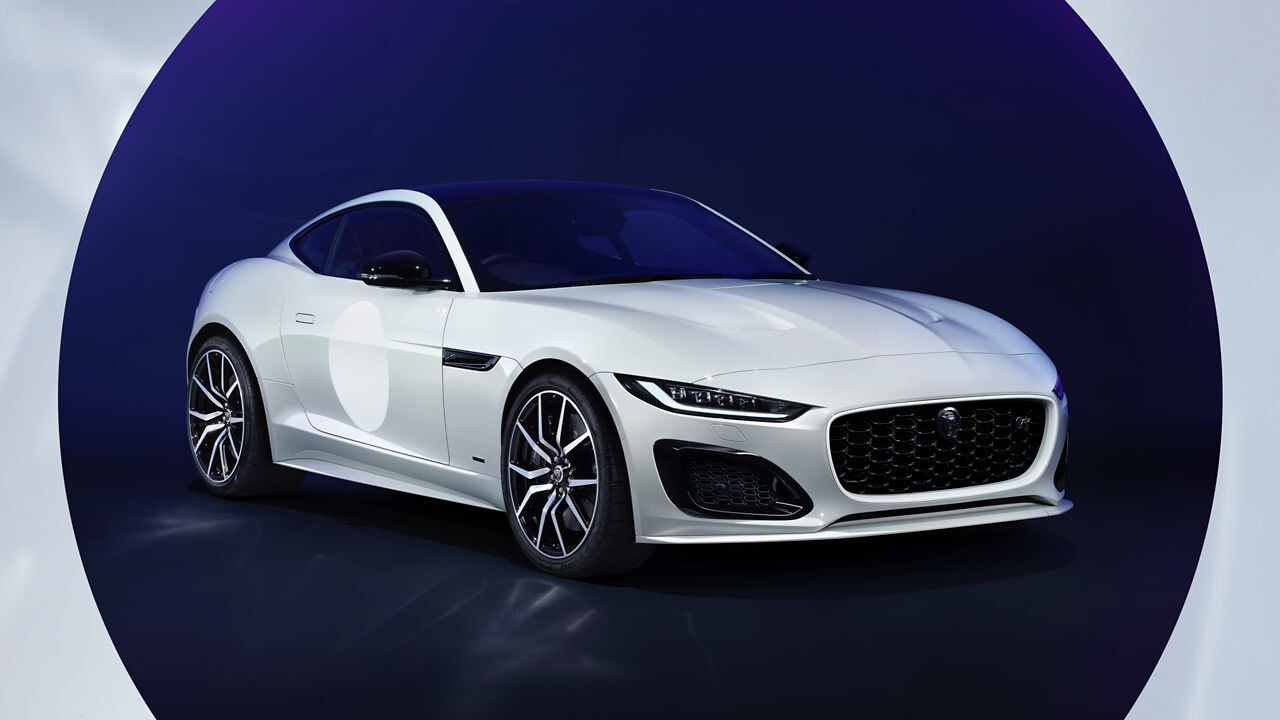

First, a bit of grounding: the F‑TYPE is a true two‑seat sports car offered in coupe and convertible forms, designed and engineered with sporting intent rather than as a dressy grand tourer. The car's structure is heavily aluminium‑based — Jaguar has long favoured aluminium for its strength-to-weight benefits and corrosion resistance — and that philosophy continues with the F‑TYPE. The result is a body that aims to be stiff where it matters, reducing flex through the sills, bulkheads and underfloor structure so the suspension can work precisely. The aluminium architecture is not exotic by today's standards, but it's the right tool for a light, responsive sports car.
On suspension, Jaguar pairs classic double‑wishbone geometry up front with a multi‑link set up at the rear. That recipe is familiar to enthusiasts because it gives engineers fine control over camber and roll stiffness independently — crucial for guaranteeing a consistent tyre contact patch through a corner. Jaguar tunes the damping relatively firm compared with soft GT cars, but still with enough compliance for everyday use. Electronic damping, where fitted, allows the car to switch between modes: a softer mode for cruising and a stiffer setup for committed driving. The steering is electrically assisted, and while electric systems can lack the organic feel of hydraulics, Jaguar has worked hard to tune weight, ratio and feedback so the wheel still telegraphs what the front tyres are doing. I found the steering to be direct and communicative at pace, with a pleasingly progressive weighting that rewards precision inputs.
Under the hood — or under the long bonnet, depending on your romantic preferences — the F‑TYPE continues Jaguar's pragmatic multi‑engine approach. Across recent years Jaguar has offered turbocharged four‑cylinder engines and supercharged V6 and V8s in the F‑TYPE. Rather than recite numbers that might vary by market or trim, what matters technically is the engine architecture and how it is married to the rest of the car. The supercharged V6 and V8 options bring that rich, immediate torque delivery that a roots‑type or twin‑vane supercharger is known for: a linear, pressurised shove in the midrange that makes the car feel brisk without a huge lag. The turbocharged four gives a lighter front end and admirable efficiency if you want a less flamboyant experience.
All engine options are paired with an eight‑speed automatic transmission. In practice, this gearbox behaves like a modern sportbox: quick to slot into the right ratio, capable of holding a gear under braking for engine braking and happy to change down with rev‑matching when the throttle is blipped. The transmission electronics are calibrated to cooperate with the drive modes, so a 'dynamic' or 'sport' selection will hold gears longer and allow more aggressive downshifts, while 'comfort' will prioritise smoothness. While purists might miss a manual, the automatic is technologically coherent with fast modern performance and helps the F‑TYPE be both usable and rapid in everyday traffic.
Drivetrain layout and traction options are important talking points for a sports car. The F‑TYPE's default character is rear‑wheel drive; this preserves the classic sports car balance most enthusiasts adore. In some trims and markets, all‑wheel drive is offered for more traction and all‑weather usability. All‑wheel drive in the F‑TYPE is a performance tool — it can channel torque to the front axle when needed and otherwise keep the bias to the rear for that traditional Jag oversteer propensity when provoked. The traction control strategy is sophisticated enough to allow a driver to pull the reins back for a more playful experience, yet it remains an understated safety net if you need it.
Brakes are generous and, in higher trims, upgradeable to high‑performance packages with larger rotors and multi‑piston callipers. The baseline design uses ventilated discs all around with robust pads that offer a consistent bite and good fade resistance. The pedal feel is firm and progressive — not numb, not frighteningly sharp — and that suits the F‑TYPE's role: a car you enjoy hustling on a B‑road yet can live with on a daily commute. Anti‑lock and stability systems are tuned to intervene late for enthusiasts who want to use the car's limits, but early enough to prevent embarrassing excursions in adverse conditions.
Tyres and wheels deserve a paragraph of their own: tyre choice profoundly changes the F‑TYPE's personality. The car rides on lightweight alloy wheels with staggered setups in some trims (wider at the rear) to enhance grip and posture. Jaguar tends to specify high‑performance summer tyres on sport names and more all‑season compounds on variants with all‑wheel drive or in markets where summertime only rubber isn't practical. If you're contemplating purchase as a classic to keep, changing to a more forgiving compound for longevity makes sense, but for sharp handling and the best steering feedback, a sticky summer tyre is hard to beat.
Inside, the cabin is a study in sports car ergonomics with a dash of modern interface design. The dash layout is driver‑centric: primary controls are oriented towards the person behind the wheel, and visibility over the long bonnet is reassuring. Seats are bolstered to hold you in place on a twisty road yet not so gauntlet‑like that you feel trapped after an hour. Materials are predominantly premium: leather, knurled aluminium, and soft‑touch plastics where you want them to be. Switchgear has weighty detents; that tactile quality is satisfying in a world of light, forgettable plastic toggles.
Infotainment in modern Jaguars has been through a few iterations; by 2024 the systems had matured to offer fast touch response, over‑the‑air updates and smartphone connectivity. The interface integrates navigation, media and vehicle settings cleanly, and tactile quick‑access buttons for drive mode selection mean you don't need to dive through menus while cornering. Where electronics shine most in a sports car is in integrating sensors and control logic: adaptive dampers, drive mode maps, and throttle and steering calibration are all coordinated through the central software. The coherence of that system makes the F‑TYPE feel like a single instrument rather than a patchwork of components.
One of the F‑TYPE's strongest appeals is its acoustic identity. Supercharged engines produce a distinctive, muscular soundtrack — a broad, insistent growl that's very different from the thin, high‑pitched note of small turbocharged engines. Exhaust packages, including active valves in many variants, let the car switch between restrained and theatrical. For a classic car lover, there's an emotional resonance in that exhaust note; it hints at older Jaguars' throatier powerplants while being unmistakably modern. On a winding road at dawn, the sound amplifies the sensory link between driver and machine — and it's precisely why many of us keep petrol cars in the garage rather than flip them for convenience.
From a technical maintenance standpoint, aluminium construction delivers corrosion benefits but can raise repair cost considerations after an incident — replacing an aluminium panel isn't the same as hammering and welding steel. Similarly, supercharged engines, while robust, involve additional components like drive belts and parasitic loads that should be checked during servicing. The eight‑speed automatic is generally durable when serviced per schedule, but like any high‑performance transmission, oil condition and fluid spec adherence matter. If you're thinking long term, ensure documented service history and look for evidence of careful use — sports cars suffer when neglected, not necessarily when driven hard.
On the road, the F‑TYPE's character translates into an almost cinematic driving experience. The interplay between chassis rigidity, suspension geometry and tyre grip allows the car to change direction with confidence. There's a natural balance: the tail is willing to step out if you ask, but the electronics and steering make that behaviour predictable rather than scary. In everyday driving, the F‑TYPE never feels like a throwback of the awkward sort; it has the manners to be noticed in a traffic queue without surrendering its sporting credentials. Take it to a track day and the car's underlying structure, brakes and powertrain make it a capable and instructive machine. Take it on a long cross‑country drive and the seats, insulation and ride tuning keep fatigue at bay.
Now, on the subject I can't resist — collectability. I often find myself looking for the traits that make a modern car likely to be a future classic. The F‑TYPE has several of them: a clear lineage to famous Jaguars (the design language and proportions echo the marque's icons), a strong visual identity (that long bonnet and the coupe's greenhouse), and in the case of V8‑powered variants, an emotive soundtrack that appeals to purists. Limited runs, special editions, or models with particularly desirable engine/spec combinations tend to be the ones that end up cherished. For collectors who adore tactile mechanical experiences, the F‑TYPE's analogue‑leaning attributes — especially in the V6 and V8 forms — should age well. Electrification and changing emissions regulations will inevitably make internal combustion sports cars rarer, which bolsters the cultural value of a well‑kept F‑TYPE in future decades.
I should be honest about drawbacks. The F‑TYPE's small cabin means practicality is limited; shopping trips demand moderation and weekend luggage needs planning. The rear view is compromised by the steeply raked roofline and short rear glass, though parking aids and cameras compensate. There's also the question of modern competition: rivals offer differing balances of technology, space and outright performance. Yet for those drawn to Jaguar's aesthetic and the visceral appeal of a low, sporty coupe or ragtop with a muscular engine note, the F‑TYPE occupies a charming niche.
From a technical critique perspective, Jaguar has generally chosen the middle path — not the most radical, not the most conservative. The car's electronics, chassis tuning and powertrain choices are coherent and aimed at making the driver feel in command. The engineering emphasis placed on weight management, front/rear balance and suspension kinematics shows a respect for the old school of sports car design: tune the chassis first, then add power. That philosophy is why the F‑TYPE feels, to me, like an honest sporting proposition rather than a numbers game.
For potential owners and collectors, my practical advice is straightforward. Buy the spec you love: if the sound and torque of a supercharged V6 or V8 are meaningful to you, prioritise that because the engine experience is central to enjoyment and future desirability. Check service history carefully, especially for high‑performance models where driving style and maintenance drastically affect longevity. Consider factory options that improve braking and suspension; these are often the parts of the car that make the biggest difference on a back road. Finally, think about provenance: well‑documented cars with single owners or low mileage and tasteful spec choices will be the ones that age into desirable examples.
In closing, the 2024 Jaguar F‑TYPE is a fitting modern chapter in Jaguar's long story of sporty, emotive cars. Its technical package — aluminium structure, double‑wishbone front and multi‑link rear suspension, a range of turbocharged and supercharged engines, eight‑speed automatic transmission and optional all‑wheel drive — all serves a unified purpose: to deliver an engaging, dramatic driving experience wrapped in unmistakable Jaguar style. As a classic car lover, I'm always looking for soul as much as spec sheets; the F‑TYPE has both. It may not be an E‑Type reincarnation, but it is a worthy, technically accomplished successor to an idea Jaguar has been refining for decades: the sports car that makes you grin, every time.
As a lifelong fan of classic Jaguars I approached the 2024 F‑TYPE with a mix of scepticism and curiosity — and I came away charmed. It wears Jaguar cues honestly: long bonnet, short rear, two seats and a sporting focus that feels more like a modern descendent of the marque's sporting past than a retro exercise. The aluminium structure, double‑wishbone front and multi‑link rear give it a lively, balanced chassis and the electric steering and adaptive dampers let the car be both composed on a long A‑road run and eager on a twisty B‑road. If you want the emotional core of the car, the supercharged V6/V8 variants are the ones that sing — active exhaust modes mean you can be polite on the commute and theatrical on a country lane. Practical compromises remain: it’s a proper two‑seater with limited luggage room and aluminium repairs can be costly, so I’d want a documented service history before buying. For collectors and enthusiasts who value design, sound and driving purity over sheer daily practicality, the F‑TYPE is compelling — not a museum piece, but a modern Jaguar that feels true to the brand’s sporting lineage. My tip: pick the engine and options that make you smile every time you start it, and keep the paperwork tidy.
Specifications
| Specification | Value |
|---|---|
| Body style | 2-door Coupe / Convertible |
| Seating capacity | 2 |
| Construction | Predominantly Aluminium Bodyshell |
| Engine options | Turbocharged 4-cylinder; Supercharged V6; V8 |
| Fuel type | Petrol |
| Transmission | 8-speed Automatic (no Manual In Presented Context) |
| Drivetrain | Rear-wheel Drive Standard; Some Trims/markets Offer All-wheel Drive |
| Front suspension | Double-wishbone |
| Rear suspension | Multi-link |
| Dampers | Adaptive/electronic Damping Available |
| Steering | Electric Power Steering |
| Brakes | Ventilated Discs All Round; Larger Rotors And Multi-piston Calipers On Higher Trims |
| Wheels tyres | Staggered Wheel Setup Available; Tyre Choice Strongly Affects Handling |
| Exhaust | Active Exhaust Valves On Higher-performance Variants |
| Infotainment | Smartphone Integration; OTA Updates Supported |
| Doors | 2 |
| Layout | Front-engine |
| Luggage space | Small, Limited Luggage Capacity |
| Safety traction | Traction And Stability Systems With Late Intervention For Enthusiast Driving |