
Silent Corners: An Ex-Racer’s Eco Adventure in the Volvo XC40 (2023)
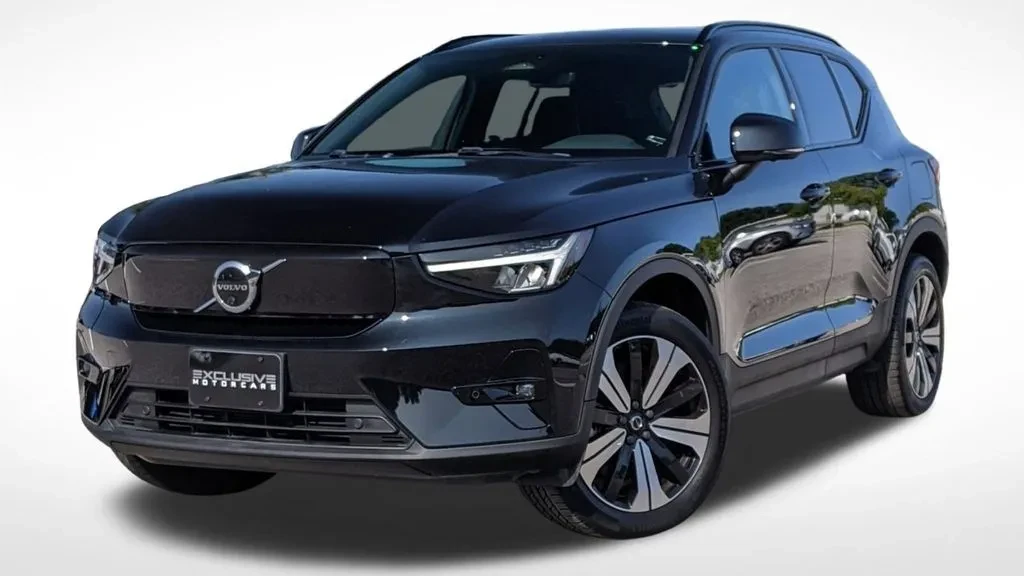

Volvo offers the XC40 in several powertrain guises, including electrified versions. Over a few long days I swapped between the plug-in capable variant and the fully electric iteration, letting each dictate a different rhythm to the journey. The first thing I noticed was how quickly the character of the car changes with the propulsion choice. The electric XC40 delivers the immediate, effortless thrust I remember from racing cars with electric hybrids on the grid: no revs to manage, just torque available the instant you ask for it. It transforms certain stretches into a silent, intimate experience. The plug-in hybrid felt like a practical compromise, able to use silent electric mode through towns and charge zones, then revert to combustion assistance when I pushed into more remote sections where chargers were scarce. Both versions make clear that Volvo wants you to think about reducing tailpipe emissions, but they also force you to be realistic about lifecycle impacts and the way you actually use the car.
The core of any eco assessment is the way a vehicle uses energy in real circumstances. Racing taught me the power of smoothness: the least efficient driver is the one who works the controls hard and unpredictably. That lesson translates perfectly to the XC40. In electric mode, silky throttle modulation and anticipatory use of regenerative braking yield big dividends. You can feel the regeneration taper in as you ease off the accelerator, and the car settles into a pleasing one-pedal rhythm if you allow it. The blending between regeneration and the friction brakes is well judged, avoiding the abrupt grab that undermines confidence and wastes energy through unnecessary brake heat. When I applied my racer senses to maximizing range — easing into corners, carrying momentum rather than arresting it, and letting long descents recharge the battery through regeneration — the XC40 rewarded patience with real gains. Conversely, blunt, aggressive inputs drained the battery and returned the cross-country ride to something that felt more like hot-lap consumption than considered travel.
You cannot talk about environmental impact without talking about the materials and the manufacturing story. Volvo has been vocal about electrification and sustainability across its range, and the XC40 carries that language in its design, options and presentation. The cabin feels honest and restrained rather than opulently wasteful. Trim choices that favor recycled materials and alternatives to traditional leather are available, and that aligns with the ethical choice many buyers want to make. From the practical perspective of a journeyman driver like me, these materials also hold up well to the knocks of real life — dirty boots after a forest walk, sand from a coastal lunch — without the fragile care requirements of some more delicate interiors. A car that looks sustainable but fails at everyday durability is a false economy; the XC40 strikes a competent balance.
Handling for a compact crossover can be a loaded subject when you come from a GT3 background. You understand centre of gravity, roll moment and the compromises inherent in a higher ride height. The XC40 never pretends to be a sports car, but it is competent and communicative in ways that matter on minor roads. The steering is light enough for urban manoeuvres yet provides enough feedback to let you place the car precisely on a twisty lane. Understeer is predictable and progressive; the chassis is tuned toward stability and user confidence rather than edge-of-adhesion thrills. For eco-minded driving this is a benefit, because predictable behaviour allows you to carry momentum through bends rather than scrub it off with heavy braking and acceleration. The suspension soaks up imperfect surfaces without overturning the composure of the car, which helps maintain energy economy: each violent suspension movement is an energy tax, and a well-managed ride keeps that tax small.
Tyres play an outsize role in the XC40’s real-world efficiency. Stock tyres are a compromise between grip, comfort and rolling resistance. If you want to squeeze more range out of an electric XC40 on long eco runs, lower rolling resistance tyres make a tangible difference, though they do soften lateral grip. On the routes I selected — quiet coastal roads with long sweepers and forested climbs where grip is less about corner-carving aggression and more about traction in a changing surface — I found the standard tyre setup to be a sensible compromise. Brake feel is solid, the ABS and stability systems are unobtrusive, and the regenerative system hands back energy in a way that feels natural rather than intrusive. My racing past makes me picky about pedal progression; the XC40’s brake pedal in electric regen-heavy driving takes a little getting used to, but it never undermines confidence.
Practicality is part of the environmental story because efficiency is partly behavioral. A car that fits your life will encourage low-impact choices. The XC40 is small enough to be polite in urban environments and large enough to carry the gear you need for a longer eco-escape. I packed light: bike, a folded kayak, some camping essentials and a cooler with locally sourced food. The hatch swallowed it all with reasonable ease, and the upright seating meant I could fit taller kit without contortions. That ability to carry equipment for non-motorized exploration matters more than the spec sheet suggests; less dependence on additional vehicles or trailers is an environmental gain that rarely appears in headline emissions numbers.
Charging and fuelling infrastructure are the practical half of any electric or plug-in ownership equation. I planned routes that deliberately passed through small towns with cafes that offered destination charging, and through stretches where a fast charger might be found at a supermarket or service area. The experience of charging is still a mixed bag across regions: some chargers are reliable and convenient, others are temperamental or occupied. For pure electric travel you quickly learn to treat charging as part of the itinerary, not a nuisance to be endured. The XC40’s charging experience is straightforward: you plug, the car accepts current, and the heat you would have felt in a combustion engine is replaced by the dull hum of electrons being coaxed into a battery. For the plug-in variant, the convenience of using electric-only in towns and switching to combustion for long legs is liberating, though it does obscure the pure environmental benefit picture — the real gains depend on how often you can actually recharge and whether the electricity comes from renewable sources.
Noise is an environmental factor in its own right. The quiet of an electric motor on an early-morning country lane turns the drive into a sensory exploration. Birdsong, the lap of small waves on a shingle beach, the whisper of wind through hedgerows — these details become part of the journey when the combustion soundtrack recedes. That quietness has a psychological environmental benefit: it makes you more aware of the landscape and more likely to treat the route with respect. Conversely, the plug-in hybrid, when running on its petrol engine, brought back a level of mechanical noise that reminded me that convenience sometimes carries acoustic and emissions costs. Choosing when to run electric and when to allow the combustion assist becomes a series of small ethical decisions you make throughout the day.
Range anxiety has a mirror in the mindset of a racer who once feared running off the track: you manage every parameter you can. Preconditioning the cabin while plugged in, selecting the correct drive mode, moderating speed on open stretches and using route planning to avoid needless detours are all part of the strategy. The XC40’s driving aids and navigation can help with this when they integrate energy use into trip planning, nudging you to slower speeds or different routes to conserve charge. On long eco routes where charging opportunities are sparse, the plug-in’s hybrid fallback felt like insurance; on shorter, local adventures the electric version felt cleaner and more immediate. In both cases, the smallest choices — closing the roof rails when not needed, packing reasonably, avoiding unnecessary idling — added up to meaningful gains.
Safety and assistive technology tie directly to environmental intent because they can change behaviour. The XC40 is fitted with driver aids designed to reduce accidents and prevent inefficient driving episodes that waste energy through sudden braking and re-acceleration. An attentive adaptive cruise or a competent lane-keeping system encourages steady, efficient travel on long open stretches. The presence of these systems — implemented with Volvo’s characteristic focus on sensible intervention rather than intrusive nannying — lets me concentrate on smooth inputs and good energy management rather than constant corrections. On the narrow roads I prefer for eco runs they are more of a backstop than a constant companion, but their existence nudges a culture of safer, more efficient driving.
One of the most interesting conversations about environmental impact is lifecycle thinking: manufacturing emissions, battery raw material sourcing, longevity and recyclability. These are complex topics that extend beyond the scope of a single road test, but they shape how I used the car. For a lot of drivers the sensible approach is pragmatic: use electric mode for the majority of short trips where it offers the most emissions avoidance, and retain hybrid flexibility for longer journeys where charging infrastructure or time constraints make pure electric impractical. Buying a car with sustainable materials, good durability and support for battery recycling matters, but so does using it in a way that reduces overall impact. The XC40 rewards a thoughtful owner who plans routes, charges wisely and treats the car as part of a broader low-impact lifestyle rather than a standalone badge of green credentials.
There were moments during the trip that appealed directly to my old racing instincts: finding the limit through a fast, sweeping bend and feeling how delicately the car’s weight transfers across the chassis; the satisfaction of carrying momentum from apex to exit without resorting to heavy throttle corrections; the silence of an electric pull out of a tiny village that would have been noisy just a few years ago. But the dominant emotion across the journey was different from the adrenaline of a lap at Daytona — it was a slower, more considered pleasure. The pleasure of efficiency is an acquired taste, one that rewards planning, patience and a willingness to let the landscape set the pace. The Volvo XC40, in its 2023 iterations, is a car that supports that approach without demanding sacrifice. It is competent, honest and built with an eye toward the environmental choices drivers can make every day.
At the end of my eco adventure I parked the XC40 overlooking a small estuary as the sun softened. The car had been silent for long stretches, it had carried equipment for non-motorized exploration, and it had given me the kind of steady, communicative handling that lets you squeeze efficiency out of real roads. As someone who once chased lap times for a living, I can say that there is still a thrill in the precision of driving efficiently: the discipline of smooth inputs, the tiny victories of conserved energy and the ethical comfort of choosing routes and powertrains that leave a lighter footprint. The XC40 is not a manifesto on its own, but it is a versatile tool for anyone looking to reduce impact without surrendering the fundamental pleasures of driving. For me, that is a very satisfactory evolution of the relationship between car and driver.
I remember the first time I shut the door on an XC40 Recharge and felt nothing but the faintest whisper of a motor and the click of seatbelt — the kind of silence that makes you unusually aware of everything else. After 15 years chasing tenths around circuits, that silence felt almost indulgent, but useful. It let me listen to the landscape as much as the car: birds, a river riffle, the crunch of gravel when I stopped to unpack a bike. That’s the point of this Volvo for me. It isn’t a halo sports car; it’s a well-sorted tool that lets you go further into quiet places without leaving a loud footprint. On narrow country lanes the XC40’s balance and predictable manners rewarded the sort of smooth, momentum-conscious driving I learned in GT3 — carry speed through a turn, modulate the throttle, let regen do the heavy lifting. The electric model’s instant torque is deliciously useable but not terrifying; the PHEV lets you string together long runs without frantic charging planning, at the cost of making some of the eco decisions your responsibility mid-trip. Interior materials and trim choices favour durability and sustainability over fragile flash, which I respect — a car that survives camping boots and a muddy rack is more likely to be kept and cherished, and that matters to the planet. Practicalities are honest: it’s compact enough for tight lanes and parking, but roomy enough for a bike, kit and a weekend’s worth of local produce. Driver aids quietly keep things steady and efficient, and one-pedal regeneration becomes second nature once you adapt your technique. The limitations are obvious — this isn’t a hot hatch — but for what it sets out to do it does it with composure, clarity and a decent dose of Volvo common sense. If you want a companion for low-impact adventures that still rewards the sort of tidy, momentum-focused driving I taught myself on racetracks, the XC40 is a very good choice. It won’t beat a proper sports car in a straight line or a circuit lap, but it will take you to the places those cars can’t — and do so with a conscience. I’d buy it for the balance of usability, thoughtful engineering and the way it politely encourages you to slow down and listen.
Specifications
| Specification | Value |
|---|---|
| Model | Volvo XC40 (2023) |
| Body style | Compact Crossover SUV |
| Seating capacity | 5 |
| Powertrains | Petrol, Plug-in Hybrid (PHEV), All-electric (Recharge) |
| Transmission | Automatic (ICE/PHEV); Single-speed Automatic (electric) |
| Drivetrain | Front-wheel Drive Or All-wheel Drive, Depending On Trim |
| Charging | AC Charging For PHEV And EV; Public DC Fast Charging Supported On All-electric Recharge Models |
| Safety equipment | Volvo Active Safety Systems And Driver Aids (adaptive Cruise, Lane Assist, And Related Systems) |
| Interior materials | Options Include Durable And Recycled-material Trims And Non-leather Alternatives |
| Cargo practicality | Practical Compact-SUV Load Space Suitable For Bikes And Outdoor Kit (varies By Configuration) |
| Intended use | Daily Driving, Low-impact Exploration, Mixed Urban And Rural Use |