
Aston Martin DB11: A Grand Tour of Craft, Comfort and Conviction
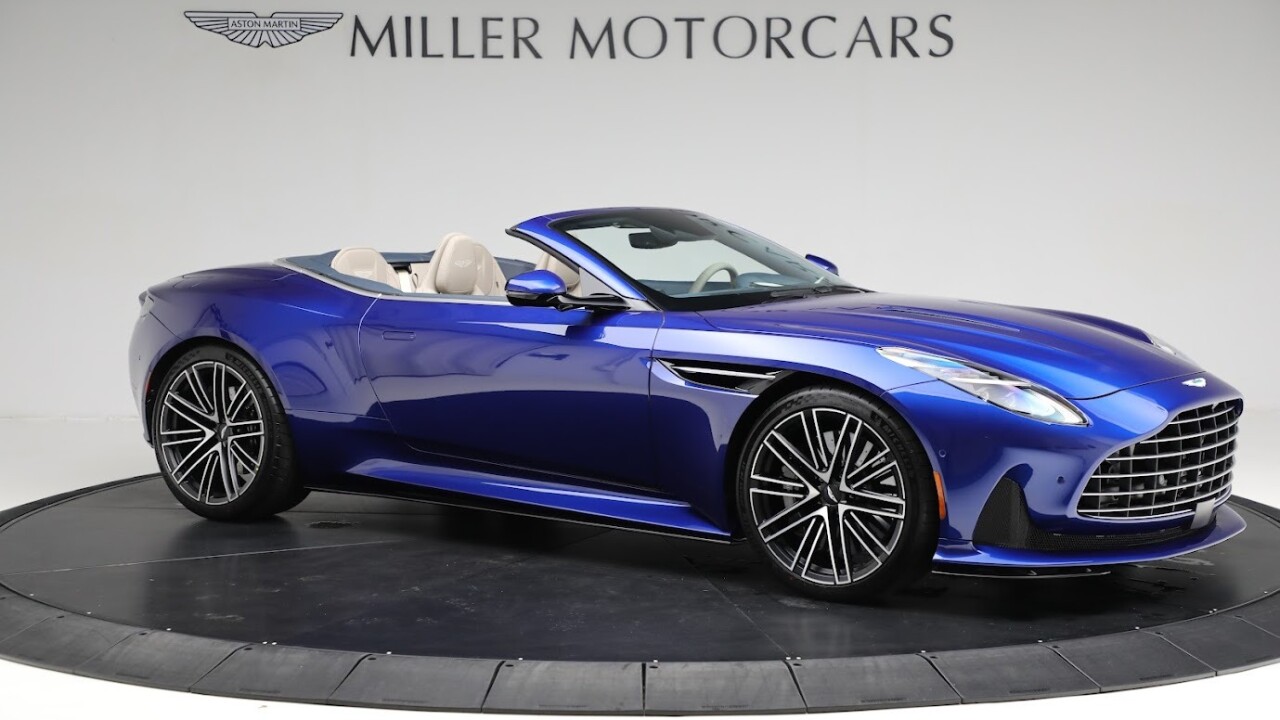

Day One: Leaving the City — Arrival into Calm
The craftsmanship is immediate and intimate. Soft, tactile materials meet in well-drawn seams; the stitch patterns are tasteful, and the trim is chosen with restraint rather than theatricality. In a market where manufacturers increasingly rely on audiovisual spectacle to convey luxury, Aston’s approach in the DB11 favours the tactile. You can feel it in the metronomic click of a switch, in the precise weight of the steering, in the way the door closes with the hush of a vault.
Comfort and Presence
If you're buying an Aston Martin, comfort is not a compromise; it's a promise. The seats are sumptuous without being marshmallow-soft — supportive on long stretches and forgiving when the road gets lively. For a grand tourer this is essential: fatigue is the enemy of pleasure, and the DB11 keeps it at bay. Cabin insulation is excellent; highway miles slip by with little more than the satisfying vibration of a powerful engine tucked beyond the passenger compartment.
Riding across rolling hills and narrow lanes, the suspension smoothed the surface while retaining composure. The car manages that difficult tightrope walk between yielding and controlled — it gives you serenity without dulling the sense of occasion.
The Drive — Mechanical Soul and Character
I will not make this piece about raw statistics. Numbers are tidy and useful, but they are not the pulse of a car. The DB11's mechanical soul — whether in the V8 or the V12 form — is what defines it. On my journey the engine was a constant conversationalist: energetic when provoked, dignified when cruising. The sound is an important part of the story. Aston Martin has tuned the exhaust and intake to deliver a soundtrack that is muscular but not gratuitous, an orchestral accompaniment that enhances the scenery rather than competes with it.
Steering is precise and weighted with the appropriate gravitas for a GT. The DB11 is not a scalpel; it does not pretend to be a track car. But through country roads it proves engaging — balanced and responsive — and in the hands of a competent driver it rewards confidence with composure.
Craftsmanship Details that Matter
Luxury is often measured in small mercies: the way a switch returns, the softness of the armrest, the quiet fit of a door latch. Aston Martin understands this. The grain of the leather, the contrast stitch, the satin finish on metal accents — these are not mere fripperies. They are the punctuation marks of a designed experience. The DB11’s cabin is a lesson in restraint: everything is premium, but nothing screams. It is curated, not assembled for maximum flash.
Practicalities are handled with the same discreet competence. The infotainment system may not be the flashiest in the segment, but it is legible and functional. My editorial contention is this: in a car devoted to the craft of travel, function should not be subsumed by gimmickry. The DB11 mostly gets this right — it prioritizes clarity and utility, though I would welcome a more modern interface that feels as considered as the leather and metal around it.
An Opinion on Luxury Today
Luxury carmakers face an existential question: how to preserve the sensory soul of a vehicle while adapting to the seismic shifts toward electrification and digitalization. The DB11 is a purist’s answer to that question. It celebrates the internal combustion engine and traditional craftsmanship. That celebration, however, is a double-edged sword.
On the one hand, there is something almost defiant about a car that clings to analog pleasures in an increasingly digitized world. On the other hand, buyers are understandably asking for a future that is cleaner and quieter — and that future will require Aston Martin and its peers to reconcile hand-finished luxury with batteries, software, and fast-charging architecture. My editorial stance is clear: manufacturers should not abandon the tactile delights of luxury, but neither should they treat electrification as a cosmetic option. The transition demands equal parts engineering rigor and design empathy.
The Itinerary — Why the DB11 Makes Sense on the Road
My route was a deliberately classical one: leaving the metropolis for winding country lanes, then onto coastal roads that married exposure with tranquility. The DB11 transformed the act of moving into a curated sequence of moments. At low speeds it is civil; at pace it is composed. For a grand tourer, this duality is everything. It must excel in both relaxation and engagement — and the DB11 does.
Over the course of the trip I appreciated features that matter on long drives: thermally competent seats, easy-to-use climate controls, and a low level of wind noise at motorway speeds. Each feature may be small in isolation, but together they compound into something greater than the sum of its parts: a persistent, effortless sense of being well cared for by a machine.
Criticisms — Where the DB11 Can Improve
No car is beyond critique, and the DB11 is no different. My principal criticisms are strategic rather than aesthetic. First, Aston Martin must keep pace with user-interface expectations. The tactile luxury of the cabin pairs awkwardly with an infotainment system that feels a touch behind the best in its class. Second, the DB11 — glorious as it is — sits at a price point that invites comparison with vehicles that offer more technology per pound. That is not an argument to cheapen the DB11’s craftsmanship; it is a call for Aston to fuse its artisanal strengths with more contemporary convenience.
Finally, while reliability on my trip was without incident, long-term dependability remains a concern for many luxury buyers. Aston Martin has made strides, but when customers invest in cars at this level they expect the peace of mind that their investment will remain usable and serviceable for years. Continual improvement in service networks and owner support will be crucial.
A Final Word: The DB11 as Heirloom
By the time I returned the DB11, I found myself reluctant to let it go. Not because it was ostentatiously flashy — far from it — but because it offered a coherent experience: a cabin that feels like an armchair in a private club, an engine with character, and an overall sense that every material choice had been considered. In an age where cars can be ephemeral — designed to iterate annually and optimized for headlines — the DB11 felt like an object designed to be remembered.
My conviction is this: The DB11 represents the last great act of a particular kind of automotive storytelling: artisanal, combustion-powered, and intensely human. As the industry thrusts forward into electrification, cars like the DB11 will become cultural touchstones; not because they are nostalgic, but because they embody a craft that will remain relevant only if it can translate its values into whatever comes next.
Specifications
| Specification | Value |
|---|---|
| Engine | 5.2L Twin-turbo V12 And Available 4.0L Twin-turbo V8 |
| Transmission | 8-speed Automatic |
| Drivetrain | Rear-wheel Drive |
| Fuel type | Gasoline |
| Body style | Grand Tourer (2-door Coupe) |
| Seating | 2+2 |
| Doors | 2 |