
Aston Martin Cygnet V8: The Speed Demon That Only Exists in My Daydreams
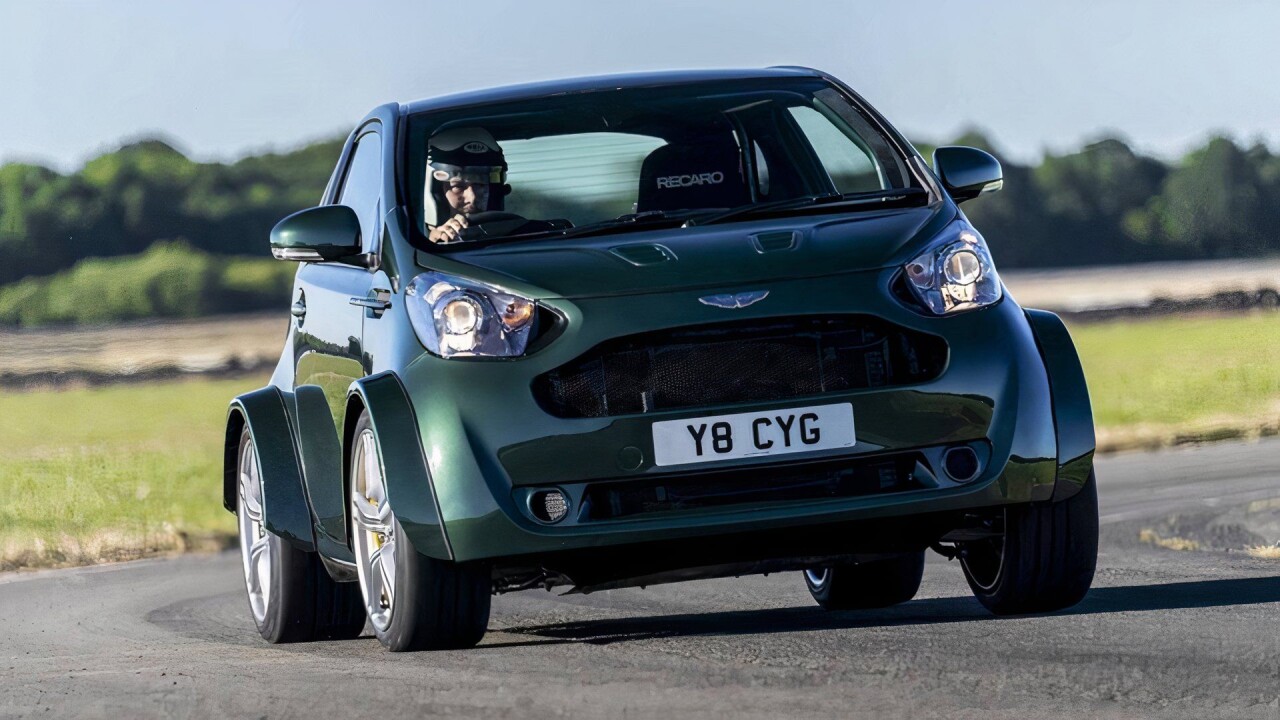

The Backstory (Because Context Is My Kettle of Tea)
Collectors and classic-car aficionados will tell you the Cygnet's interest lies in its audacity. Imagine the marque that builds grand tourers and proper GT cars slapping on quilted leather, an Aston grille and a price tag that would make a sensible person laugh and then cry. That contradiction is the Cygnet's entire charm.
First Impressions: Tiny But Properly Dressed
Climbing into the Cygnet is like putting on a silk waistcoat over a hoodie. The cabin is aston (pun intended) enough to make you forget — briefly — that it's a city car. The seats are trimmed in delightedly expensive materials; the switchgear is tidily Aston-esque. It looks the part from the driver's seat, even if the part it is playing is 'micro-luxury commuter' rather than 'track predator.'
On the Track: A Comedy of Expectations
There is a particular kind of joy in taking the wrong tool to a task. We arrived at the We Review Cars track on a morning that showcased meteorology's theatrical range: drizzle that considered itself a threat, sun that pretended to be permanent, and wind that fancied itself a keen opinionated critic. I strapped into the Cygnet, checked that my helmet didn't make the lavish interior look ridiculous (it did), and set off.
If you're expecting talk of apexes clipped at the limit and tyre temperatures blooming like the petals of a late-summer rose, put that expectation back in the glovebox. The Cygnet is not about hair-raising commit-and-hang moments; it is about measured, almost apologetic progress. Around the tighter bits of the circuit, the car felt nimble in a city sense: light steering, a short turning circle, and the sort of eager shrug you'd want when threading round town centre bollards. But on the sweeping sections where a true 'Speed Demon' would build momentum, the Cygnet politely declined to participate.
Under acceleration it is clear the Cygnet's personality is built around economy and civility. Power delivery is linear and modest — perfectly adequate for a tight inner-city jaunt, thoroughly inadequate when the desire to hustle from apex to apex requires a bit more oomph. The front wheels carried most of the work, and as speeds rose their inclination to understeer became obvious. Hanging on to a late-apex line felt less like a triumph of driver skill and more like a negotiation with physics where the car won by reminding me it wasn't built to be embarrassed into cornering theatrics.
Handling and Chassis: Graceful in a Tea-Cup Way
For a small, soft-sprung car, the Cygnet has an endearing composure at low to medium speeds. There is a pleasant unpredictability to some classic performance cars that I adore: chassis that inform you of their limits in the crispiest possible terms. The Cygnet's limits are broadcast rather differently — with polite warnings, a touch of body roll, and a gentle persuasion to slow down. It never scolded me; it merely sighed and did its best.
The suspension soaks up bumps with an almost aristocratic disregard for discomfort. That's great for town use, less great on a track where body control can be weaponized into cornering speed. Brakes were adequate for the car's intended purpose; they held up to repeated stops but never inspired confidence for late-braking heroics. And why should they? You don't buy a Cygnet to out-brake a hot hatch; you buy it to whisper into town lanes with class.
Interior and Ergonomics: Aston Touches on a Shoestring Chassis
One of the Cygnet's most disarming traits is how it treats its occupants. The leather, the stitching, the sense that someone bothered to make a city car feel sumptuous — all of it distracts you from the fact that beneath your hands is a fundamentally sensible Toyota cockpit. The controls are straightforward. The driving position is upright and comfortable. For motorway stints and three-mile commutes where comfort wins, the Cygnet is a little gem.
On the track, the interior simply served as a cozy cell from which to observe the ridiculousness of my undertaking. It was warm, nicely trimmed, and charmingly incongruous — like wearing a dinner suit to a muddy field lab day.
The Soundtrack: Quiet Nights, Not Sonic Blasts
Ask any Speed Demon to judge a car by the soundtrack and you'll get a teary-eyed list of glorious noises. The Cygnet, bless it, sings the lullaby of efficiency. The engine hums in a steady, utilitarian fashion. There are no V8 burbles to make passers-by look up and weep. This is not a criticism; it is simply a factual observation. It sings the song of the morning commute, and that song is pleasant and practical rather than operatic.
Why the Myth of a Cygnet V8 Persists
I've lost count of the emails I receive proposing swaps, dream builds and hypothetical 'Aston-ized' pocket rockets. The image of a V8 stuffed into that little shell is irresistible as an internet fever dream. It speaks to an appetite many of us have: to mash up proportions, to create the smallest possible thing that still makes the planet tremble when it fires up. But the reality is more prosaic. The Cygnet was about style and niche compliance, not brute force.
That said, there's a certain romantic appeal to the idea. If I were writing fiction, I'd describe a secret workshop, a bored engineer with a penchant for scale models, and the improbable noise of a V8 echoing off hedgerows. But fiction is not what I'm tasked with here. The Cygnet V8 is an enjoyable mental exercise, not a physical specimen.
Collectability and the Classic-Car Angle
As a classic car lover, I love the Cygnet's oddness. It's the kind of car that will age into desirability because of its story rather than its performance. Limited production numbers, Aston Martin badging, and the sheer audacity of the concept make it a candidate for future interest. Will it become a sought-after classic like an oddball coachbuilt special from the 1950s? Time will tell. But as a piece of motoring history, it already has that crucial ingredient: a narrative people will enjoy telling over a glass of something strong at a club meet.
Final Thoughts from the Fast Lane (Which Isn't Always Fast)
On a track day, the Cygnet behaved exactly as you'd expect a pampered city car to behave: politely, predictably, with a calm refusal to be something it was not. And yet, I drove it with a grin. There is real charm in restraint. The Cygnet reminded me that not every car needs to demonstrate its worth with tyre smoke and turbo whine. Sometimes the sheer absurdity of the pairing — Aston Martin and city hatchback — is the performance: it performs the role of conversation starter brilliantly.
Would I crown the Cygnet a Speed Demon? No. Would I secretly love a well-executed V8-swap fantasy? Guilty as charged, in a metaphorical sense. But in reality, the Cygnet excels at being what it is: a tiny, thoroughly upholstered oddity with a polite disposition and a story that will make future petrolheads smile. In the world of track-focused reviews, it is the polite guest who turns up to the party in a tux and promptly offers everyone tea. Not what you expected, but oddly appreciated.
The Closing Lap (Of My Imagination)
So if you came here expecting a lap time, a horsepower figure and the furious joy of a V8-propelled pocket rocket, I'm sorry to disappoint. What you got instead is a race against expectation, a little meditation on brand whimsy, and a reminder that performance wears many disguises. The Cygnet's performance is not measured in quarter-mile times; it is measured in eyebrow-raising, head-turning presence and the tiny victory of turning urban travel into something slightly theatrical.
And if, on a damp English morning, you ever find yourself at a quiet circuit with a Cygnet and a big imagination, do what I did: drive it with a smile, respect its intentions, and leave the V8 fantasies to suitably fictional workshops. The world needs both kinds of cars — the ones that howl past at 150 mph and the ones that look good while idling at a traffic light, pretending to be more important than they are.
Specifications
| Specification | Value |
|---|---|
| Manufacturer | Aston Martin Lagonda |
| Model | Cygnet |
| Based on | Toyota IQ |
| Body style | 3-door City Hatchback |
| Engine | 1.3 L Inline-4 (Toyota-sourced) |
| Production years | 2011–2013 |
| Market position | Luxury City Car / Compliance Model |