
Electric Punch: How the 2025 Hyundai Ioniq 5 Taught Me to Respect the Quiet Fury
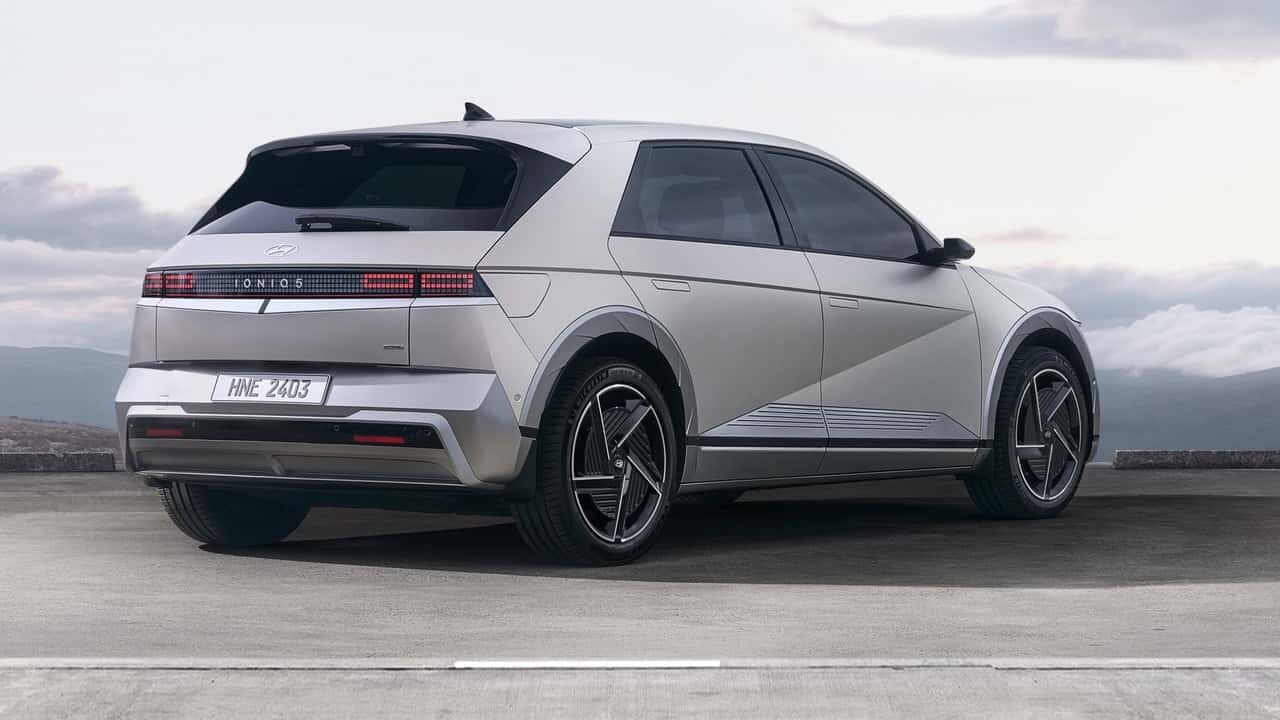

I arrived at the circuit with the usual mixture of cynicism and curiosity. EVs have saturated the market with shiny numbers, range claims and dramatic power curves. Too many of them are made for the stat sheet and the showroom, divorced from the tactile conversation that matters on a track: steering weight, brake feel, suspension compliance, tyre grip at temperature. What matters to me is simple — can you put the power down when it matters, can you manage weight transfer, and does the car reward commitment? The Ioniq 5's answers were nuanced.
First impressions off the trailer: the mass is obvious. You don't need scales to know you're dealing with an EV-built-on-batteries; there's a solidity to the way it settles into a compression that a petrol car simply doesn't have. That reality influences everything on a circuit — turn-in, mid-corner balance, and brake performance. But Hyundai's engineers have not tried to hide that mass with artificial nonsense. Instead, they work within the EV's fundamental strengths: a low center of gravity and instant torque delivery. The result is a car that, when driven with respect, can be kept honest and even made to feel playful.
On a damp, cold morning when tyres struggle to wake, the Ioniq 5's instant torque is both boon and potential trap. Left-foot on the throttle in a higher-speed sweep and the car rewarded you with immediate drive, but that drive needs to be married to a measured right foot and a clear head. There's a brutal clarity to torque in an EV — it does what you ask the instant you ask it — so any impatience shows up as understeer or a snap of the tail if you ask too much at the wrong moment. For that reason, the quickest way around the circuit wasn't to dump power early: it was to use the delivery intelligently, letting momentum and balance win the battles you can't brute-force.
Steering is where the Ioniq 5 walks a fine line. It's not a classic analogue sports car — it doesn't have the tactile, granular feedback of a set-up designed purely for the road-racing world. But the steering has been tuned with more than commuter life in mind. There's a progressive weighting that helps you place the nose, and at higher speeds it settles with a confidence that allows you to hustle. Where it loses marks is in the ultimate level of information transmitted through the wheel rim: the crispness of tyre slip and the micro-messages you get from the contact patch are softened. A former race driver like me learns to read other cues — body roll, sound, suspension harmonics — and the Ioniq lets you. It tells you, just not in an obsessive, needle-sharp way.
Cornering balance surprised me. There is a natural understeer tendency if you approach with a petrol-car mindset — carve in late, aim for apex-first, and the front will plead for mercy. The trick is to think in terms of weight transfer and axle load: brake earlier, initiate with a smaller steering input, then allow power to pull you through the exit. When you do this the Ioniq rewards with a planted mid-corner stability that is confidence-inspiring. In faster sweepers, where aero and mass distribution play, the car stays remarkably neutral. It isn't agile in the flicky sense, but it is composed, which on a wet English day is worth its weight in gold.
Regenerative braking is a double-edged sword on track. On public roads the magic of one-pedal driving and energy capture is obvious. On a circuit, regen becomes part of the braking system and therefore part of your rhythm. The Ioniq 5's regen mapping is effective and fairly linear, but it doesn't replicate the progressive resistance of a race-car pedal. I found myself blending regen with the physical brakes to sculpt the feeling I needed for trail braking. For drivers coming from ICE cars, that blend takes practice: too much regen and you lose the subtle weight shift; too little and you're leaving electronic efficiency on the table. The engineers have given the driver enough control to make the trade-offs, and on my final runs the brake-to-throttle choreography felt intuitive.
Speaking of brakes, their heat management under repeated laps is competent but not relentless. The temptation with EVs is to assume regenerative assistance will mask thermal issues; it doesn't. The friction brakes still do the heavy lifting in a track day scenario, and they require respect. I didn't experience catastrophic fade, but I did notice a gradual change in pedal feel over consecutive hot laps when I pushed the car hard. It was manageable, but it reminded me that this is an all-rounder, not a purpose-built track monster. If you plan to spend extended sessions on a circuit, brake cooling and pad selection become part of the conversation.
Tyres — the single greatest influence on lap time — are where the Ioniq 5 can be made to sing. On OEM rubber the car is competent: the compound warms, the carcass works with the suspension, and grip grows to an honest plateau. But give it better rubber, and the character subtly sharpens. Grip increases, turn-in becomes more decisive, and you can play with the balance more aggressively. Match that with a firming of driver inputs and the Ioniq feels quicker and more responsive. It's not transformative into a sports car, but it's the tuning equivalent of taking an athlete from fit to elite: you're unlocking latent potential.
One of the day’s surprises was the car's composure in mixed conditions — a blessing and curse of English circuits in late spring when sunshine and a sleet squall can coexist. The Ioniq 5's traction control and stability systems are sophisticated, intervening in ways that aim to preserve momentum rather than punish. On one damp corner they allowed a controlled slide that I could modulate with throttle and steering, letting me string together a line that felt both fast and tidy. At other times they nipped minor errors cleanly, preventing me from escalating a smart oversteer into something more dramatic — a humbling reminder that electronics are your co-driver these days, and sometimes you want them to step in.
As an editorial point, that balance between electronic assistance and driver's agency is where the industry still trips over itself. There is a powerful temptation to sell performance through software — drive maps, launch control, artificial sounds — rather than mechanical purity. Hyundai's approach with the Ioniq 5 is pragmatic: they give you usable power, decent chassis calibration, and the ability to feel competent at high speed. For a performance-conscious buyer who still wants the convenience and refinement of an EV, that's more sensible than over-engineered theatrics. I respect that honesty. But I also want the option for more rawness — a more direct steering rack, a track-focused brake package, and perhaps a more aggressive performance tune that doesn't compromise daily usability.
Comfort versus performance is another area where the Ioniq 5 makes sensible compromises. The suspension is compliant enough for road miles yet controlled enough for the track. Punch it over kerbs and the car soaks up the hits without wallowing, allowing you to use the apexes confidently. Yet, push it hard and the dampers' calibration surfaces — you feel the limits, but not in a way that feels brittle. Again, it's engineered for the broadest possible satisfaction rather than the narrowest lap-time hunting instincts. As a former racer, I can appreciate craftsmanship that sacrifices absolute extremity for a more complete package. Not everyone wants to live with a car that only behaves at 90 degrees of commitment.
There were times on the inner loop where I missed a tactile engine cue — the revs and the harmonics that used to tell me when to shift or when a tyre was beginning to grumble. EV silence forces you to listen to other indicators. That encourages better driving in some ways: you become more attuned to balance shifts, to steering weight and to subtle yaw. But it also removes a layer of visceral reward. For a motoring journalist who cut his teeth in GT3 cars, there's a bittersweet quality to extracting speed from silence. It's pure, efficient and often faster than combustion, but it lacks the soundtrack that made mistakes thrilling in the past.
As the day wound down and the temperature dropped, my final assessment settled. The 2025 Ioniq 5 is not a car that will dominate your dreams if you live for analogue feedback and slapstick flicks at the apex. But it's a credible, engaging performer in the hands of a driver who respects its logic. It rewards smooth inputs, measured throttle application, and an appreciation for how mass and grip interact. It also demands that manufacturers continue to refine steering feel and braking modulation if they want EVs to truly satisfy the purist segment of the market.
From an industry standpoint I think the Ioniq 5 represents a mature approach to electric performance — one that balances daily usability and a genuine, usable performance envelope. There is still room for more expressive variants, and I want Hyundai to push further: sharpen the steering, give us an unfiltered N-trim with track-ready brakes and a more ferocious software tune, and make regenerative braking more configurable for circuit duty. These are the evolutions that will make EVs not only fast on paper but thrilling on track.
In the end, what stayed with me was the Ioniq 5's honesty. It doesn't try to be something it's not. It takes the inherent strengths of an electric platform and translates them into a car that will put a genuine smile on a driver's face without demanding that they give up their daily life. For those who want an EV that can double as a weekend weapon for those secret track outings, it's a very compelling proposition — provided you go in with the right mindset. Respect the mass, use the torque wisely, tune the tyres, and let the electronics be your ally rather than your crutch. Do that, and you'll find the quiet fury the Ioniq 5 offers is both rewarding and, in its own way, addictive.
Driving fast has always been about conversation — between driver, machine and track. The 2025 Hyundai Ioniq 5 talks in a different register than the petrol cars I grew up with. It doesn't shout; it calculates, it adapts, and when you listen closely you'll discover a lot of performance waiting to be coaxed out. For my money, that's progress. Now, can it be made more thrilling? Absolutely. Will I be first in line to try that sharper, louder version? Without question.
I’ve spent enough laps in analogue race cars to know what a chassis should tell you, and enough time behind the wheel of the Ioniq 5 to know what this car is trying to be. In plain terms: the 2025 Ioniq 5 is an honest, well-engineered electric crossover that comfortably bridges daily usability and genuine on-track competence — provided you drive it like an EV rather than an old-school sports car. The battery mass is obvious, but the underfloor pack gives a low centre of gravity and a composed platform that rewards momentum, measured throttle and a small investment in better tyres and brake management. What I can’t forgive is the muted steering feedback and the way regenerative and friction braking need careful blending to feel intuitive at the limit. Those are solvable problems: a sharper rack, a more track-focused brake pack and deeper regen configurability would transform this from a very good all-round EV into a genuinely exciting one. Industry-wide, manufacturers are finally learning that electric cars don’t need to fake soundtrack drama to be engaging — they need clearer chassis cues and better brake thermals. Hyundai has nailed the packaging and usability here; now I want them to give drivers the sharper tools to exploit it. For buyers who want a comfortable, quick, sensible EV that can also be fun with modest upgrades, the Ioniq 5 is an easy recommendation. For purists chasing analogue feedback and razor-sharp steering, wait for a proper Hyundai N variant or a dedicated track package.
Specifications
| Specification | Value |
|---|---|
| Make | Hyundai |
| Model | Ioniq 5 |
| Year | 2025 |
| Body style | 5-door Compact Crossover |
| Seating capacity | 5 |
| Powertrain | Electric (single-motor RWD And Dual-motor AWD Variants Available) |
| Battery placement | Underfloor Pack (low Centre Of Gravity) |
| Regenerative braking | Regenerative Braking With Selectable Modes |
| Charging | AC Charging And DC Fast-charging Capable |
| Doors | 5 |
| Market | UK |