
Urban Scout: A Technical, Long-Range Dissection of the Mercedes‑Benz A‑Class (2022)
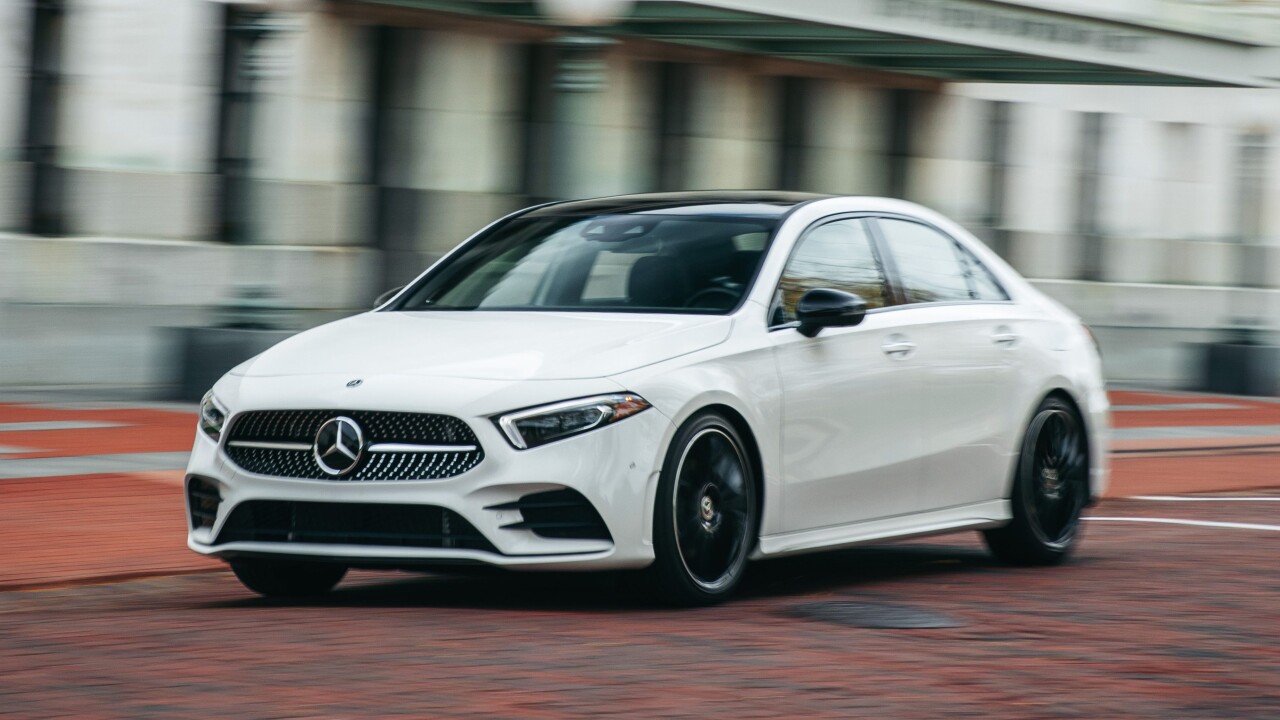

Architecture and structure: The 2022 A‑Class sits on Mercedes’ MFA2 (Modular Front Architecture) platform — a modular, front‑engine, front‑wheel‑drive‑based architecture designed to accommodate a wide array of compact‑car powertrains and to underpin derivatives that range from economical hatchbacks to high‑output AMG machines. MFA2 is a packaging first approach: it prioritizes cabin space, crash energy management, and the ability to integrate front and (where applicable) full‑time all‑wheel‑drive systems without a complete redesign. From a materials perspective Mercedes uses a mix of conventional and high‑strength steels in the A‑Class body structure to keep torsional rigidity high while controlling mass. The front bulkhead, A‑pillar geometry, and side‑intrusion beams are engineered for predictable deformation characteristics in crash events, and you feel the payoff in the A‑Class's composed body behavior at speed — there is less flex than you might expect from a compact hatch.
Chassis layout, suspension, and steering: Mercedes configures the A‑Class with a conventional MacPherson strut front suspension and a multi‑link rear suspension — a combination that gives the car a good baseline for both ride comfort and wheel control. MacPherson struts keep the front assembly compact and light, which is helpful for steering response and packaging under the hood. The multi‑link rear allows longitudinal and lateral control of the rear wheel centers independently, so the engineers can tune toe and camber changes through suspension travel to balance handling with comfort. Higher specification A‑Class models offer adaptive damping systems that vary shock force through modes, shifting bias between comfort and sport. The hardware is typical of premium compact cars: aluminum control arms forward and a mixture of pressed steel and aluminum components where Mercedes has judged it best for unsprung mass reduction.
Steering in the A‑Class is electromechanical, rack‑mounted, and tuned with variable assist. What this means in practice is that steering feel is more synthetic than analog — you get quick ratios for city maneuvering and a weighted response at higher speeds — but the system allows precise calibration of steering effort and center return. For drivers who prize a direct, mechanical connection, an A‑Class will never feel like a dedicated sports car, but the tradeoffs here favor packaging and efficiency without leaving the driver feeling disconnected.
Drivetrain and powertrain philosophy: Mercedes offers the A‑Class with a range of small‑displacement, turbocharged engines tailored for different markets and buyer priorities. The common thread across the lineup is forced induction, direct injection, and engine management strategies that prioritize low‑end torque and fuel efficiency for real‑world driving. Some petrol variants incorporate mild‑hybrid assist (a 48‑volt electrical subsystem in certain engine configurations) to provide torque fill during transient demands, enable stop‑start operation that is smoother, and recover braking energy. The platform also supports diesel units in markets where diesel remains popular, and the architecture is ready for electrified derivatives. On the high end of the spectrum, Mercedes’ AMG division replaces the base architecture with heavily reworked hardware — a short block 2.0‑litre turbo in AMG trims, bespoke cooling, and unique drivetrain calibrations — but the A‑Class’ DNA still comes through in packaging and modular systems.
Transmission choices are oriented toward dual‑clutch automated gearboxes in many configurations, which deliver quick shifts and improved efficiency compared with some traditional torque‑converter automatics. For AWD capability Mercedes integrates a power transfer unit ahead of the rear axle on models equipped with 4MATIC; the modular design enables AWD on selected trims without compromising space significantly. The overall drivetrain package emphasizes urban responsiveness—strong low‑end torque, prompt throttle response through turbocharger tuning and engine management—and the potential for high‑power variants without a platform overhaul.
Thermal management and cooling: Thermal control is critical when you pack high output into a small engine bay, and Mercedes addresses that with a layered cooling system. Charge air (intercooler) cooling, radiator capacity, and oil cooling are configured depending on engine output and the option packages selected. AMG variants include significantly upgraded cooling hardware — larger radiators, additional oil coolers, and enhanced air routing — to manage repeated high‑load use. The standard A‑Class benefits from carefully engineered ducting that optimizes airflow to the heat exchangers while minimizing aerodynamic penalties.
Brakes and stopping performance: Braking hardware follows the engineering intent of each trim: ventilated front discs are standard on most models to handle heat dissipation under repeated heavy use, while rear discs are conventional. Brake-by‑wire assist and electronic control modules oversee ABS, brake assist, and stability control intervention. The Electronic Parking Brake simplifies interior packaging and integrates with hill hold functionality. In everyday driving the A‑Class’ braking is linear and confidence‑inspiring; modulation is predictable and the pedal feel is tuned to feel substantial rather than overly soft. For track or spirited driving the AMG models include larger rotors, multi‑piston calipers, and more aggressive friction materials to resist fade during sustained high‑speed braking.
Noise, vibration, and harshness (NVH): Mercedes invests significantly in NVH suppression for its compact cars, and the A‑Class benefits from multi-layered acoustic strategies. Laminated front windshield glass, targeted sound deadening in the firewall and doors, and tuned cavity resonances all reduce perceived noise. Engine mounts and transmission bushings are calibrated to isolate vibration in the frequency ranges most noticeable to humans. The result is a cabin that feels far quieter than the car's physical size would suggest, and at highway speeds the A‑Class often feels more mature and settled than typical hatch competitors.
Electronics and the MBUX experience: One of the A‑Class' defining technical features is the Mercedes‑Benz User Experience, MBUX. The system is a suite of integrated hardware and software encompassing dual widescreen displays, multiple input methods (touchscreen, touchpad, steering‑wheel controls), and a voice assistant activated by "Hey Mercedes." From a systems architecture perspective MBUX aggregates sensor data (vehicle state, navigation, telematics) and presents it in configurable digital instrument clusters and central displays. The software supports touch gestures, swipe actions, and personalized user profiles that store seating positions, infotainment preferences, and navigation history. Augmented reality navigation is an available module: it overlays directional cues and point‑of‑interest markers on live camera feed mapped to the display, which can be a significant aid in complex urban environments.
Under the hood MBUX runs on a central processing stack with real‑time data streams and over‑the‑air update capability in some markets. The hardware is capable; the user experience is the differentiator — Mercedes’ UX team prioritizes minimal driver distraction and rapid access to key functions. From a technical standpoint MBUX represents how modern vehicles shift value from raw mechanical sophistication to software integration and human‑machine interface engineering.
Driver assistance and safety systems: The A‑Class incorporates an array of advanced driver assistance systems (ADAS) that bring many semi‑automated functions to the compact segment. Core modules include collision mitigation with autonomous emergency braking, lane keeping assist that provides corrective steering torque, and adaptive cruise with speed adaptation in traffic. Mercedes ties these systems into a sensor fusion layer — typically cameras, radar, and ultrasonic sensors — to create robust environmental models. While the systems are tuned conservatively to prioritize safety, they also provide tangible reductions in driver workload during long highway stretches. The engineering challenge here is ensuring graceful degradation: the A‑Class signals clearly when a feature is no longer available and limits automation to the conditions it can handle safely.
Packaging and ergonomics: One of the A‑Class’ technical strengths is how Mercedes has used packaging to enhance perceived space. The MFA2 architecture allows for an efficient firewall and transmission tunnel layout, which translates into a roomy cabin given the car's exterior footprint. Controls are positioned with intent: steering wheel touch switches and stalk functions are placed to minimize hand movement from a driving position; HVAC vents and climate controls are engineered to work effectively without high airflow noise. Cargo space in a compact hatch is always a compromise, but the A‑Class offers sensible load dimensions for urban‑oriented users and smart under‑floor storage where possible.
Serviceability, modularity, and repair considerations: Mercedes designs the A‑Class with dealer service in mind. Common maintenance items—fluids, filters, brakes—are accessible without disassembly of primary structural components. The modular nature of the MFA2 platform also aids repair costs in the event of component replacement: subframes, crash structures, and major assemblies can be dissassembled along standardized interfaces. That said, the integration of electronics and the proliferation of sensors increase diagnostic complexity. Access to factory‑level diagnostic tools and software is essential for correct calibration after repairs, which is an important practical consideration for independent shops wanting to service late‑model Mercedes vehicles.
Real‑world performance impressions and technical tradeoffs: On road, the A‑Class is best understood as an urban‑optimized performance compromise. Engines are tuned for flexibility — strong torque at low RPMs, quick pick‑up for merging and overtaking — and dual‑clutch gearboxes provide prompt shifts that keep the engine in its sweet spot. The suspension layout prioritizes composure and compliance; even on coarse chip or rough suburban roads the A‑Class tames inputs without transmitting excessive harshness into the cabin. In spirited driving the car leans into body control; it rewards precise steering inputs but does not mask the physics of front‑wheel‑drive dynamics — torque steer and understeer are inherent limitations if you ask the front tyres to do too much. This is where AWD (4MATIC) models and AMG torque vectoring solutions make a discernible difference, distributing drive force rearward when lateral grip is demanded.
From an adventurer's perspective: I judge a car’s engineering by how honestly it tells me its limits. The A‑Class is candid: it's not an off‑road truck, but it projects solidity and engineering thoughtfulness that inspire confidence on poor pavement, through gravel lanes, and across mountain switchbacks. Mercedes’ focus on modularity, safety systems integration, and a high‑quality electronics platform makes the A‑Class technically sophisticated. Yet that sophistication carries complexity: more sensors, more software, and more electrical content mean more potential points of failure and a greater reliance on dealer software for correct diagnostics and repair.
Concluding technical assessment: Technically speaking, the 2022 Mercedes‑Benz A‑Class is a well‑engineered compact that brings premium features to a small footprint. Its strengths lie in platform modularity (MFA2), sophisticated human‑machine interface (MBUX), balanced chassis geometry (MacPherson front, multi‑link rear), and scalable powertrain architecture that supports mild‑hybrids and high‑performance AMG derivatives. The engineering compromises — prioritizing packaging and efficiency over raw mechanical feedback — are deliberate, and Mercedes executes them cleanly. For enthusiasts who value engineering coherence, logical systems integration, and a premium electronics stack, the A‑Class is a compelling technical package. For those looking for pure, mechanical simplicity or rugged off‑road capability, it is less suitable — but as an urban scout with surprising engineering depth, it earns respect for what it attempts and largely succeeds at.
I approached the 2022 Mercedes‑Benz A‑Class the way I approach any vehicle I might take off the beaten track: by inspecting its bones, its thermal and electrical systems, and how it would survive sustained hard use. The A‑Class is not an off‑roader — it’s a precision‑engineered urban hatch — but from a durability and systems‑engineering perspective it impressed. The MFA2 platform gives Mercedes a stiff, predictable baseline; mixed high‑strength steels and modern joinery reduce flex and support long‑term body integrity. The MacPherson front and multi‑link rear suspension package, with available adaptive dampers, is tuned for composed urban ride and responsive handling rather than articulation or high‑travel rough‑road compliance. Electromechanical steering and a dual‑clutch gearbox deliver sharp responses, though they trade mechanical feedback for electronic mediation. Under the bonnet Mercedes keeps things compact and efficient: small turbocharged petrol engines with optional 48‑volt mild‑hybrid assistance are focused on low‑end torque and drivability rather than raw, linear power. The modular 4MATIC AWD option and AMG variants add robustness and cooling capacity, but even these are best treated as performance street systems rather than rugged off‑road drivetrains. NVH treatment (laminated glass, targeted damping, isolation mounts) produces a cabin that will hold up well against fatigue on long road runs, and the MBUX electronic architecture is powerful — but it also increases diagnostic dependency on dealer tools. From my perspective as an off‑road adventurer, the A‑Class wins on engineering polish and serviceable modularity, loses on ground clearance and mechanical simplicity. If your world is largely tarmac with occasional rough B‑roads, the A‑Class will reward you with refinement, safety systems that behave predictably, and a chassis that resists the kinds of knocks that corrode long‑term durability. If you need true off‑road capability or easy field repairs, look elsewhere. For what it is — a compact premium hatch engineered to be quiet, safe, and software‑forward — Mercedes did the job with technical rigour.
Specifications
| Specification | Value |
|---|---|
| Platform | MFA2 (Modular Front Architecture) |
| Layout | Front Engine, Front‑wheel Drive Base (4MATIC Optional) |
| Body materials | Mixed Conventional And High‑strength Steels |
| Front suspension | MacPherson Strut |
| Rear suspension | Multi‑link |
| Front control arms | Aluminium Front Control Arms (where Specified) |
| Dampers | Standard Dampers; Optional Adaptive (mode‑based) Damping |
| Steering | Electromechanical Rack Steering With Variable Assist |
| Transmission | Dual‑clutch Automatic (primary Gearbox) |
| Hybrid system | Optional 48‑volt Mild‑hybrid System On Some Petrol Variants |
| Drivetrain options | FWD Standard, 4MATIC AWD Optional, AMG High‑performance Variants Available |
| Amg hardware | AMG Models Use Reworked Hardware And Tuned Turbocharging With Upgraded Cooling |
| Brakes | Ventilated Front Discs Common; Electronic Brake Controls (brake‑by‑wire Features) |
| Cooling | Layered Cooling Strategy Scaled To Output (radiator, Charge‑air/intercooler, Oil Cooling; AMG Has Upgraded Cooling) |
| Nvh measures | Laminated Windshield, Targeted Sound Deadening, Tuned Mounts And Cavity Treatments |
| Infotainment | MBUX Dual Widescreens; Touch, Touchpad And Voice ('Hey Mercedes') Inputs; AR Navigation Overlay Available |
| Driver assistance | Autonomous Emergency Braking, Lane Keeping Assist With Active Steering Input, Adaptive Cruise With Traffic Adaptation; Sensor Fusion (camera, Radar, Ultrasonic) |
| Software updates | Over‑the‑air Updates Supported In Some Markets |
| Serviceability | Modular Assemblies For Dealer Servicing; Increasing Electronic Complexity Requires Manufacturer Diagnostics For Many Calibrations |
| Packaging | Efficient Cabin Packaging For A Compact Footprint; Emphasis On Occupant Space And Cargo Utility Within Hatch Constraints |