
City Commute Challenge: Ford Transit — The Commuter Van That Refuses to Be Ignored
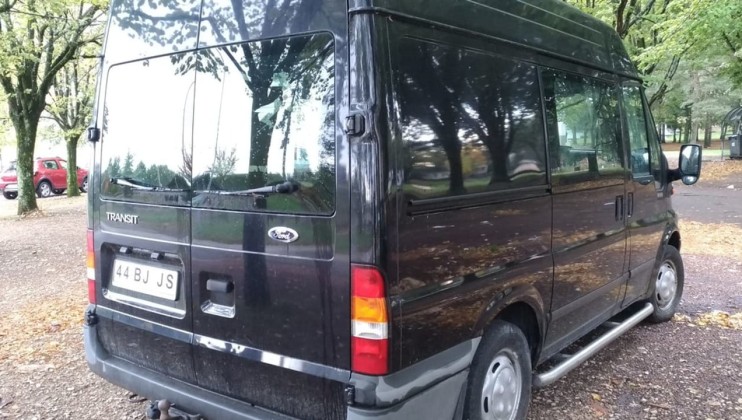

Visibility forward and to the sides is generally good thanks to large windows and tidy A-pillars. The flip side is the rear: when you have a bulkhead behind the driver or you're hauling cargo, the world behind the van vanishes. Rear cameras and sensors are not indulgences in this context; they are survival gear. If your Transit is fitted with them, parallel parking and reversing into loading bays become manageable. If not, expect to become intimately familiar with curb scratches and the logic of two-person parking choreography.
Maneuverability in tight urban spaces is, predictably, the Transit’s weakest suit. It’s no hot hatch; tight roundabouts and narrow one-way streets require planning and the sort of reverence you usually reserve for fragile antiques. That said, it’s not unreasonably awkward either. Ford has tuned the steering to feel predictable rather than playful: the steering weight is measured, the turn-in is deliberate. You’ll adjust quickly if you accept the van's purpose and plan your arcs a touch wider than you do in a car. My inner off-roader appreciated the need for measured line choices — it’s simply a different kind of driving puzzle.
Ride quality around town is a study in compromise. With no cargo, the van can feel a fraction floaty over imperfections, a reminder of commercial suspension geometry that prioritizes load-carrying and durability over suppleness. Add weight and the Transit settles into a steadier, more planted demeanour; the springs and dampers are designed to perform when burdened. If your workday involves moving kits, tools or multiple passengers, the Transit rewards you by being tuned to carry that weight. For solo commutes, expect a firmer feel and a chassis that will occasionally remind you it's built to work, not to cosset.
Noise insulation is adequate for city speeds. Engine note, road roar and city clamor are present but not oppressive. If you habitually take long, traffic-light-to-traffic-light commutes where every conversation must cross the cab, a Transit fitted with a well-damped interior and sound-reflective fittings will keep things civil. The glass and the bulkhead do a reasonable job of isolating cab and cargo; again, the variance between cargo and passenger configurations matters. Passenger-spec Transits feel more carlike; cargo vans retain the honest acoustics of a working vehicle.
One of the Transit’s unsung strengths in an urban environment is practical ergonomics. Loading and unloading are straightforward: wide side slides, tall rear doors with good aperture, and an interior you can move around in without ridiculous contortions. The cargo bay becomes an office extension, a weekend-haul friend, a pop-up shop or a contractor's mobile closet. For city-based businesses that need to be nimble, the Transit’s packaging is a masterstroke. Even if you’re not hauling goods, the sheer volume and configurable interior can accommodate strollers, bicycles, shop runs and awkward furniture with grace.
Fuel economy discussions in city driving are a specialist’s brawl. Large vans are never going to be frugal compared to small cars, but efficiency in the Transit is serviceable when you compare like-for-like: a cargo-hauling workday. The real question is whether you value the flexibility and capacity enough to justify the liters or gallons you’ll use. For businesses, that math often comes down to utility per tank rather than pure miles per gallon. For private commuters, the Transit makes sense if your lifestyle genuinely requires its size; otherwise, it’s a noble but heavy-handed commute partner.
Parking is where the Transit demands respect and logistics. A high-roof, long-wheelbase Transit will not fit comfortably into many downtown parking garages. I learned that the hard way the first afternoon, when an automated garage usher almost refused me due to clearance sensors reminding me that high roofs are not fashionable in subterranean malls. On-street parking is workable but often requires parallel parking chops and a healthy respect for mirror width. The Transit’s length and height do attract attention — helpful when you’re making deliveries and want visibility, less helpful when you’re trying to squeeze into a side-street spot. Shorter wheelbase and low-roof configurations dramatically improve daily usability, so if you live and work in tight urban environments, choose your dimensions like a surgeon.
City traffic also turns the Transit’s driveline choices into practical decisions. The higher torque available in heavier-duty drivetrains is a boon when you’re loaded and accelerating from junctions. You feel confident taking off from a stop with weight onboard; the power delivery leans toward usable grunt rather than theatrical performance. Stop-start traffic is where drivability and transmission calibration matter. In city circulation, the Transit tends to prefer smooth, deliberate throttle inputs rather than aggressive footwork. If you’re into spirited commuting, this van will politely decline the duel.
That said, the Transit’s braking and driver-assist systems — when present — lend a hand in urban congestion. Features such as adaptive cruise, lane-keeping aids and automatic emergency braking, if specified, ease long, slow commutes and make micro-maneuvers less fatiguing. They don’t change the van’s character; they sharpen its urban manners. To my mind, these systems are essential on a vehicle of this scale because they reduce the cognitive load of city driving and make the Transit feel less like a tool and more like a thoughtful partner.
Practicality extends beyond driving dynamics. The cabin layout is sensible: storage pockets, cup holders that actually fit work-site mugs, and seats designed to endure weekly abuse. Visibility aids and ergonomic touches reduce irritation over a week’s worth of errands. For businesses, durability trumps plushness; for private users, the Transit’s honest practicality can become endearing once you accept that luxury will not be its primary language.
Where I do sharpen my criticism is in the subtleties of manoeuvreability and urban finesse. The Transit will never be as nimble as a high-roof minivan or a compact crossover. It’s heavier to throw into gaps, less responsive in tight traffic and demands an anticipation that city driving rarely rewards. If you’re a driver who thrives on cutting diagonals, late apexes and assertive lane changes, the Transit will humble you. It is a vehicle for planners: people who map their moves two junctions ahead and prefer to do the job right rather than do it fast.
All of that said, there's a stubborn charm to the Transit that other city transport can't replicate. It's honest, reliable, and built to be useful. In the city, that translates into a van that can ferry people, carry absurdly awkward cargo, and survive the repeated indignities of daily use. For small businesses, contractors, or families that need capability without pretence, the Transit is a straightforward proposition. For solo commuters who live in neighborhoods where parking, narrow lanes and low clearances are the norm, it may be more truck than you need.
My final urban note is about adaptability. The Transit’s breadth of configurations is its ace: short roof, long roof, passenger or cargo, various wheelbases — choose with your daily reality in mind. Pick the wrong configuration and the city will punish you; pick the right one and you'll find a vehicle that makes urban logistics feel almost easy. As an off-road aficionado, I can appreciate a platform that respects its purpose. The Transit respects it so much it refuses to apologize for being plain. That blunt integrity is, in a city full of compromises, refreshingly precise.
After a week of stop-start commutes, tight parking, and more loading bays than I thought existed in the city, the Transit left me with a clear verdict: it's not about being the most thrilling drive; it’s about being the most dependable when the job demands it. The Transit doesn’t dress up its utility. It serves it, day in and day out. That can be maddening or admirable depending on what you expected at the start of the week. Me? I admire the clarity. In a metro packed with cars that try to be everything, the Transit’s refusal to pretend is a kind of honesty I respect — even if it occasionally frustrates my craving for nimble, spirited urban motoring.
Specifications
| Specification | Value |
|---|---|
| Manufacturer | Ford |
| Model | Transit |
| Vehicle type | Full-size Van |
| Body styles | Cargo Van, Passenger Van, Chassis Cab, Cutaway |
| Roof heights available | Low, Medium, High |
| Wheelbase options | Multiple Wheelbase Options |
| Seating capacity | Up To 15 (in Passenger Configurations) |
| Drivetrain options | Rear-wheel Drive Standard; Available All-wheel Drive |
| Cargo/configurability | Modular Cargo And Passenger Configurations For Commercial And Personal Use |