
Leaves, Trails and the Suburban Green: My Eco-Adventure with the Audi Q3 (2024)
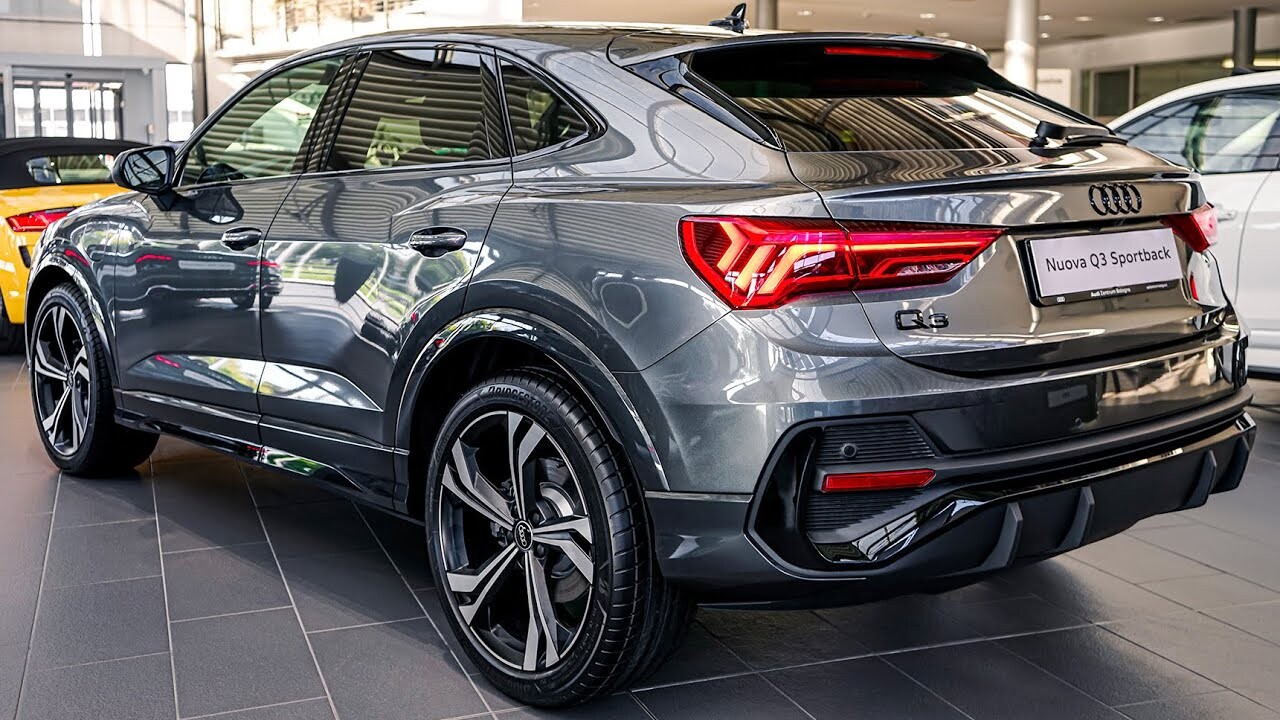

On the surface the Q3 feels like a conventional city-to-country SUV: compact, well-built, and reassuringly refined. But what surprised me over the days I spent with it was how often that refinement translated into practical efficiency on eco-friendly routes. Not because it promised some miraculous zero-emission magic, but because the sum of its design choices — predictable throttle, crisp gear transitions, and a cabin that rewards calm driving — made it easy to be economical without turning the journey into a chore.
My natural test for any vehicle that claims to be an 'eco-conscious' option is a mixed route that mimics real adventures: morning urban commute to the cafe, a stretch of stop-and-go subdivision roads, a twisty country lane where speed discipline matters, and then a series of gravel forestry roads where traction and low-speed control become the priority. Vehicles that excel on such a route are versatile; they consume less fuel in the city, can cruise efficiently on the open road, and still feel competent when the pavement ends. The Q3 handled that eclectic day with an easy demeanor.
Early on I learned that the Q3 is not a vehicle that magically makes you economical. What it does do is reward good technique. Set off gently, respect the torque curve, and you’ll find that the car settles into a surprisingly frugal rhythm. The powertrain pulls smoothly from low revs, which is a small thing that makes a big difference on eco routes: you’re not constantly hunting for revs or slamming the throttle to stay ahead of traffic. That predictability translates into fewer throttle blips, fewer unnecessary downshifts, and ultimately a calmer consumption profile across variable terrain.
One of the quieter victories for the environment is the way the Q3’s aerodynamic shape and tight body gaps reduce the soundtrack of wind at cruising speeds. It’s subtle, but less wind noise is often a sign that the car is slicing through the air with less resistance — a trait that benefits fuel efficiency on long stretches of highway that connect green zones and quiet trails. Couple that with an interior that’s insulated from the outside world, and you end up with long drives where the engine can breathe comfortably without being needlessly revved.
On gravel I pushed the Q3 into its more adventurous side. I’m not talking lock-axles and rock-crawling here; this is a compact crossover built for mixed use, not border-line overlanding. What matters on forest roads is traction control that is calibrated to let the wheels find grip without punitive intervention, and a chassis that doesn’t feel like it’s going to sulk the moment things get bumpy. The Q3’s suspension and traction setup struck the right balance. It soaked up corrugations and worked to keep momentum without demanding excess fuel to power through misjudged ruts. When you’re trying to be eco-minded on an off-piste run, conserving forward momentum is the most important skill — and the car made that easy to practice.
I thought a lot while driving about the unseen environmental costs of ownership: lifecycle emissions, manufacturing footprint, and the reality that even the most efficient internal combustion vehicle still produces CO2. I won’t pretend a compact premium crossover is the apex of sustainability solutions, but I appreciated how the Q3 can be part of a considered lifestyle choice. For someone who wants the flexibility to take day trips into nature, pick up local produce, tow a small trailer or carry bikes, and do so without penalizing the planet at every turn, a vehicle that encourages gentle driving and isn’t wasteful under normal use is valuable.
Practical touches matter here. The Q3’s packaging lets you carry outdoor gear in a way that reduces the temptation to overload the roof — roof boxes and racks increase drag and bite into fuel economy, so being able to stow bikes or packs inside the hatch more comfortably is an eco-win. The rear seat layout and the hatch design are straightforward; they don’t inspire radical packing tricks, but they are sensible. On one trip with two e-bikes and a set of waterproof packs, I ended up using a soft folding rack that hugged the body closely and reduced wind penalty — a small choice that made an appreciable difference over the course of a day-long coastal loop.
Another part of being eco-aware is route planning, which I treat as half the vehicle’s job and half my responsibility. The Q3’s navigation and trip feedback encourage that approach. If you plan for lower-speed corridors, avoid rush-hour bottlenecks and favor scenic routes with gentler stops, the car’s onboard systems cooperate. The information available is clear and not preachy; it nudges rather than nags. That sort of driver feedback is useful when you’re trying to minimize idling and reduce stop-start cycles in town — two real contributors to unnecessary emissions on short trips.
Tire choice was an element I paid special attention to. Many owners underestimate how much tires influence the environmental profile of any outing. For my time with the Q3 I had a set of all-season tires that were comfortable and low-drag, not the chunky mud-terrains that would have looked macho but made no sense for the routes I planned. The result was a predictable grip level on wet gravel and minimal rolling resistance on tarmac. It’s the kind of practical compromise that makes ownership days less about sacrifices and more about intelligent preparation.
When the route climbed up into cooler, damp woodland one late afternoon, I found myself appreciating the Q3’s heating and climate systems from an efficiency perspective as much as comfort. A well-insulated cabin reduces the need to blast heat for long periods, and the localized vents mean you can target warmth without battling a cold interior. That sounds mundane, but in colder months the difference between a warm car that needs a short burst of energy to reach comfort and one that must be heated continually is an environmental one. The Q3’s sensible thermal management meant I could stay comfortable while keeping energy use modest.
Driving modes are a standard feature in most modern cars, and the Q3’s choices are tuned for usability more than theatrics. There’s a mode that favors efficiency, and when I committed to it — soft accelerator response, earlier upshifts and reduced climate load — the car became almost meditative on long, winding lanes. You could feel the trade-offs fade into advantages: smoother transitions, fewer heavy braking events, and an almost unconscious change in my driving style. That’s the hallmark of a good eco-vehicle experience: it makes the right behavior the easy behavior.
Of course, no single model solves the larger puzzle of mobility’s environmental impact. I found myself reflecting on alternatives as well: full battery-electric Audi models are an obvious choice for those whose daily lives are compatible with charging infrastructure and shorter ranges. But if you’re an adventurer who frequently ventures beyond reliable charging networks into national parks or rural trails, the Q3’s blend of efficiency and range may be a more pragmatic choice. It’s a reminder that the most sustainable option is often the one that realistically aligns with how you live — the one you’ll actually use for trips instead of renting a vehicle or taking less convenient alternatives.
Routine maintenance and driving culture also play a role in the ecological footprint. I’ve seen well-maintained older vehicles outperform poorly kept newer ones in terms of efficiency. The Q3’s serviceability is conventional and straightforward: accessible service intervals and a network of dealers that, in my experience, are more likely to keep the car in its best possible tune. That consistency helps the car stay efficient over the years rather than gradually losing performance — a factor that too few buyers consider when judging environmental impact.
One vivid day I drove the Q3 on a circular route that included a low-emission town centre, an agricultural valley where tractors and old stone barns reminded me that rural economies are sensitive to transport cost, and a windswept bluff with a viewing layby. The Q3 carried me through all of it without drama. In town it felt composed and unobtrusive; on the valley lanes it picked up speed with measured authority; at the bluff I folded the seats down, pulled out a thermos and watched gulls drift in the wind while thinking about how many times I’d sacrificed scenery for speed in the past. The car made thoughtful travel feel natural.
For those who plan to use the Q3 as a base for true eco-adventures — the kind that involve camping, singletrack trails, and hauling practical kit — there are a few caveats. Its off-road capability is pragmatic rather than heroic. It can handle loose surfaces, wet grass and gentle inclines with composure, but I wouldn’t push it into deep sand, aggressive rock fields, or situations where underbody protection and high articulation are necessary. In those environments you need a more dedicated off-road platform. That said, for the vast majority of green-lane adventures and national-park forays where discretion and respect for the environment are paramount, the Q3 is more than competent.
Sustainability is also about the choices you make beyond the vehicle. Driving less, carpooling, choosing local routes, using reusable containers on trips, and planning to avoid unnecessary detours — these are the day-to-day behaviors that define whether a vehicle is truly 'green' in practice. The Q3’s sensible geometry, comfortable ergonomics and predictable dynamics make those choices easier. When the car’s personality doesn’t demand excess and the controls are intuitive, you’re less likely to override your better judgment in a stretch of impatience.
What surprised me most by the end of my time with the Audi Q3 (2024) was how much the experience of driving it re-centered my thinking about eco-minded adventures. This wasn’t a lecture in green living nor a defensive justification of internal combustion; it was a practical tool in a toolkit where route choice, driver behavior, and vehicle design converge. For families and individuals who want a single vehicle to ferry them through weekday errands, occasional off-grid forays and weekend escapes — and who care about minimizing their footprint while doing so — the Q3 is a convincing all-rounder.
In a world where environmental credentials are often reduced to headlines and badge engineering, the real test is how a car performs when you combine the demands of everyday life with the unpredictable needs of the wild. The Q3’s quiet competence, sensible packaging and forgiving manners make it a useful companion for that balance. It won’t replace electric SUVs for those who live exclusively on plug-in miles, and it won’t replace a hardened off-roader for climactic expeditions. But for someone like me, who measures adventures in miles and in memories rather than in extremes, it strikes a pragmatic chord: an efficient day-to-day machine that still responds to the call of lesser-traveled roads, and does so in a way that lets me keep an eye on emissions without sacrificing the joy of getting there.
At the trailhead I locked up the Q3, slung a pack over my shoulder and walked into the trees. Later that evening, watching the sunset over the same coastline we’d followed in the morning, I thought about the small choices that add up: a smooth throttle, an unhurried lane change, a lower roof load, and a route that honors place and pace. The Audi Q3 (2024) doesn’t preach sustainable travel, but it does make it manageable — and for many of us who love the road and want to keep it beautiful, that combination is worth the ride.
I remember cresting a muddy lane just as the sun was breaking through the pines — the Q3 tucked under me like a sensible companion rather than a show pony. Over the course of an ‘eco-adventure’ day that mixed commutes, twisty lanes and a few gravel forest tracks, the 2024 Audi Q3 proved exactly what I’d banked on: a compact, well-built crossover that makes efficient, practical travel feel natural rather than punitive. The efficiency driving mode calmed the throttle and coaxed early shifts; the traction control let me carry momentum on gravel without overworking the engine; and the cabin insulation meant I didn’t need to drown the car in HVAC to stay comfortable. As someone who spends weekends chasing remote lines and occasional campsites, I appreciated that the Q3 lets you leave the motorway behind without forcing you into a dedicated off-roader. It’s not the truck I’d choose for deep sand or technical rock, but for the mixed-use adventurer who values refinement, everyday usability and lower running appetite, this Q3 is a very practical compromise. I came away liking it — a car that nudges better driving, keeps things civilized, and will get you and two mates plus kit to most trailheads without complaint.
Specifications
| Specification | Value |
|---|---|
| Model | Audi Q3 (2024) |
| Market | UK |
| Body type | Compact Premium Crossover SUV |
| Seating | 5 |
| Drivetrain | Front-wheel Drive (quattro All-wheel Drive Available) |
| Notable features | Efficiency Driving Mode; Balanced Traction Control; Well-insulated Cabin; Driver Assistance And Eco Route Guidance |
| Suitable for | Daily Commuting, Weekend Escapes, Light Off-piste (gravel/forest Tracks), Modest Bike-hauling With Low-drag Rack |
| Limitations | Not Designed For Serious Off-roading (deep Sand, Rock Crawling) Or As A Full EV Replacement For Those Who Can Live Entirely On Electric Power |