

Roots: From Spanish Small Cars to a Crossover Lineup
Introduced in 2017, the Arona arrived at the start of the peak B‑segment crossover boom. It rode the Volkswagen Group's MQB A0 modular underpinnings — the same architectural family that allowed SEAT to stretch the compact formula into something taller and more versatile. From the start the Arona felt like a pragmatic response to the market: an Ibiza that could do a lot more with outdoor gear and poor roads while still fitting into multistory car parks and narrow lanes.
Design and Packaging: Height, Practicality and Personality
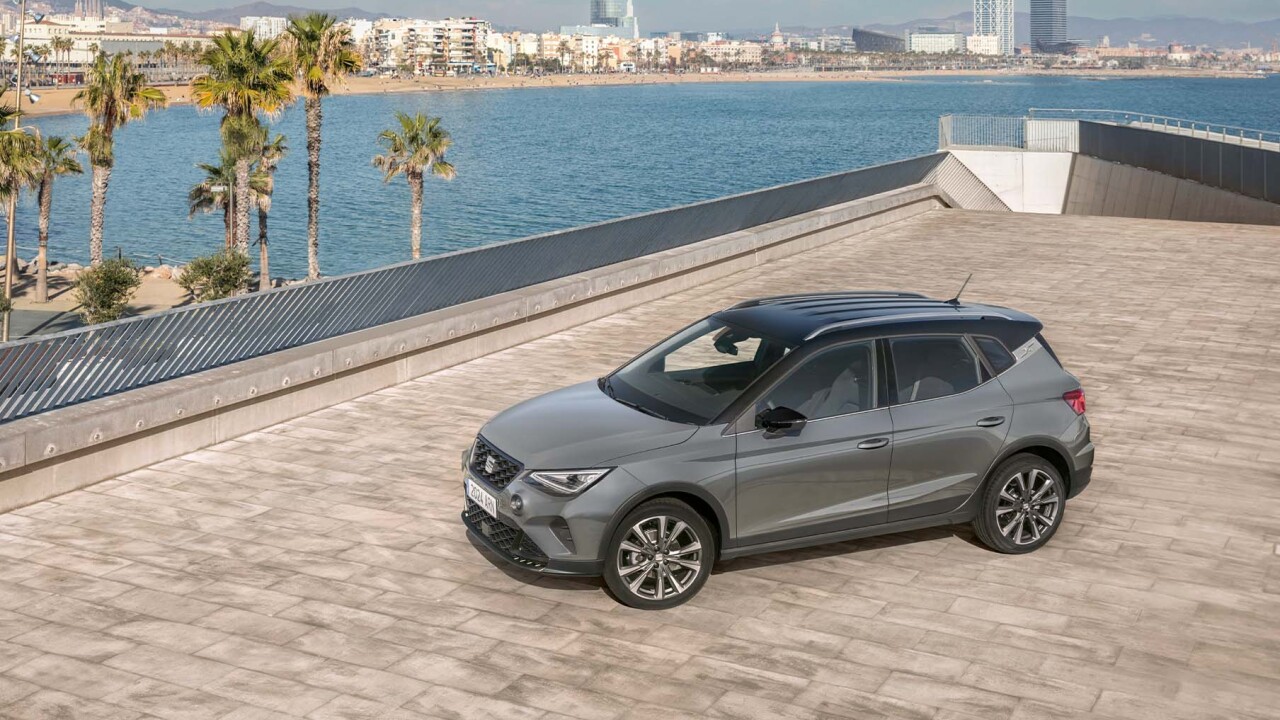
From a photographer's angle, the Arona reads as a small SUV that never lost the crisp SEAT lines. Compared with its hatchback cousin it brings ride height, an upright seating position and roof rails — small things that change how you approach a weekend. The raised stance gives drivers a better view of the world ahead, and the combination of compact footprint and higher clearance lets you tackle rough access roads that would rattle a supermini's suspension.
Internally the Arona kept SEAT's youthful and driver-focused interior cues. Materials are pragmatic rather than luxurious, and the layout is intuitive — that matters when you're on a camp run with one hand on a map and the other grabbing a crate of gear. Practical touches like fold-flat rear seats and a reasonable load floor make it a more honest outdoor tool than many of its similarly priced rivals.
Powertrains and Drive: The Weekend Balance
Because I won't invent engine outputs here, I’ll keep this section focused on how the Arona’s drivetrain choices translate to weekend use. Across its life the Arona has been offered with a range of small-displacement, turbocharged petrol engines — these are the kinds of units that prioritise efficiency and low-end torque over natural aspiration drama. The net result is a car that can potter through suburban runs all week and still muster adequate shove when overtaking on rural roads on the weekend.
Transmissions were offered in both manual and dual-clutch automatic formats in various markets. For the Weekend Warrior, a well‑set manual gives control and feel when you want to sense what's under the wheels on gravel, while the dual-clutch automatic makes motorway and ferry‑ramp merging effortless when you're towing a small trailer or pulling a loaded roof box.
On the Weekend: Real-World Use and Versatility
I've used multiple Aronas across years of weekend trips. One thing that sticks is how reliably the layout serves outdoor life. The raised seating makes long stints less fatiguing, and the compact width helps when threading between damp hedgerows and parked vans at trailheads. The cargo area isn't cavernous but it's intelligently packaged; fold the rear seats and you can stuff in a couple of mountain bikes, a couple of backpacks, and still get at the small items without an archaeological dig.
Roof rails are a deceptively big deal. Getting kayaks, bikes or a roof box up there is far easier than wresting them into a hatchback, and the Arona's roofline handles aftermarket racks and crossbars without looking like a misplaced tower of luggage. Ground clearance is sufficient for farm tracks and unimproved access roads; the Arona will take you to trailheads that flatter smaller cars and that would have the lowered sports hatch crying for a ramp in reverse.
Off the Beaten Path: Capability and Limits
Let's be blunt: the Arona is not a true off-roader. It lacks all-wheel drive as a mainstream option and does not have the approach and departure angles, suspension articulation, or heavy-duty protection of a proper 4x4. But as an off-road-aware commuter it shines. Think of it like a highly competent access-road vehicle: it will climb muddy ruts, tractable gravel descents and stony farm lanes without drama — provided you respect the limits.
The Arona's traction on loose surfaces comes from a combination of modest torque, narrow track width and predictable chassis balance. That's a plus when you're trying to place the car between ruts; it won't tease you into making optimistic off-road moves. However, if your weekend involves serious water crossings, heavy rock gardens or sustained, steep mud you should be planning to swap into a true SUV. The Arona's advantage is in versatility, not conquest.
Practicality, Comfort and Everyday Use
On long drives to rural locations, the Arona rewards with an upright driving position and supportive seating. Cabin comfort is pragmatic rather than plush; that’s perfect for an outdoor-focused buyer who wants washable practicality more than soft-touch luxury. Heating and ventilation work well for drying kit after a damp hike, and the heater’s ability to demist a windscreen quickly is appreciated when mornings start cold on the moor.
Visibility is another practical win. The Arona's windows are generous for the class, which helps when reversing off a farm track or when trying to tuck the car into a tight campsite pitch. Smaller drivers and taller passengers alike will find getting in and out easier than in a low-slung hatch — those extra centimeters of ride height make a difference across repetitive entries and exits during a long weekend.
Safety, Tech and Mid-Cycle Evolution
Over the years the Arona's feature set evolved, following the industry trend of bringing more active-assistance and connectivity into even entry-priced cars. Driver assistance packages and infotainment upgrades made the cabin more future-proof and improved long-distance comfort. From a Weekend Warrior perspective, features such as hill-hold, parking aids and good connectivity help when navigating unfamiliar rural roads or when coordinating with friends at a rendezvous point.
SEAT also tuned the Arona to be easy to live with: service intervals and parts accessibility were planned with cost-conscious buyers in mind. In my personal ownership experience, small repairs were rarely complex — a feature of the car's mainstream mechanical layout and the MQB A0 architecture.
Reliability and Ownership: A Retrospective View
In a historical sense the Arona sits comfortably in SEAT's tradition of delivering pragmatic value. Owners I know who use the Arona for regular weekend adventures report that the cars age well when maintained. Nothing about the Arona invites overly complicated garage time; the engines and drivetrains that became the car's backbone are mainstream Volkswagen Group items with broad parts availability and wide service networks.
Resale values are helped by the car’s broad appeal: families, young professionals and outdoor buyers all found reasons to choose an Arona. That diversity of ownership means a second-hand market where you can find variants with sensible options or stripped-back models with lower running costs.
Comparisons and Competitors
Against rivals in the B‑segment crossover field the Arona's strengths were packaging and personality. it wasn't the outright roomiest, nor was it the most frugal in every guise, but it balanced urban agility with occasional dirt-track capability in a way that appealed to practical adventurers. If you're choosing between similar crossovers, think about what you truly need: the Arona is for people who want a little extra ride height and practicality without stepping up into heavier, thirstier territory.
Final Thoughts: Who Should Buy an Arona?
If your weekend life is a mixture of urban mornings and outdoor afternoons — if you need a car that can carry a bike, tow a small trailer, handle a muddy lane and be economical on weekday commutes — the Arona is worth serious consideration. It offers the features that matter to Weekend Warriors: compact dimensions, useful ride height, flexible load space and a congenial driving character.
As a historical piece, the Arona represents a natural evolution in SEAT's lineup: a brand that understands small-car virtues applied them to the crossover trend. It never pretended to be a hardcore off-roader, but it carved out a practical niche for people who spend weekends where tarmac thins and views open up.
Verdict: The Little Crossover That Earned Its Stripes
In the end, the Arona is a Weekend Warrior with sensible priorities. It brings honest practicality, a sprightly driving attitude and a usable personality to the B‑segment crossover table. For outdoor-minded drivers who value utility over headline-grabbing power figures and who want a single vehicle to do the weekday commute and weekend escape, the Arona delivers more than its size suggests.
Would I take it on a rough route? Yes — but with respect for its limits. For most weekend missions it will arrive, unpack and go home smiling. That combination of humility and usefulness is exactly why the Arona deserves a place in the retrospective of compact crossovers that actually spent time outside the city.