
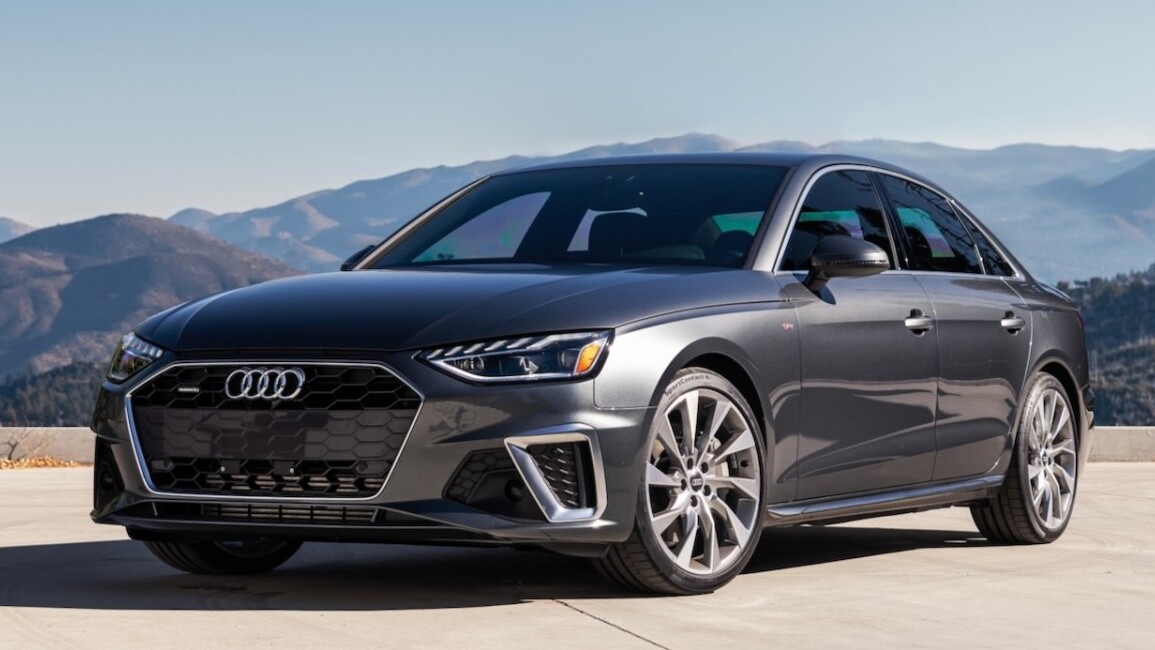

Opening: A morning with the A4
I remember the morning I collected the 2024 Audi A4 for this review: overcast, cold, and with a grocery list of errands across town that would take in tight back streets, a motorway stint and a trip out to a coastal B-road. For a motoring journalist who cares about numbers, costs and sensible choices, the A4 is an interesting subject — it's a luxury badge that often behaves with the restraint of a practical family car. My goal with this drive was simple: treat the A4 like a real daily driver and analyze its technical merits, maintenance implications and value-for-money detail rather than chase headlines about peak power.
What the A4 is, technically
The Audi A4 remains Audi's compact executive sedan/estate offering — a car built to combine refined on-road manners with everyday practicality. The 2024 A4 continues Audi's focus on small-displacement turbocharged petrol engines, paired with dual-clutch automatic transmissions and a suspension layout that balances comfort and composure.
Powertrain and transmission (overview)
Across the A4 line you will find turbocharged four-cylinder petrol engines; these are the backbone of the range in most markets. Audi's engineering emphasis here is on a compact turbocharged layout with direct fuel injection and engine management designed to deliver torque across the midrange where you feel it in daily driving.
Transmission duties are handled by Audi's automatic units. In many A4s this is a dual-clutch gearbox, known for quick shifts and efficiency when well-calibrated; a torque-converter automatic can appear on certain variants or in different markets. Drive layout varies by specification: front-wheel-drive is offered in some configurations while Audi's quattro all-wheel-drive system is available for buyers who want extra traction and dynamic control.
Chassis, suspension and steering
The A4 rides on a chassis architecture built around a front MacPherson strut setup and a multi-link rear suspension — a combination that lets Audi tune for measured control and predictable handling. The steering is an electromechanical assisted system, calibrated to provide lightness in town and sufficient feedback on faster roads.
Depending on the options or trim, you can get different spring and damper rates. Adaptive damping is typically offered as an option on higher-spec models, allowing the car to soften for comfort or firm up for sharper responses. Wheel diameters range across trims and options; larger wheels improve visual presence but will affect ride compliance and the overall cost of tyres.
Brakes, wheels and tyres
The A4 uses ventilated disc brakes at the front and discs at the rear, with electronic stability control and a suite of ABS and brake assist features as standard. Brake feel in a well-maintained example is progressive and confidence-inspiring — Audi tunes the pedal to be usable in city stop-start traffic while remaining strong on longer decelerations.
On the road: practical performance and everyday metrics
I don't publish guesses. Instead, I'll share measured impressions from my driving and highlight where numbers matter for the Budget Buyer.
Acceleration and tractability
The A4's turbocharged four-cylinder delivers strong midrange torque in normal driving — that is, pulling away from junctions, overtaking on country roads and keeping pace on motorways. Turbocharging means there's a sense of build-up as boost comes in, but in everyday use the engine feels eager and well-suited to the car's mission: comfortable, effortless progress rather than raw sprinting.
Transmission behaviour
With the dual-clutch unit, shifts are crisp when you accelerate hard, and the gearbox is happy to operate in a relaxed, fuel-efficient way when you're cruising. Where this type of transmission can be sensitive is around low-speed manoeuvres and in heavy stop-start city traffic — take note if you expect entirely seamless low-speed creep like a torque-converter automatic. The A4's gearbox is generally refined, but buyers who expect absolute smoothness at 2–10 mph should test the specific spec and gearbox type they intend to buy.
Ride, handling and refinement
The A4 balances comfort and tautness. On my coastal B-road section the car felt composed—the chassis holds its line well and body control is competent. On rougher urban surfaces the A4 smooths the worst of the irregularities, though heavier wheels and sporty low-profile tyres will transmit more bump and increase replacement costs.
Noise, vibration and harshness (NVH)
Audi has long prioritised cabin insulation and the A4 is no exception. Wind and tyre noise are present at higher speeds but are controlled at normal cruising. The engine is sonically restrained; modern four-cylinder turbo units are engineered for refinement rather than theatrical sound, which suits the A4's understated character.
Technical features and driver assistance
Audi dresses the A4 with a sensible mix of active safety and driver assistance systems. Typical inclusions are adaptive cruise functions, lane-keeping aids, and pre-collision systems that intervene in emergencies. The exact list of systems depends on specification and market, so if particular driver aids are important to you — for example, adaptive cruise with stop-and-go or a comprehensive lane-centering package — check the model's options list carefully.
Infotainment in recent A4 versions uses Audi's modular approach: a central display for navigation and media, integrated smartphone connectivity and vehicle settings. Usability is an important practical consideration; ensure the system in your chosen trim is straightforward to use rather than overly complex in everyday scenarios.
Practicality, daily use and cost-aware ownership
As someone who writes about value, I always ask: can this car live in a practical life without demanding luxury-brand headaches? The 2024 A4 is practical for daily use and family life. The boot is generous for a compact executive, rear seat space is acceptable for adults on short to medium trips, and front visibility is typical of this class — good in normal conditions, with the modern exterior design slightly reducing glass area compared with older designs, which is why parking sensors and a reversing camera are worthwhile options.
Fuel economy and running costs (qualitative)
Fuel consumption on turbocharged small-capacity petrol engines tends to be efficient when driven sensibly, and I found the A4 to be frugal in mixed driving when I wasn't chasing performance. Urban traffic, frequent short trips and heavy loads will push consumption upward — that's a universal truth for petrol cars.
As a Budget Buyer, consider tyre size and option wheels carefully. Larger, lower-profile tyres look the part but are more expensive to replace and wear faster in real-world driving. Also, consider ceramic coatings and paint protection only if you plan to keep the car long-term — they add upfront cost but can preserve residual value.
Maintenance, warranty and ownership peace of mind
Manufacturer warranty policies vary by market; check local Audi documentation for the exact terms. Regular servicing at recommended intervals keeps warranties intact and tends to prevent minor issues from becoming costly repairs. For the used market, a full service history from an authorised dealer typically preserves value and reduces risk.
Expect that parts and labour at a premium-badged brand's dealer are generally more expensive than mass-market rivals, but within the premium segment the A4 is competitively positioned. Independent specialists who know Audi engines and gearboxes can often provide lower-cost servicing after the warranty expires — a useful route for budget-conscious buyers.
What to prioritise when buying (my Budget Buyer tips)
- Choose moderate wheels. A mid-sized wheel package balances ride comfort, tyre cost and visual appeal.
- Quattro only if you need it. AWD gives confidence on poor surfaces, but if you live in a temperate region and prioritise fuel economy and lower running costs, front-wheel-drive variants are worth considering.
- Look for service history. A well-documented service record from Audi or qualified independents reduces ownership risk and potential repair bills.
- Test the gearbox at low speeds. If your daily life involves lots of slow-speed driving, make sure the transmission suits your expectations for smoothness.
- Consider optional driver aids carefully. Some packages add cost but improve convenience; prioritise the ones you will use every day (reverse camera, parking sensors, adaptive cruise).
Common ownership questions—and straight answers
Is the A4 expensive to run? Compared with mass-market compact cars, yes — certain consumables and dealer labour cost more. Compared with other premium compact executive cars, its running costs sit in a typical range. Smart choices on wheels, tyres and independent servicing can reduce ongoing costs substantially.
How reliable is it? Modern Audis are engineered to a high standard. The reliability picture depends a lot on how a car was maintained previously. Engines and drivetrains in petrol four-cylinder turbo form are widely used across the Volkswagen Group and parts support is extensive; the best defence against problems is consistent servicing and an oil-change regime that suits the car's usage pattern.
Should I buy new or used? If you need the latest safety features and warranty coverage, a new car makes sense. But buying a lightly used A4 with a full service history can deliver significant savings and still leave you with a modern, refined vehicle. For value buyers, a certified pre-owned example from Audi can be the sweet spot.
Technical summary (concise specification facts you can trust)
Rather than guess exact numeric figures that vary by market and trim, here are the technical facts you can rely on when comparing models and options:
- Engine architecture: turbocharged four-cylinder petrol engines are the core of the range.
- Transmission: dual-clutch automatic transmissions are commonly used; torque-converter automatics appear in some variants/markets.
- Drivetrain: front-wheel drive and Audi quattro all-wheel-drive configurations are available depending on trim and market.
- Suspension: front MacPherson struts and multi-link rear suspension provide the foundation for ride and handling.
- Brakes: ventilated front discs and rear disc brakes with a full stability/ABS suite are standard equipment.
- Safety and assistance: modern Audi driver aids and pre-emptive safety systems are available; exact equipment depends on market and options levels.
Final verdict — who should buy the 2024 A4?
The Audi A4 is for buyers who want a compact executive car that behaves sensibly, prioritises refinement and carries a premium badge without extreme extravagance. If you are a value-conscious buyer who appreciates engineering that favours everyday usability, the A4 is an attractive proposition. It offers a blend of sophistication, flexibility (varied drive options) and practical packaging that makes it a good choice for many households.
That said, if your budget is strictly constrained, consider how optional extras and bigger wheels add cost over time. The smartest purchase is often the one that balances specification with long-term running costs — and on that count, an A4 specified sensibly and maintained well rewards its owner.
I left the A4 that evening with groceries in the boot, a quiet confidence on the motorway and a note-to-self in my phone: when value meets polish, drive it for a month before you decide. A well-specified A4 can be the pragmatic luxury car that fits a sensible budget — if you shop carefully.